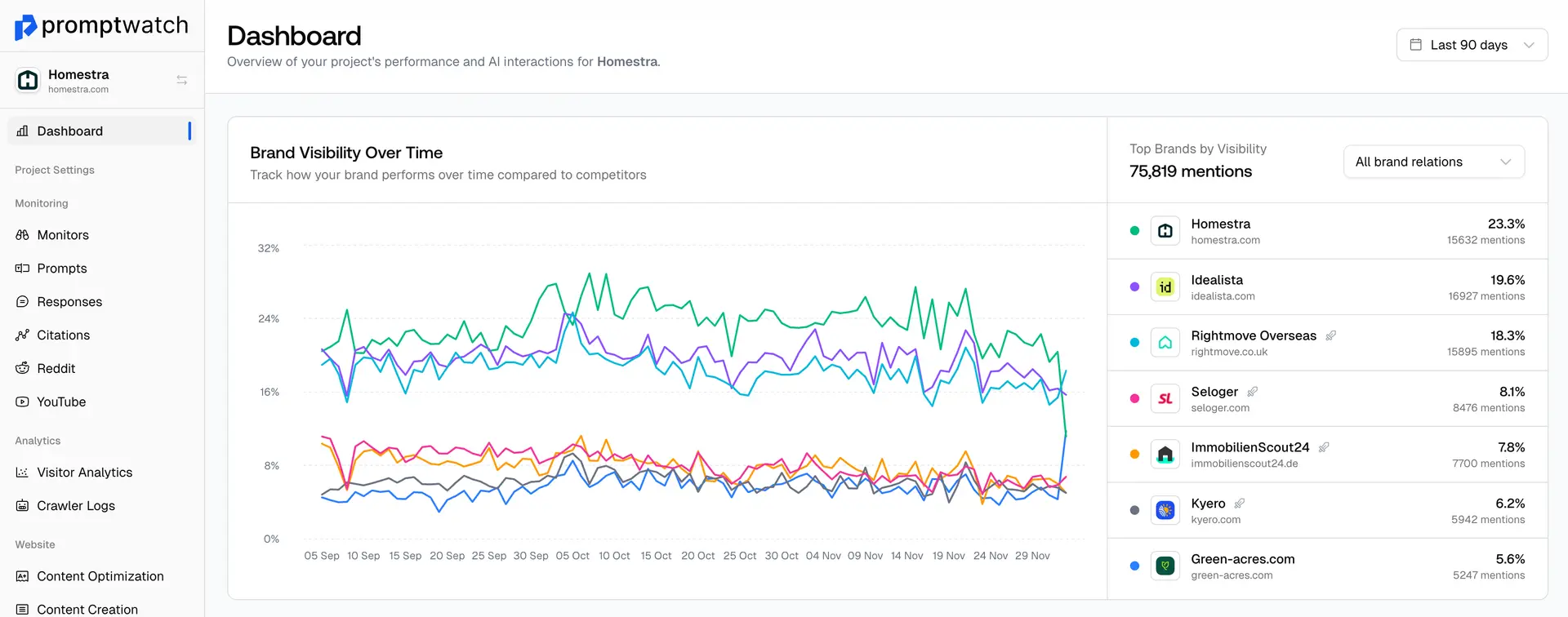
Reading Your Brand Visibility Score
Your Brand Visibility Score represents how often, and how accurately, your brand appears in AI-generated responses across ChatGPT, Claude, Perplexity, and Gemini.
A strong score means:
- Your pages are being crawled and cited frequently.
- AI systems recognize your brand as a trusted authority.
- You appear in prompts relevant to your core topics or industry.
A low score doesn’t mean you’re invisible, it means AI engines see your competitors more often than you. This is the starting point for mapping your competitive landscape.
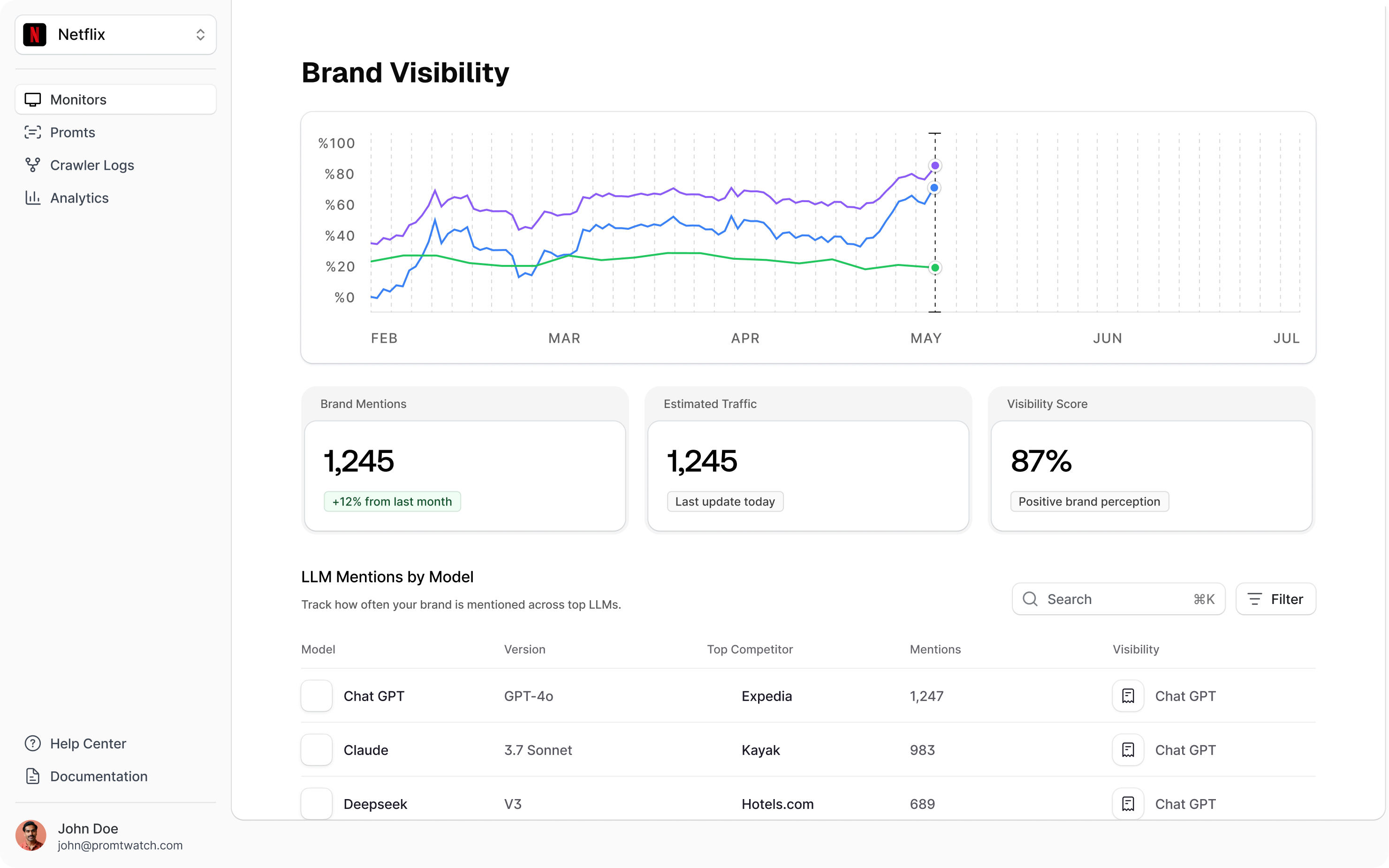
Comparing Your Visibility to Competitors
Promptwatch visualizes competitor performance alongside your own, allowing you to:
- Compare Scores Directly: See how your visibility ranks against up to five competitors in the same market.
- Track Trends Over Time: Identify who’s gaining share in AI answers week by week.
- Spot Overlaps and Gaps: Discover where competitors dominate prompts that matter most to your audience.
When your Brand Visibility Score is plotted against competitors, the distance between them represents a share of AI visibility. Closing that gap is your roadmap to growth.
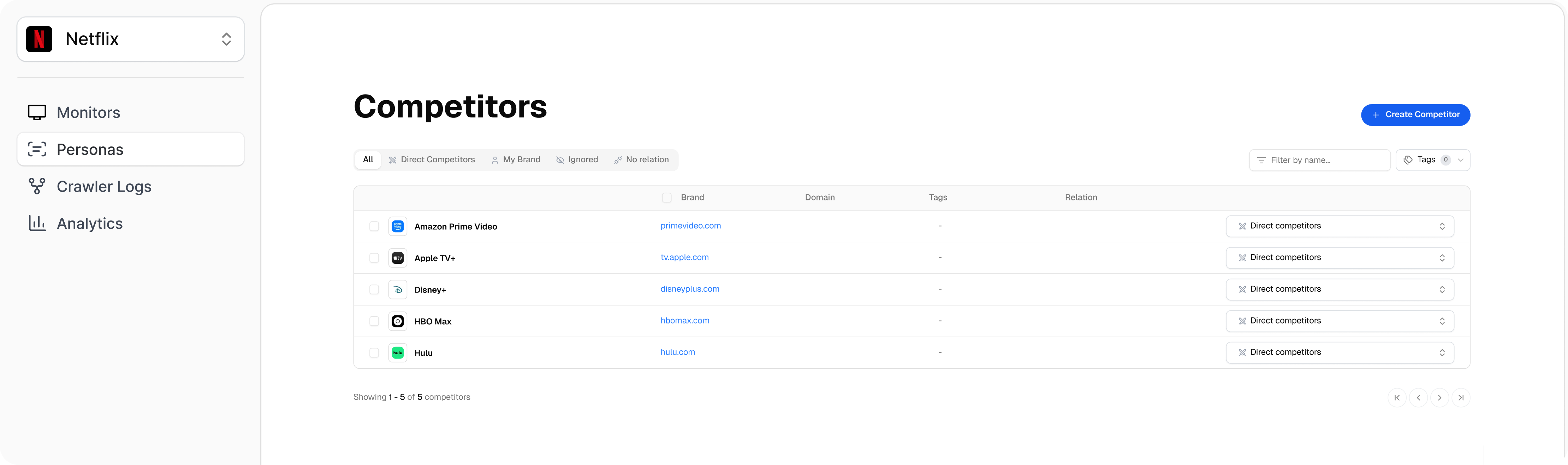
Tracking Prompt-Level Competition
Beneath the visibility graph, you’ll see competitor performance across tracked prompts. This view answers three key questions:
- Who’s mentioned most often?Which brand AI models prefer in each answer.
- What’s the sentiment or position?Whether your brand is recommended, compared, or omitted.
- Where are the gaps?Which prompts cite competitors but not you.
Use this to prioritize your next round of optimization. For example:
- If your competitor dominates “best CRM for small teams,” create new or updated content that addresses that query directly.
- If you appear but with weak positioning (“mentioned but not recommended”), refine your messaging and structured data to align better with AI context.
Building a GEO Strategy Around Competition
Once you’ve identified where you stand, the next step is to act.
- Strengthen Pages Already Cited: Build depth and recency into the content AI engines already trust.
- Target Competitor-Heavy Prompts: Publish optimized articles to reclaim share in prompts they currently dominate.
- Expand Into Untapped Prompts: Use Answer Gap insights to discover questions neither you nor your competitors are covering yet.
Every visibility gain against a competitor strengthens your brand’s footprint in AI search results — compounding over time.
Next Steps
Check your Competitive Landscape Dashboard weekly. Watch how your visibility score and prompt share shift after every content update or new publication. When your brand starts closing the visibility gap, you’ll know your GEO strategy is working.
Tip: Don’t chase every competitor. Focus on the 2–3 whose content overlaps most with your monitored prompts, they define the real battle for AI visibility in your space.