Agencies today are being asked questions their current playbooks can’t fully answer, questions like “How visible is our brand in ChatGPT?” or “Why is a competitor showing up in AI answers when we’re not?”
Generative Engine Optimization (GEO) gives agencies a way to answer those questions, and turn AI search visibility into a measurable service offering. With Promptwatch, you can track, prove, and improve how clients appear inside generative search engines like ChatGPT, Claude, and Why
GEO Is a New Agency Opportunity
AI assistants are fast becoming the first stop for research and recommendations. This shift means traditional SEO and media strategies are no longer enough, visibility inside AI answers is now part of brand awareness and conversion.
Agencies that understand and manage AI visibility gain a major competitive advantage. GEO services let you:
- Prove emerging value to clients before competitors can.
- Build measurable deliverables tied to AI exposure and discovery.
- Help clients future-proof their search and content strategies.
1. Benchmark Each Client’s AI Visibility
Start every GEO engagement by benchmarking where your client currently stands.
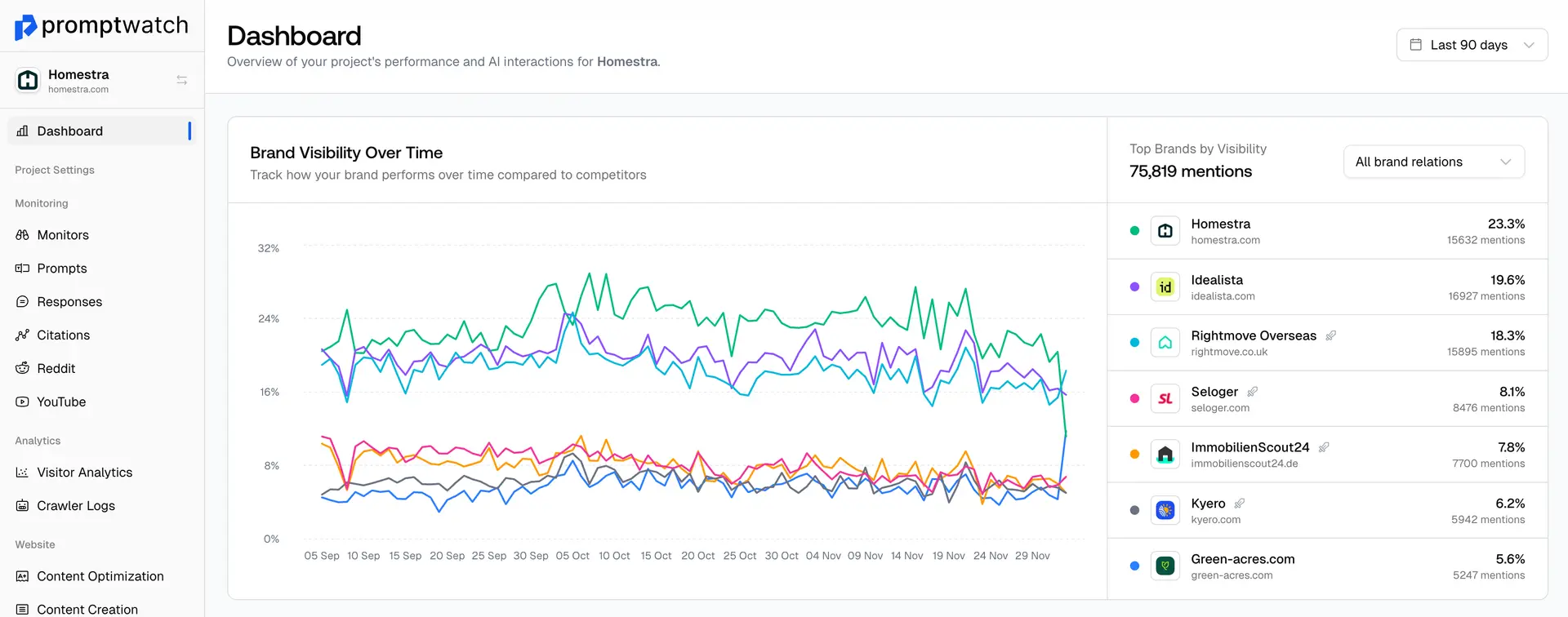
- Use Brand Monitors in Promptwatch to track visibility across ChatGPT, Perplexity, and Claude.
- Measure how often their brand appears, how accurately it’s represented, and how that compares to key competitors.
This baseline report instantly quantifies your client’s position in AI search, a perfect starting point for onboarding conversations and quarterly reporting.
2. Map the Competitive Landscape
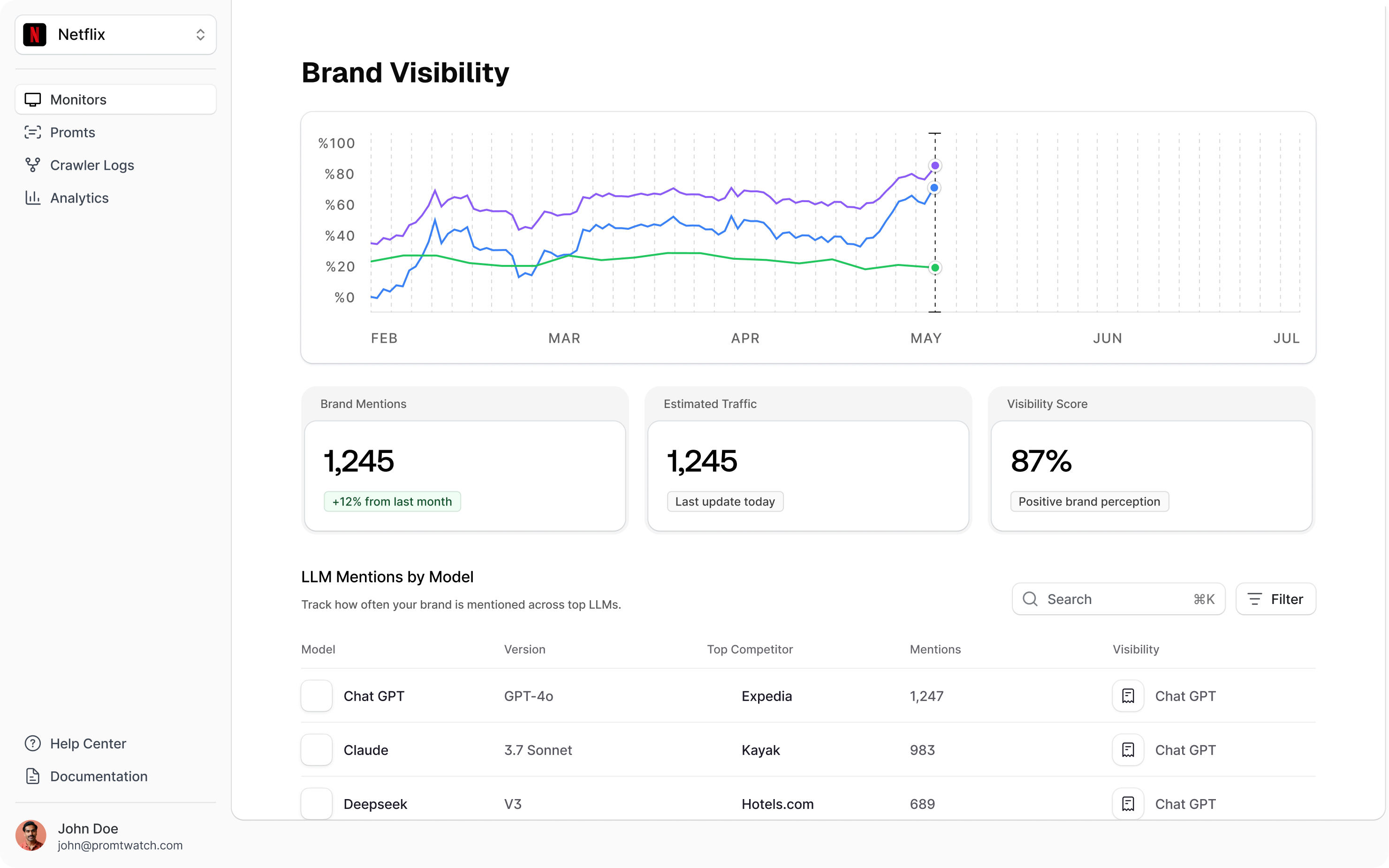
Promptwatch visualizes competitor visibility alongside your client’s own score.
- Identify which competitors dominate category prompts (“best project management tools,” “top skincare brands,” etc.).
- Highlight where your client is missing or underrepresented.
- Use those insights to create a visibility roadmap backed by data.
Agencies can use these dashboards in client reports to show concrete movement in AI visibility over time, not just traffic or impressions.
3. Build Targeted Content Strategies with AI Data
Once you know where your client’s brand is missing, turn those insights into content opportunities.
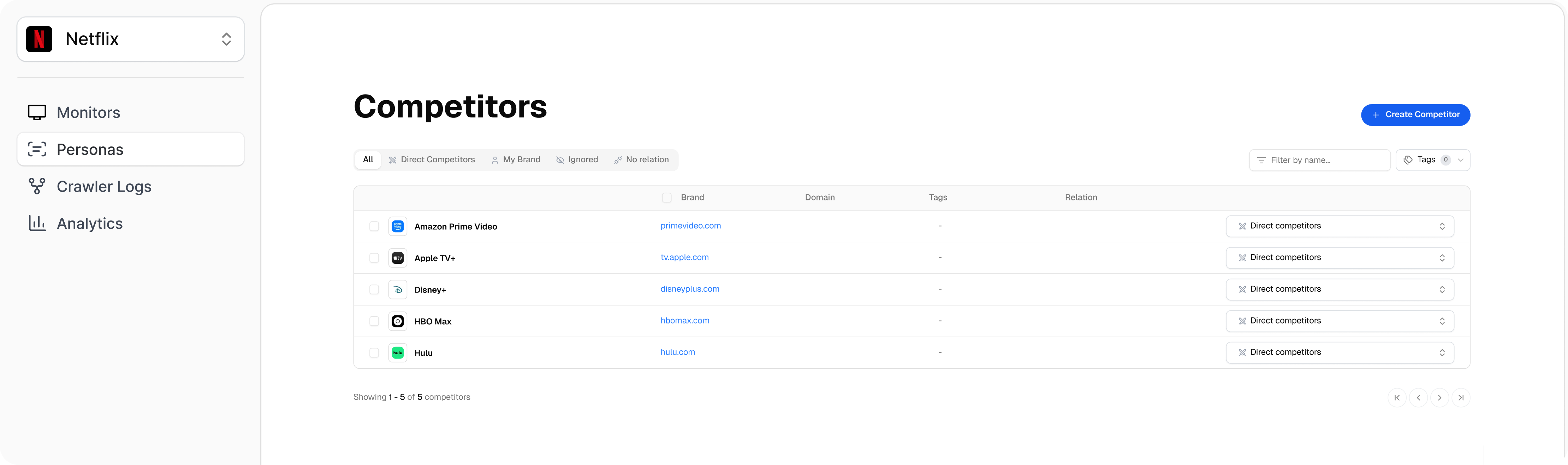
- Use Answer Gaps to identify prompts where AI models recommend competitors but not your client.
- Generate optimized articles, product pages, or comparisons using Content Generation in Promptwatch.
- Align tone and focus with uploaded Personas to keep every piece of content on-brand.
This workflow connects content creation directly to measurable AI search visibility improvements, something few agencies can currently offer.
4. Monitor AI Crawlers and Site Readiness
Before AI can mention a client, it has to crawl their content.
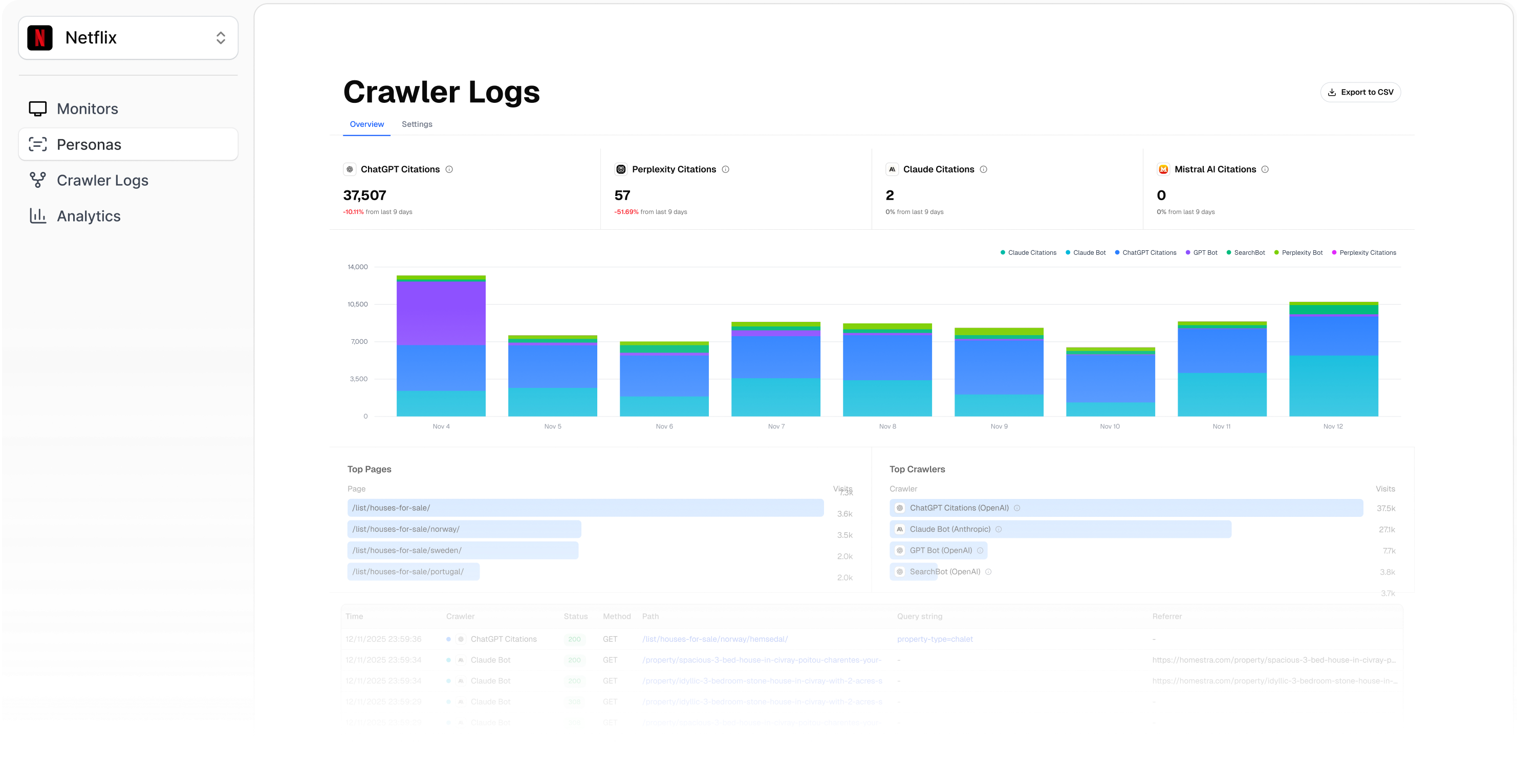
- Use Crawler Logs to see which bots are visiting client sites and which pages they’re reading.
- Identify missing sitemap entries, crawl errors, or underexposed content.
By maintaining technical readiness, agencies ensure that AI systems can actually access and understand the content they optimize, a key part of any ongoing GEO service.
5. Report Real Impact
Use Visitor Analytics to track referral traffic from AI platforms and tie it to site engagement or conversions. Combine this data with visibility reports to show clients:
- Where they’ve gained presence in AI models.
- Which prompts or topics now include their brand.
- How AI exposure translates into measurable site traffic.
This helps you show how GEO is not only increasing your visibility, but also traffic that will still come direct from AI.
Next Steps
Position GEO as part of your agency’s full-funnel offering, not a replacement for SEO, but its evolution. Start with visibility audits for a few key clients and build a repeatable service model around prompt tracking, content generation, and performance reporting.
Tip: Bundle GEO tracking into your existing content retainers. Clients see immediate value when you can show how AI search models interpret their brand.