For direct-to-consumer brands, product discovery has quietly shifted away from search engines and social feeds. Consumers are now asking AI assistants like ChatGPT, Perplexity, and Claude what to buy and those models are recommending products based on what they’ve read and understood from across the web.
This shift creates both a risk and an opportunity. If your brand isn’t visible in those AI-generated answers, you’re invisible at the exact moment of purchase intent. That’s where Generative Engine Optimization (GEO) comes in and why it’s becoming essential for every D2C growth strategy.
Why GEO Matters for Direct to Consumer Brands
A customer’s journey now often starts with a question like:
- “What’s the best stain-proof shirt?”
- “Which natural skincare brand actually works?”
- “Top-rated sustainable running shoes?”
Those questions are answered instantly by AI and the brands included in those answers are the ones consumers remember first. GEO helps your brand become one of them by ensuring AI systems can find, understand, and confidently recommend your products.
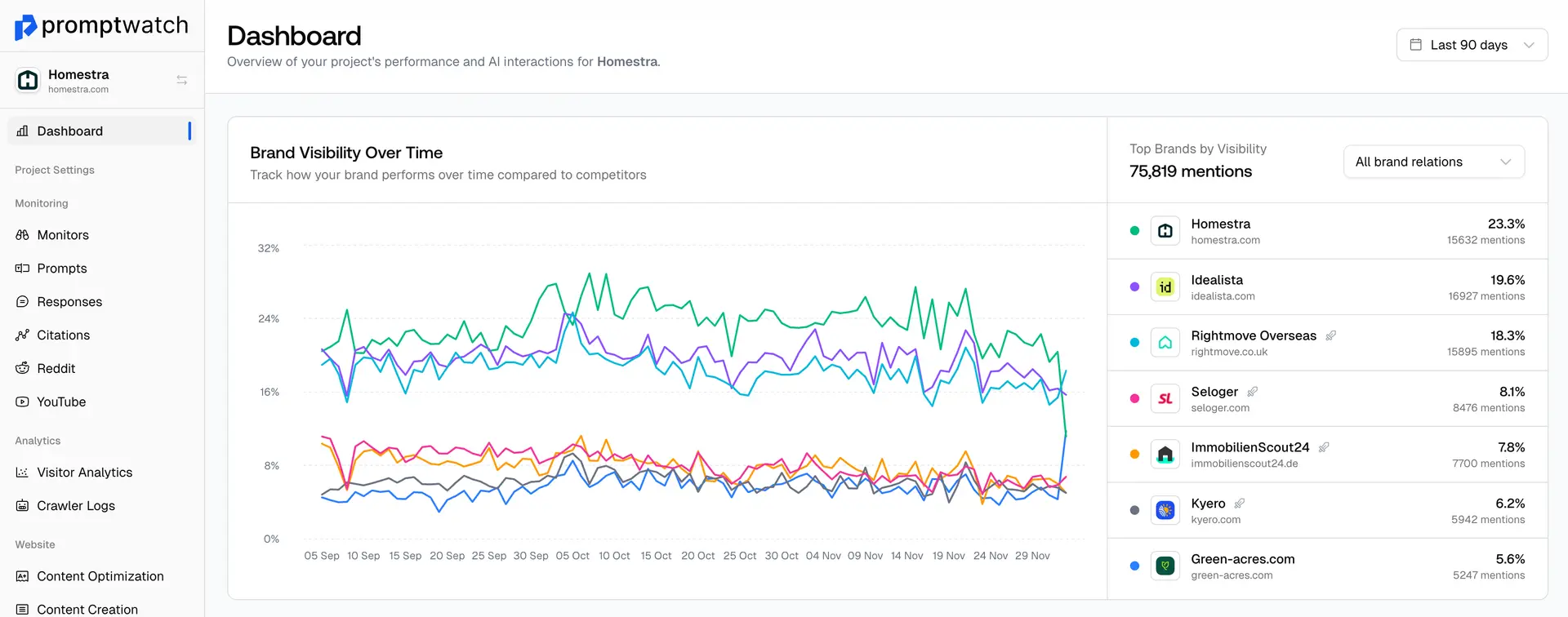
1. Measure How Often AI Recommends Your Brand
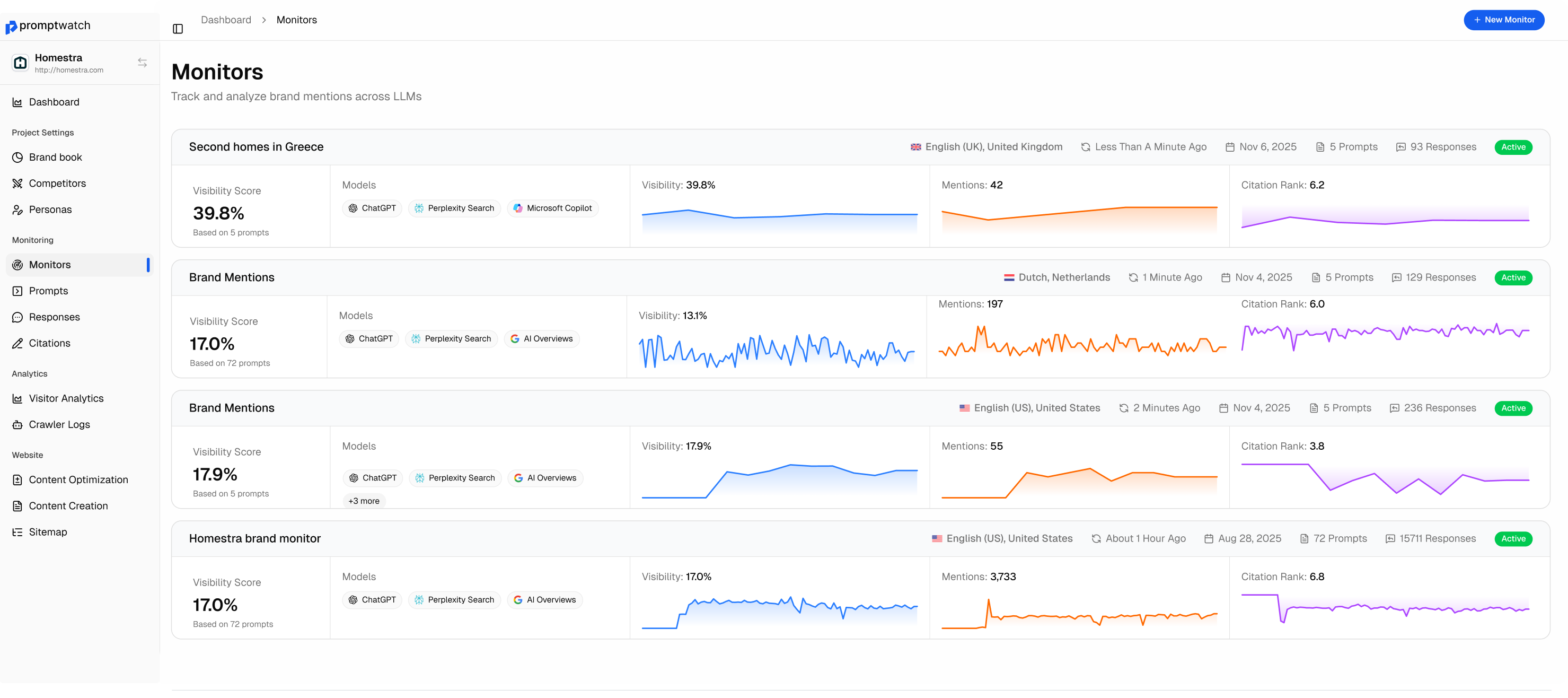
Start by identifying where your brand appears in generative search results.
- Track prompts that describe your product type, benefits, or unique category position.
- Compare how often AI models mention your brand versus competitors.
Using Monitors in Promptwatch, D2C marketers can see how ChatGPT, Claude, and Perplexity describe their products, whether as trusted recommendations, secondary mentions, or missing altogether.
2. See Where Competitors Are Winning
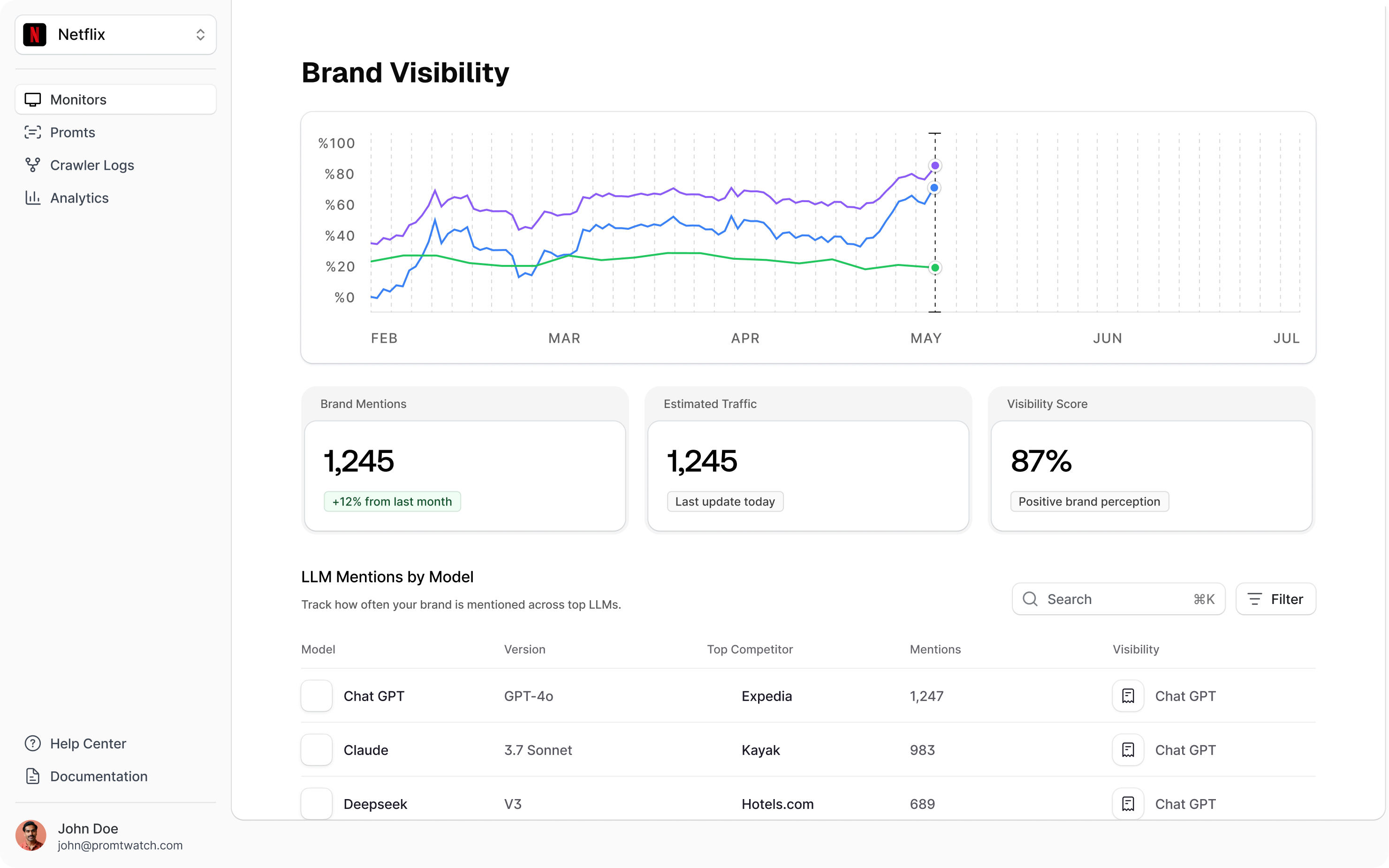
Your GEO visibility isn’t isolated, it’s relative. If your competitors appear more frequently in AI answers, that means their content is being crawled, cited, or structured in ways the models prefer.
- Use your Brand Visibility Score to compare your presence against theirs.
- Identify prompts where your competitors appear but you don’t, these are your Answer Gaps.
Promptwatch helps you spot these gaps so you can create content that competes directly for those AI-driven recommendations.
3. Optimize Product Pages for AI Crawlers
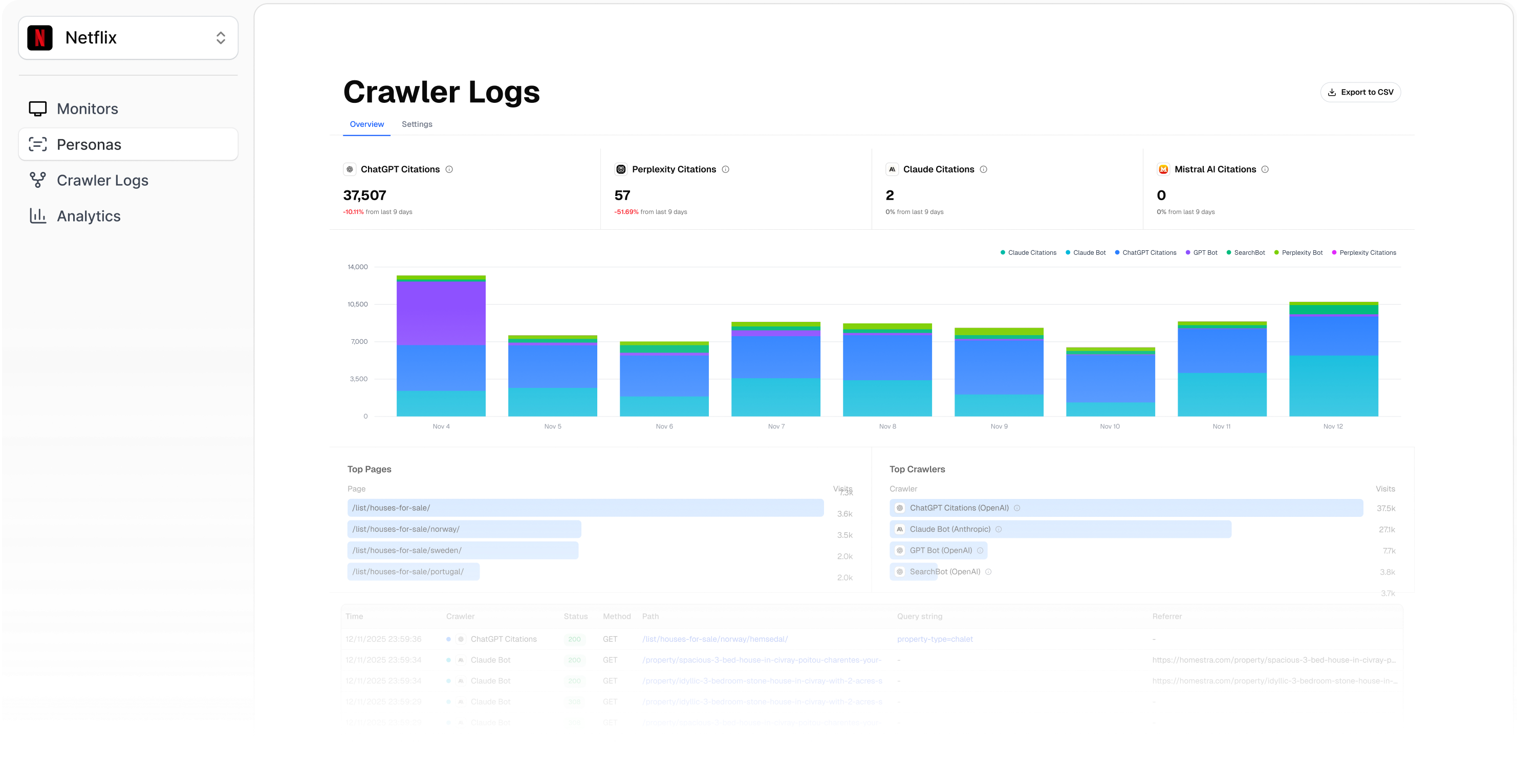
AI crawlers like GPTBot and ClaudeBot read your site to decide which content to use in answers. They value clarity, context, and structure over keyword density.
- Review your Crawler Logs to see which bots access your product pages.
- If your best-selling products aren’t being crawled, update your internal links and ensure your sitemap includes those URLs.
- Add descriptive product copy that clearly answers common consumer questions (“How does it work?”, “Is it sustainable?”, “What makes it different?”).
The easier AI systems can interpret your content, the more likely they are to recommend it.
4. Generate Content Around Real Consumer Prompts
Use Content Generation in Promptwatch to turn your AI insights into demand-driving content.
- Create blog posts, comparison pages, and FAQs based on real prompts customers ask.
- Focus on the questions that drive conversions (“Is brand X better than brand Y?”, “What’s the most durable travel bag?”).
- Publish consistently to build topical authority across multiple AI models.
When AI systems recognize your content as the best answer source, they cite it more often, and that visibility compounds.
5. Track AI-Sourced Traffic and Conversions
Visitor Analytics in Promptwatch shows you exactly how many visitors come from AI models and which products they engage with.
- See which prompts drive the most traffic or conversions.
- Identify which models (ChatGPT, Perplexity, Claude) send the highest-value users.
- Align your paid, influencer, and organic efforts around proven AI-driven demand.
This helps you show how GEO is not only increasing your visibility, but also traffic that will still come direct from AI.
Next Steps
Start with three key monitors: one for your brand name, one for your category terms, and one for your competitors. This will reveal how consumers currently encounter your brand in AI search and where your visibility can grow.
Tip: Treat AI visibility like digital shelf space. The more consistently your brand appears in product-related prompts, the more likely AI models are to keep recommending you, even when consumers ask in new ways.