


TL;DR
- Gate 1, reach: ChatGPT search only includes sites that let OpenAI's OAI-SearchBot in. OpenAI accounts for 79.8% of verified AI crawler requests, so its bots should show up clearly in your logs.
- Gate 2, retrieval: ChatGPT doesn't search your customer's question. It searches its own rewrite of it, about 53 characters long on average since April 2026, and 16.8% of those searches now target one specific website.
- Gate 3, selection: only 4.7 to 4.9 sources make it into an average ChatGPT answer since March 2026. Product pages win the largest share, 32.8% of citations in July 2026.
- Gate 4, corroboration: no single domain holds more than 4% of ChatGPT Search citations, so what other sites say about you counts as much as your own pages.
- Staying cited: citation relevance typically fades after 8 to 14 weeks unless the page is refreshed.
How to get cited by ChatGPT
Google SEO is a contest for positions in a list. ChatGPT SEO is a contest for a handful of citation slots inside one written answer, decided by a system that reads passages rather than ranking pages.
| Google SEO | ChatGPT SEO | |
|---|---|---|
| The prize | A position among ten blue links | One of about five citations in a single answer |
| Who writes the query | The user | ChatGPT, rewriting the user's question into short searches (query fan-out) |
| What gets judged | The whole page | Individual passages |
| What earns trust | Links and relevance | Crawler access, direct answers, original evidence, and agreement from other sources |
| What success looks like | Rankings and clicks | Citations and brand mentions; clicks from AI answers stay under 0.1% |
Because the two systems pick sources differently, a page can rank well on Google and still never be cited by ChatGPT. Treat them as two channels that share a website.
Gate 1: Can OpenAI's crawler reach the page?
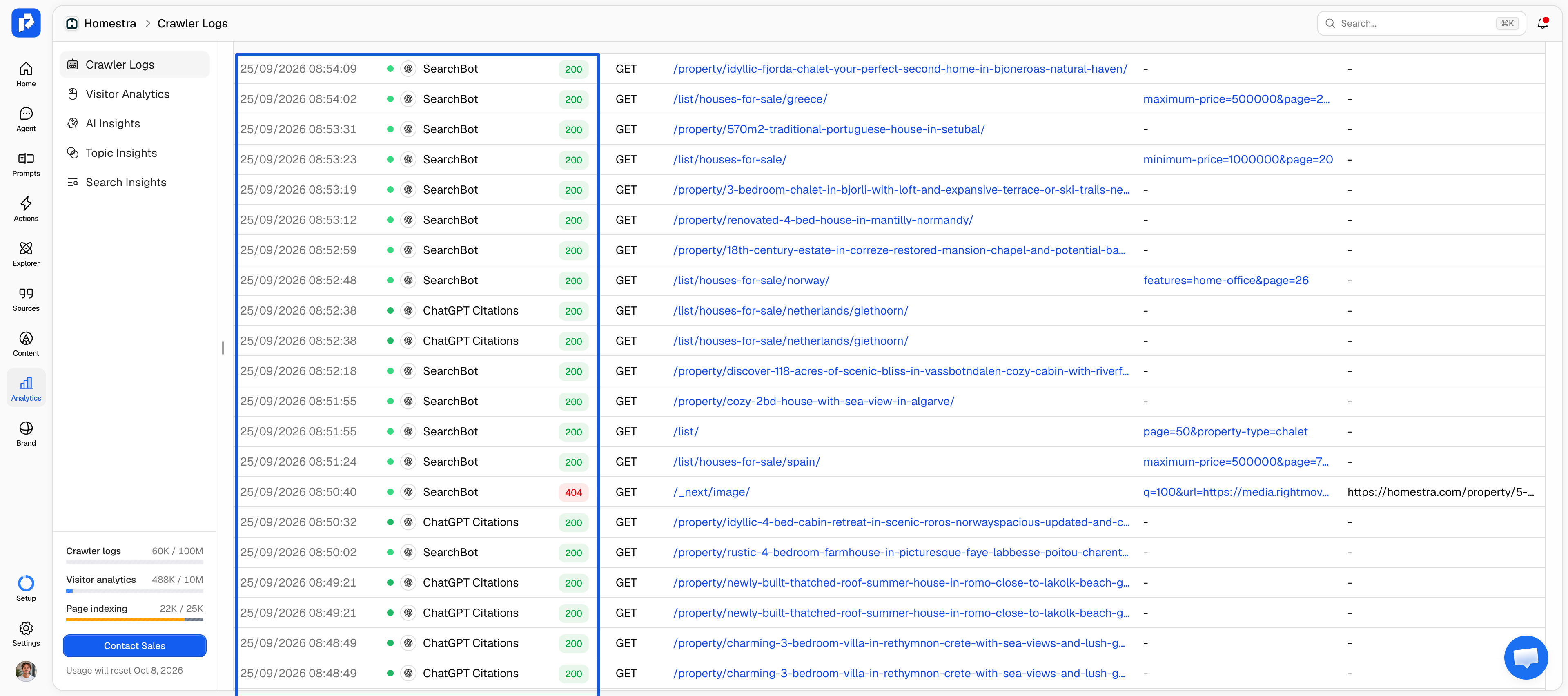
ChatGPT can only cite what OpenAI has been able to fetch. OpenAI's ChatGPT search documentation makes one requirement explicit: a site has to allow OAI-SearchBot, and its host or CDN has to accept traffic from OpenAI's published IP addresses.
OpenAI uses three different agents, and they need different treatment:
| Agent | Job | What to do |
|---|---|---|
| OAI-SearchBot | Builds the search index ChatGPT draws on | Allow it |
| ChatGPT-User | Fetches a page live during a conversation | Don't block it |
| GPTBot | Collects data to train future models | Your choice; blocking it doesn't remove you from ChatGPT search |
Robots.txt is only half of the check. Firewalls, bot-protection rules, and CDN settings block crawlers without anyone noticing, and pages that build their content with JavaScript can look empty to a crawler. The quickest test is your logs: OpenAI made 79.8% of verified AI crawler requests in the week of August 31 to September 6, 2026. If OAI-SearchBot and ChatGPT-User barely appear, or mostly receive errors, fix that before touching the content.
"You can have a beautiful digital PR campaign bringing in lots of traffic, but if you're blocking AI crawlers on that page, all the money is wasted." Hans van Gent, Head of SEO at Seeders
Gate 2: Do ChatGPT's searches find the page?
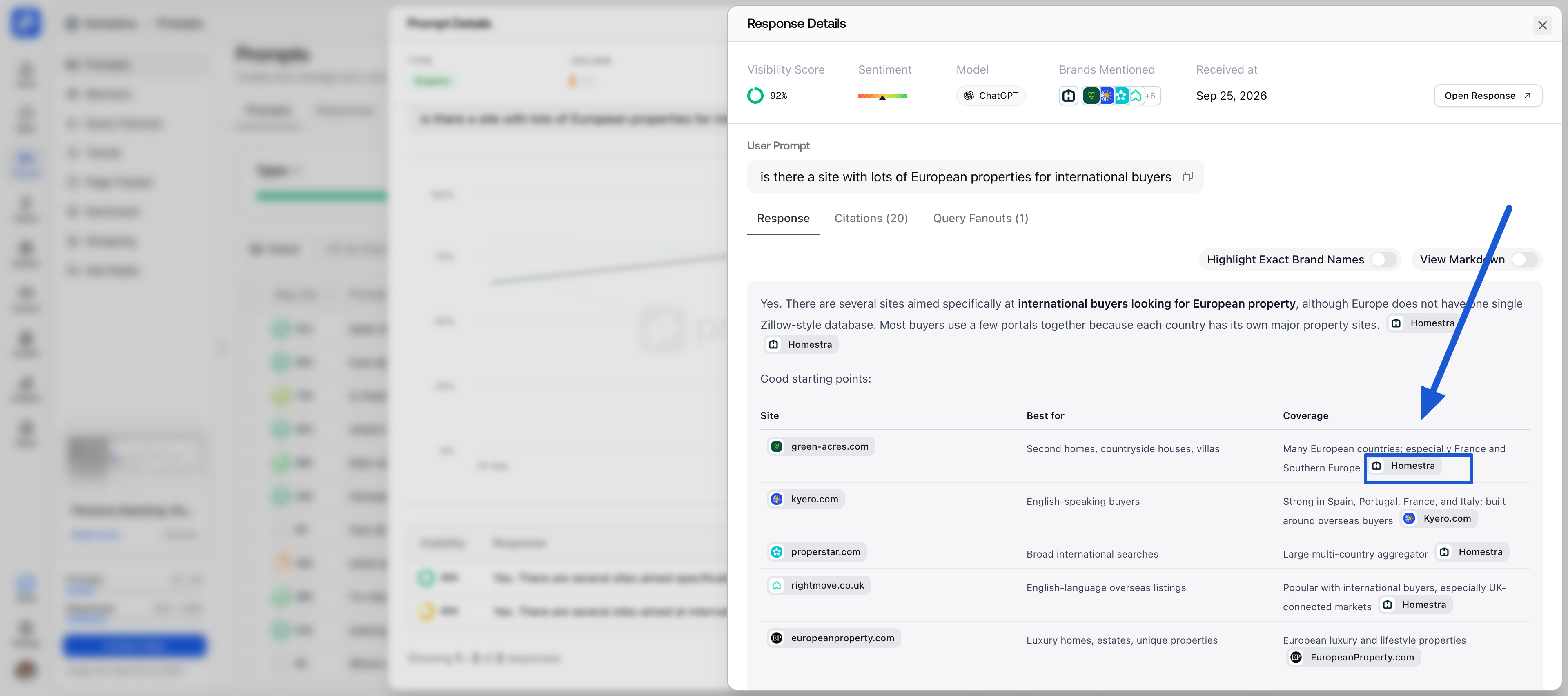
Passing gate 1 only makes a page eligible. To be considered for an answer, it has to come back for one of the searches ChatGPT runs after it reads the question. Promptwatch records those searches, called fan-out queries, for every tracked prompt, and three patterns stand out in 2026:
- They're short. ChatGPT's fan-out queries averaged about 117 characters in early December 2025 and about 53 from April 2026: closer to a keyword search than to a question.
- There are few of them. ChatGPT ran 2.15 searches per answer in December 2025 and 1.0 by April 2026, before rising to about 1.83 in August.
- Many target a single website. On August 8, 2026, the share of searches using the site: operator jumped from 0.37% to 16.8%. ChatGPT increasingly goes looking on a domain it already has in mind.
Here's what that looks like for a real prompt. When Promptwatch tracked "how do I get my website to show up as a source when ChatGPT answers questions in my niche," ChatGPT's searches repeatedly went to OpenAI's publisher and crawler documentation, Google Search Central's guidance on AI features, and Bing's webmaster guidelines. The question sounds like it wants tips; the searches go looking for official rules.
How to pass gate 2:
- Work from the prompts your buyers ask, then from the searches ChatGPT runs for them. Non-branded prompts matter most, because that's where new customers find you.
- Use the vocabulary of those short searches in titles, headings, and first sentences: category, use case, audience, year, and words like "best", "pricing", "vs", "review", and "alternatives".
- Give every product, use case, pricing question, and competitor comparison its own page, so a site: search on your domain has something specific to land on.
The mechanics are covered in depth in how ChatGPT searches the web.
Gate 3: Does ChatGPT choose your passage?
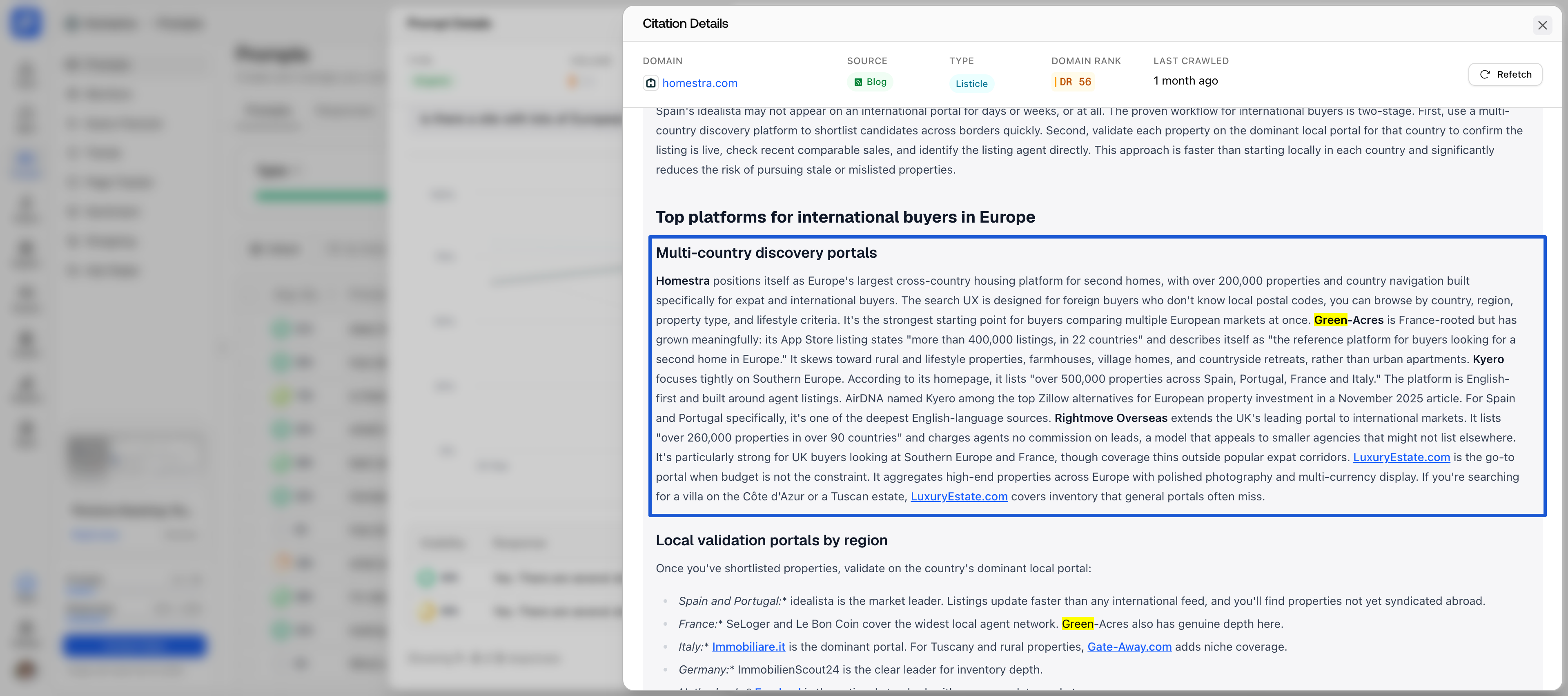
A search can return dozens of pages, but an average ChatGPT answer now cites 4.7 to 4.9 sources, down from 6.4 before GPT-5.3 rolled out on March 4, 2026. ChatGPT reads the candidates and picks the passages that answer the question most directly and most credibly. Three things decide that.
The format of the page. In July 2026, product pages took 32.8% of ChatGPT citations, ahead of listicles (9.7%), news articles (5.2%), and how-to guides (4.1%). When a question is about choosing something, ChatGPT favors the page that describes the thing itself.
Whether a passage works on its own. ChatGPT lifts a few sentences, not your whole argument. The passage it takes has to name its subject, answer the question, and include the key fact, without depending on the paragraph above it. Write each section so its opening sentences could be quoted alone.
"I thought new content was so much more important than old content. Then one blog from 2012 showed up in almost every prompt we had. It wasn't even long, but it was formatted really well with really clear headlines. Now every blog we write uses it as its bible." Emma Gammons, Director of Global External Comms at Shutterstock
Whether it gives ChatGPT something no other page has. In the research that coined generative engine optimization (KDD 2024), adding quotations raised a source's visibility in AI answers by 41%, adding statistics by 25.9%, and citing credible sources by 24.6%. Your own numbers, named experts, and dated facts are what separate your passage from the ten others saying the same thing. More on that research is in what generative engine optimization is.
Gate 4: Do other sources back you up?
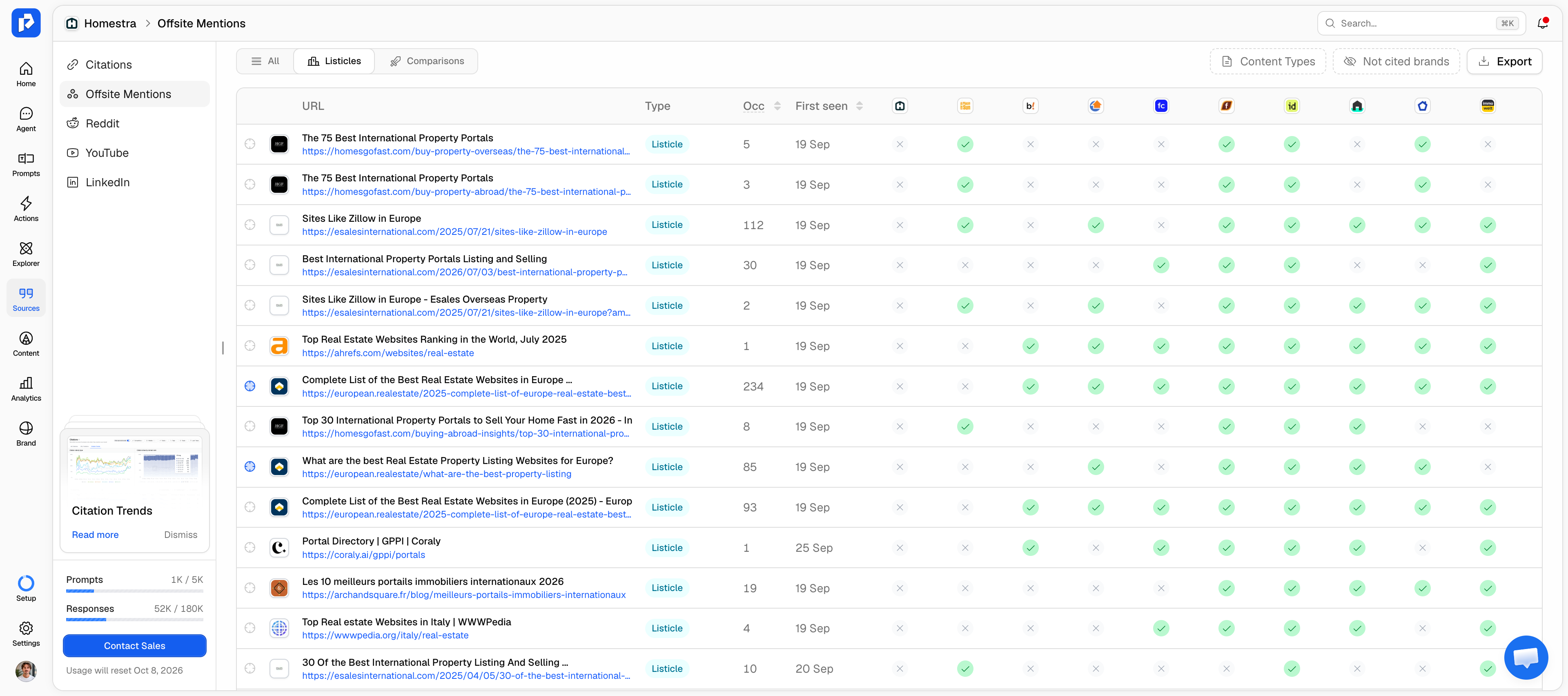
ChatGPT doesn't only read your site. It reads what the rest of the web says about you, and its citations are spread across many domains: in June 2026 no domain passed 4% of ChatGPT Search citations, and the most-cited, Reddit, had 3.71%.
In some categories the independent sources clearly outweigh the brands. Promptwatch's automotive report for August 2026 found:
- Marketplaces and listing sites: 14.65% of ChatGPT citations
- Review and research sites: 12.62%
- Manufacturer sites: 7.92%
How to pass gate 4:
- List the third-party domains ChatGPT cites for your prompts, and make sure you're present and described accurately on them.
- Keep facts such as pricing, features, and positioning identical everywhere, because conflicting versions give ChatGPT a reason to leave you out.
- Spread your presence across several sources. When Reddit's share of ChatGPT Search citations fell 86% in one week of August 2026, any visibility that depended on Reddit threads dropped with it.

Staying cited after you pass all four gates
A citation is not permanent. Across Promptwatch's data, citation relevance typically holds for 8 to 14 weeks before a refresh helps. The page doesn't break and its Google ranking may not move; it simply stops being the passage ChatGPT chooses.
Schedule reviews for the pages that matter most. At each review, update the figures and examples, show a new "last updated" date, and re-run the prompts the page is supposed to win.
Which gate is stopping you?
Each gate leaves a different trace in your data, so you can diagnose the problem before rewriting anything:
| What you see | Gate that's failing | What to fix |
|---|---|---|
| OAI-SearchBot and ChatGPT-User rarely appear in your logs, or get errors | 1, reach | Robots.txt, firewall, CDN, or JavaScript rendering |
| OpenAI's bots visit, but the page is never cited | 2 or 3, retrieval or selection | Match ChatGPT's searches; rewrite for quotable passages and original evidence |
| Competitors' pages are cited for your prompts, and yours aren't | 3, selection | Dedicated product and comparison pages, stronger evidence |
| Third-party sites are cited for your prompts, but they don't mention you | 4, corroboration | Earn accurate coverage on those sites |
| You were cited, then disappeared with no change on your side | Platform change or content age | Compare with platform-wide data, then refresh |
Promptwatch's own blog shows why this matters. One of its research articles received 230 requests from AI crawlers over 90 days but no citations on the prompts Promptwatch tracks: it cleared gate 1 and failed the next ones. The fix it needed was a rewrite, not a technical change.

Promptwatch covers every gate in one place.
- Agent Analytics shows which OpenAI crawlers reach each page (gate 1)
- Prompt Tracking records ChatGPT's answers, citations, and fan-out searches for every prompt (gates 2 to 4)
- Content Agent checks those searches against your site to show which ones none of your pages answer.
What doesn't help you pass the gates
- llms.txt files. Promptwatch found no measurable impact from llms.txt, and Google says its search doesn't use the file. AI search cites the HTML page: markdown files were 0.05% of 1.67 million citations in a February 2026 sample.
- Schema as a shortcut. Structured data still helps with Google rich results, but Google's AI optimization guide says its AI features need no special markup, and there's no evidence that schema alone gets ChatGPT to cite a page.
- Keyword stuffing. In the GEO research, repeating the query's keywords made sources less visible than leaving the page unchanged.
- Treating Google rank as the goal. Ranking can help a page get discovered, but ChatGPT decides at passage level, so a top position is no guarantee of a citation.
Measuring ChatGPT SEO
Asking ChatGPT your key questions yourself tells you what it said once. Answers change between runs and after model updates, so measure the same prompts on a schedule and watch the trend:
| Metric | What it answers |
|---|---|
| Citation rate | How often ChatGPT cites one of your pages for the prompts you track |
| Brand mentions | How often ChatGPT names you, with or without a link |
| Visibility score | How prominently and favorably you appear, over time |
| Share of voice | How you compare with competitors on the same prompts |
| Crawler activity | Whether OpenAI's bots reach your key pages successfully |
| AI-referred visits | How many people click through from ChatGPT to your site |
Keep clicks in perspective: in Promptwatch's data, click-through from AI answers stays below 0.1%. The value is mostly in being named and recommended inside the answer.
Frequently asked questions
What is ChatGPT SEO?
ChatGPT SEO is optimizing your website and brand presence so ChatGPT cites your pages and recommends your brand when it answers questions using web search. It's the part of generative engine optimization (GEO) that focuses on ChatGPT.
How do I get my website cited by ChatGPT?
Pass four gates: let OAI-SearchBot and ChatGPT-User reach your pages, make your pages match the short searches ChatGPT runs, write passages ChatGPT can quote with evidence it can't find elsewhere, and get accurate coverage on the third-party sites ChatGPT already cites. Then refresh key pages every 8 to 14 weeks.
Does a high Google ranking get you cited by ChatGPT?
Not reliably. Ranking can help a page get found, but ChatGPT chooses passages for each prompt and cites only about five sources per answer, so rankings and citations often diverge. Track them separately.
Does ChatGPT use robots.txt?
Yes, for its search crawler. OpenAI says sites must allow OAI-SearchBot to be included in ChatGPT search. GPTBot, its training crawler, is controlled separately, so you can block training without leaving ChatGPT search.
Does llms.txt help ChatGPT SEO?
There's no evidence it does. Promptwatch found no measurable impact from llms.txt, Google says its search doesn't use it, and markdown files made up just 0.05% of AI citations in Promptwatch's data.
Does schema markup help with ChatGPT citations?
Not on its own. Schema is still useful for Google rich results, but Google says its AI features need no special markup, and there's no evidence schema alone makes ChatGPT cite a page. Crawler access, content, and third-party coverage matter more.
How many sources does ChatGPT cite in an answer?
About 4.7 to 4.9 per web-search answer since GPT-5.3 rolled out on March 4, 2026, down from 6.4 the week before. Google AI Overviews and Perplexity cite about 10.
How long does ChatGPT SEO take?
Changes can show up within weeks, because ChatGPT re-crawls often, but results also shift more than Google rankings do. Judge progress over several weeks, and plan to refresh important pages every 8 to 14 weeks.
How is ChatGPT SEO different from GEO?
GEO covers all generative engines, including Google AI Overviews, AI Mode, Gemini, Claude, and Perplexity. ChatGPT SEO is the ChatGPT-specific part: its crawlers, the way it searches, and what it chooses to cite.


