


TL;DR
- LLM visibility tools track whether ChatGPT, Claude, Gemini, and Perplexity mention, cite, or recommend your brand, a different measurement problem than traditional Google rank tracking.
- Only Promptwatch and AthenaHQ track their full engine roster on every tier with no per-model add-on fee; most others charge $9 to $199/month extra per additional AI platform.
- Promptwatch has observed 4B+ total citations, clicks, and prompts to date, and scrapes the real ChatGPT, Gemini, and Perplexity interfaces rather than relying only on API responses.
Looking for the best LLM visibility tool to track your brand's AI presence?
With AI assistants like ChatGPT, Gemini, and Perplexity now handling billions of queries each month, your brand's visibility no longer depends on Google alone. The challenge is that most companies don't know when they're mentioned, cited, or left out of these AI-generated answers, leaving gaps competitors can exploit.
This guide compares the 8 LLM visibility tools most worth evaluating in 2026: what each one tracks, what it costs, and where it falls short.
Why listen to us
Promptwatch is used by 1,780+ brands and agencies to track real-time mentions across ChatGPT, Perplexity, Gemini, Claude, and 7 other AI platforms. Rather than relying only on API responses, Promptwatch scrapes the real interfaces of these models, so what you see in the dashboard is what an actual user would see, including localization and citation ordering. We compare AI visibility tools for multiple countries and languages in a separate guide.
What are LLM visibility tools?
LLM visibility tools track your brand's presence in AI-generated content across platforms like ChatGPT, Gemini, and Claude. They capture mentions, prompt citations, traffic sources, and sentiment to show how AI systems perceive and present your brand.
The better ones also surface content gaps, detect competitor coverage, and connect that visibility back to actual site traffic, not just a dashboard of mentions.
Why are LLM visibility tools important?
- Real-time brand monitoring: know when and how your brand is mentioned across AI models.
- AI traffic attribution: identify which AI models are actually driving traffic and conversions, not just mentions.
- Content gap detection: find where your brand's presence is thin so you can close it.
- Competitive benchmarking: see your visibility against competitors on the same prompts.
- Actionable recommendations: get told what to fix, not just shown a score.
Top 6 LLM visibility tools for enhanced AI presence
- Promptwatch
- Keyword.com
- Search Atlas
- Nightwatch
- Writesonic
- Otterly.AI
1. Promptwatch
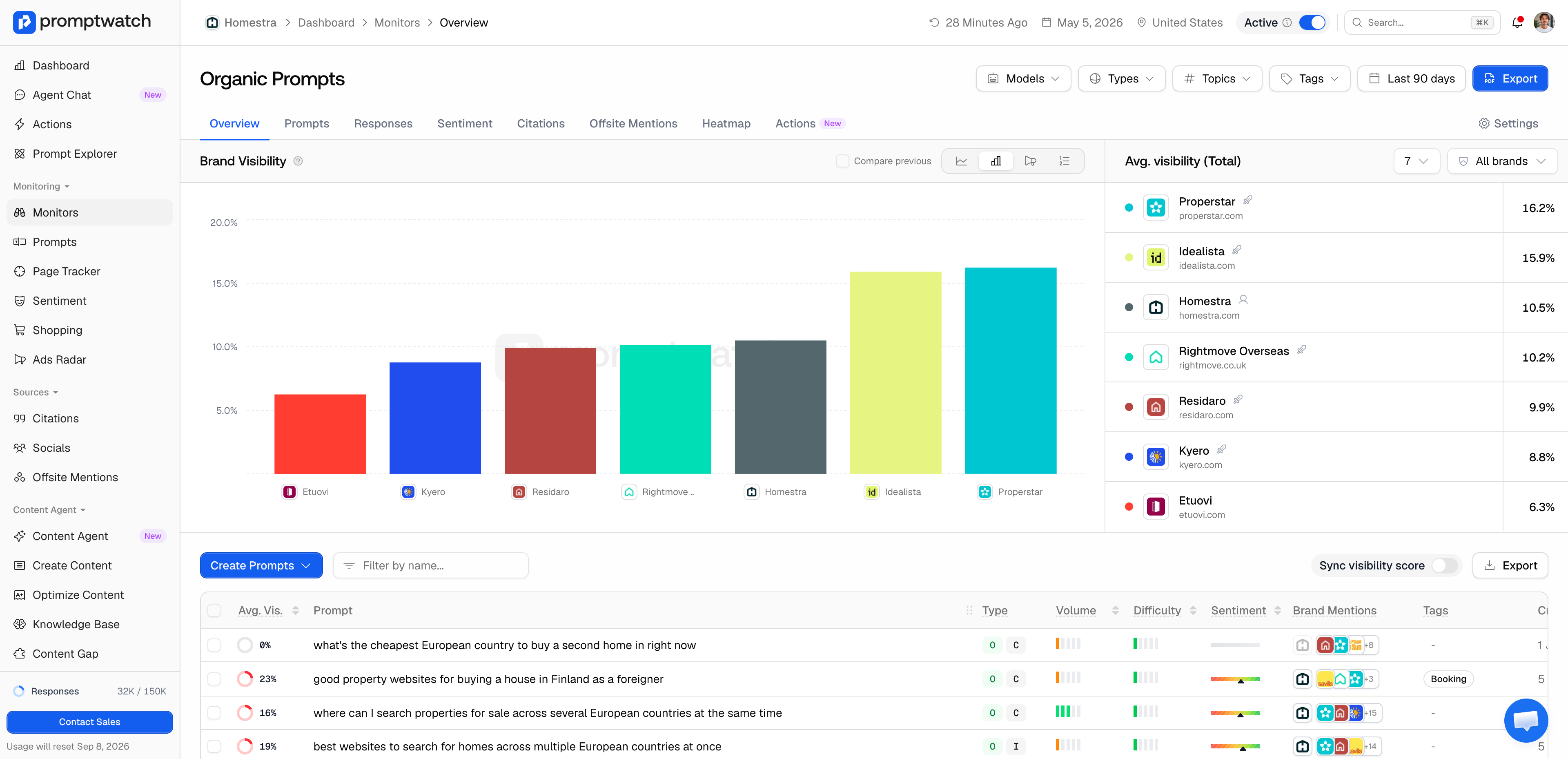
Promptwatch is an AI Search Visibility and GEO platform built to answer a different question than a pure prompt tracker: not just "was my brand mentioned," but how that visibility connects to AI-referred traffic and revenue.
- Key features: AI Visibility (mentions, sentiment, Share of Model), prompt tracking with volumes and query fan-outs, citation and off-site mention tracking including Reddit and YouTube, AI crawler logs, visitor analytics tied to conversions, content gap analysis, and a content agent that drafts and can publish to CMS.
- Supported platforms: all 11 are available to select from on every plan, including Essential; 4 are actively tracked per project at a time.
- Pricing: Essential $95/month, Professional $245/month, Business $579/month. Custom pricing for enterprise-scale accounts. A 7-day free trial is available on Essential.
- Pros: scrapes real UI responses instead of relying only on APIs; joins crawler logs to citations so you can see why you're visible or not; unique Reddit and YouTube citation tracking; no per-model add-on fees.
- Cons: not a replacement for keyword research and backlink analysis; works best alongside a traditional SEO tool.
2. AthenaHQ
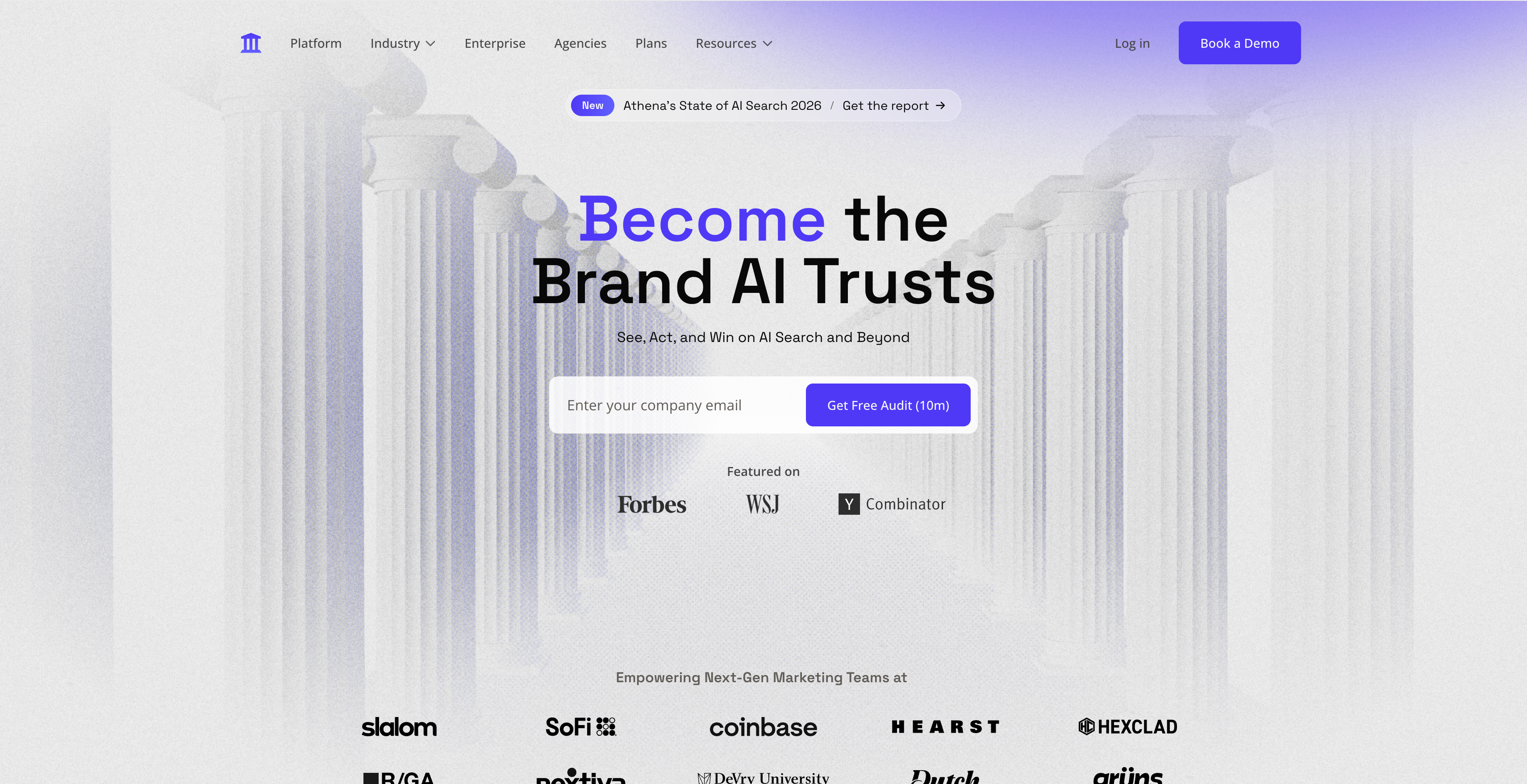
AthenaHQ stands out for tracking all 8 major engines, including Claude and Grok, on every tier with zero add-on fees, which is rare in this category.
- Key features: credit-based metering (1 credit = 1 AI response), revenue attribution tied to GA4 and Shopify.
- Supported platforms: all 8 engines, every tier, no add-ons.
- Pricing: $295/month entry (Self-Serve), credit-based.
- Pros: full engine coverage with no per-model upsell; genuine GA4/Shopify revenue attribution.
- Cons: Self-Serve is single-country only; no MCP server; API, BI integrations, and the ACE Citation Engine are Enterprise-only. See Promptwatch vs AthenaHQ.
3. Otterly.ai
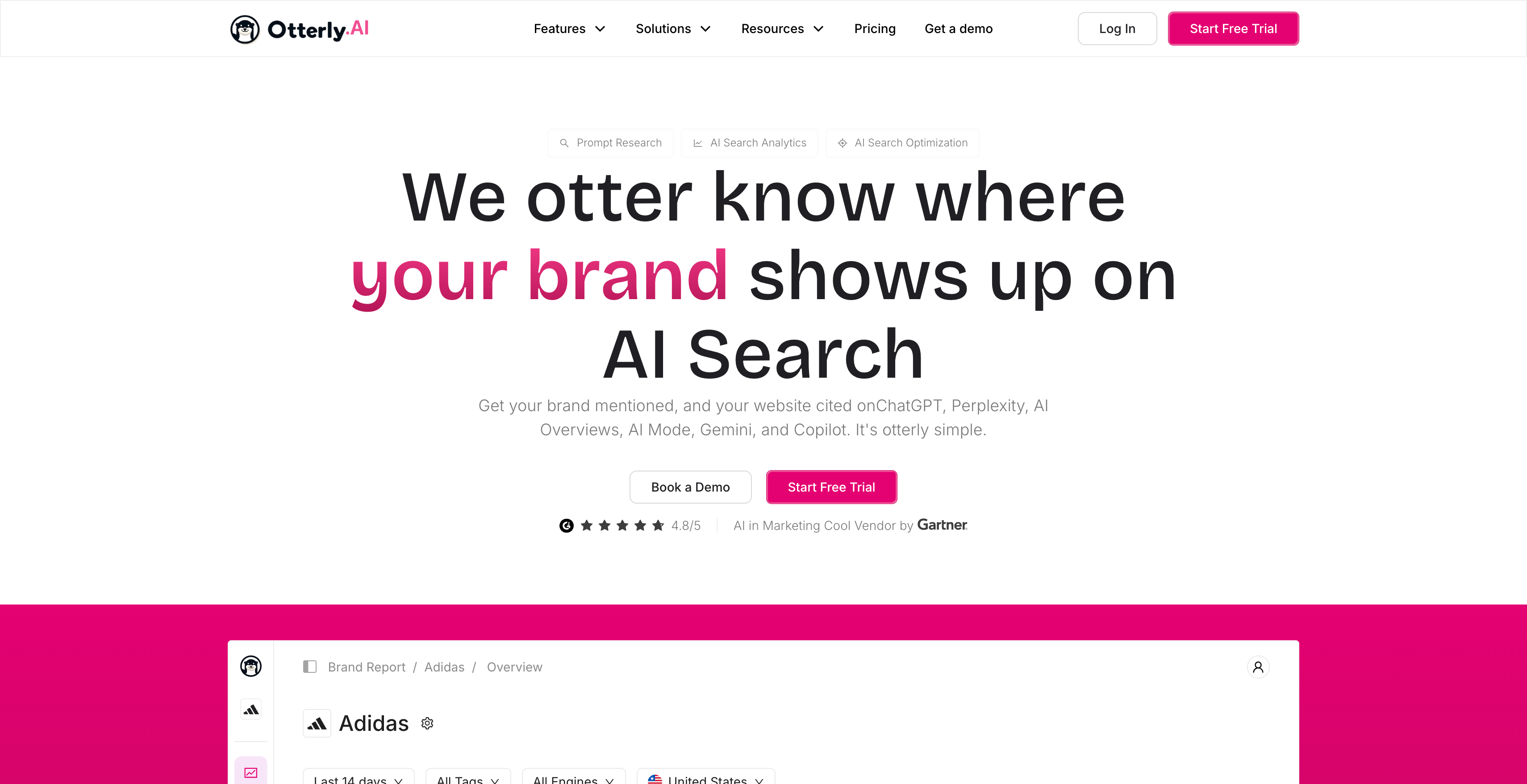
Otterly.ai has the cheapest credible entry point in the category at roughly $29/month, and unlimited seats on every plan, including that entry tier.
- Key features: automated AI search monitoring, sentiment analysis, weekly reports.
- Supported platforms: 4 core engines on Lite (ChatGPT, Google AI Overviews, Perplexity, Copilot). Gemini, AI Mode, and Claude are paid add-ons ($9–$149/month).
- Pricing: Lite ~$29/month, Standard $189/month (MCP, API, and Looker Studio arrive here), Premium ~$489/month.
- Pros: cheapest entry point with real functionality; unlimited seats even on Lite; Gartner Cool Vendor recognition (AI in Marketing, 2025).
- Cons: Lite caps at 15 prompts with no rollover; monitoring only, no content generation, no CMS publishing, no crawler logs. See Promptwatch vs Otterly.
4. Qwairy
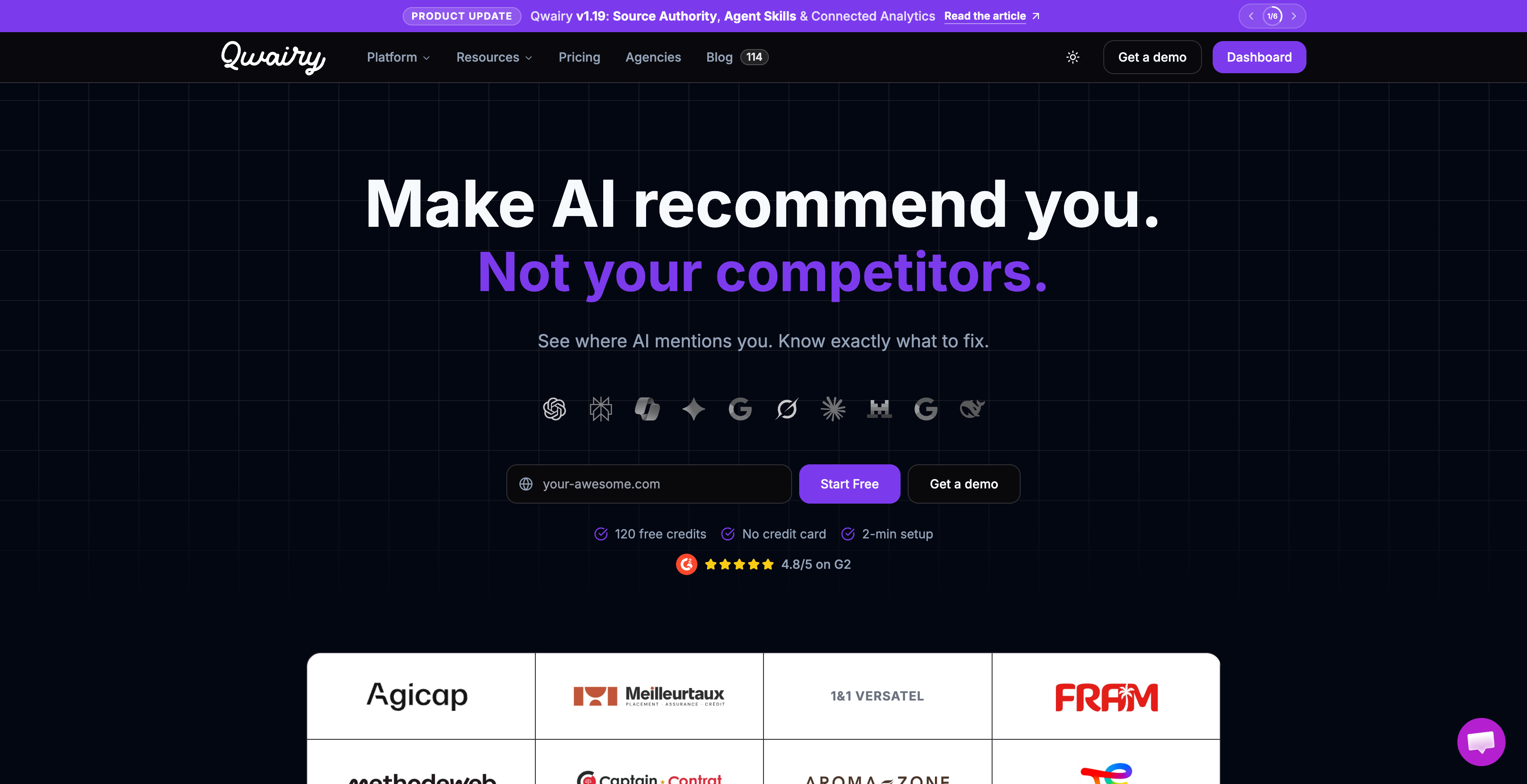
Qwairy covers the widest engine list of any tool on this list, 10+ platforms including Claude, Grok, Mistral, and DeepSeek, with no per-provider surcharge.
- Key features: a five-module workflow (Visibility, Insights, Strategy, Technical, Analytics) and Content Studio briefs in 45+ languages.
- Supported platforms: 10+, including ChatGPT, Claude, Perplexity, Gemini, Copilot, Grok, AI Overviews, AI Mode, Mistral, and DeepSeek.
- Pricing: roughly €59–79/month, credit-based.
- Pros: broadest engine coverage without add-on pricing; strong multilingual content briefing.
- Cons: credit-based pricing is hard to forecast; no prompt volume or difficulty data; Content Studio produces briefs, not published pages. See Promptwatch vs Qwairy.
5. Scrunch AI
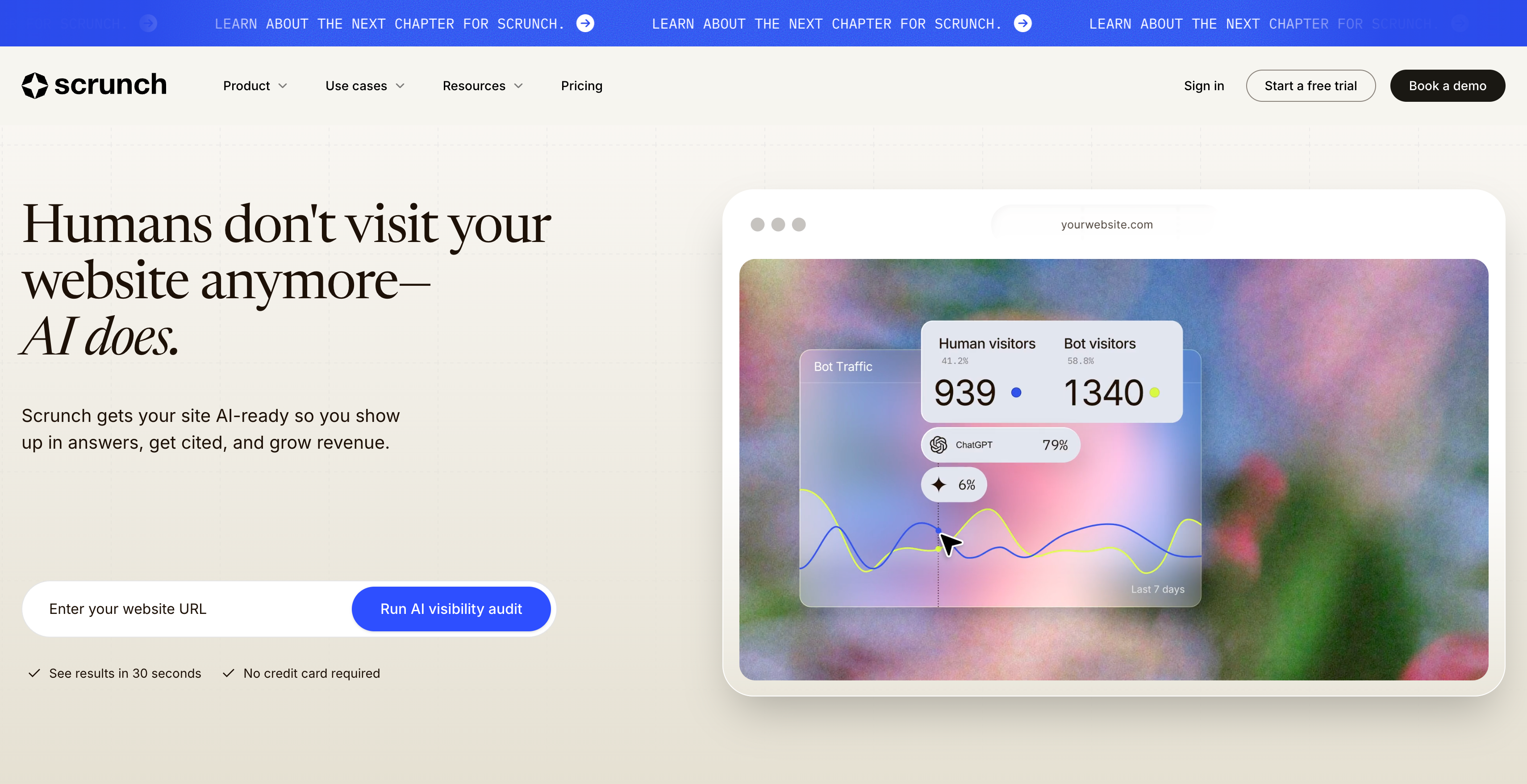
Scrunch AI's standout feature is its Agent Experience Platform (AXP), which serves a machine-readable version of your site directly to AI crawlers, paired with strong named-crawler and agent-traffic analytics.
- Key features: AXP, hallucination detection, crawler and agent-traffic analytics.
- Supported platforms: 4 engines and 125 prompts on the Core plan.
- Pricing: ~$250/month (Core). Scrunch was acquired by Sitecore in June 2026 (~$225M) and continues operating standalone; plan packaging has changed several times in 2026, so confirm current tiers before quoting a prospect.
- Pros: genuinely differentiated crawler-facing product (AXP); strong agent-traffic visibility.
- Cons: AXP, hallucination detection, API access, and full engine coverage are all Enterprise-only. See Promptwatch vs Scrunch.
6. Semrush AI Visibility Toolkit
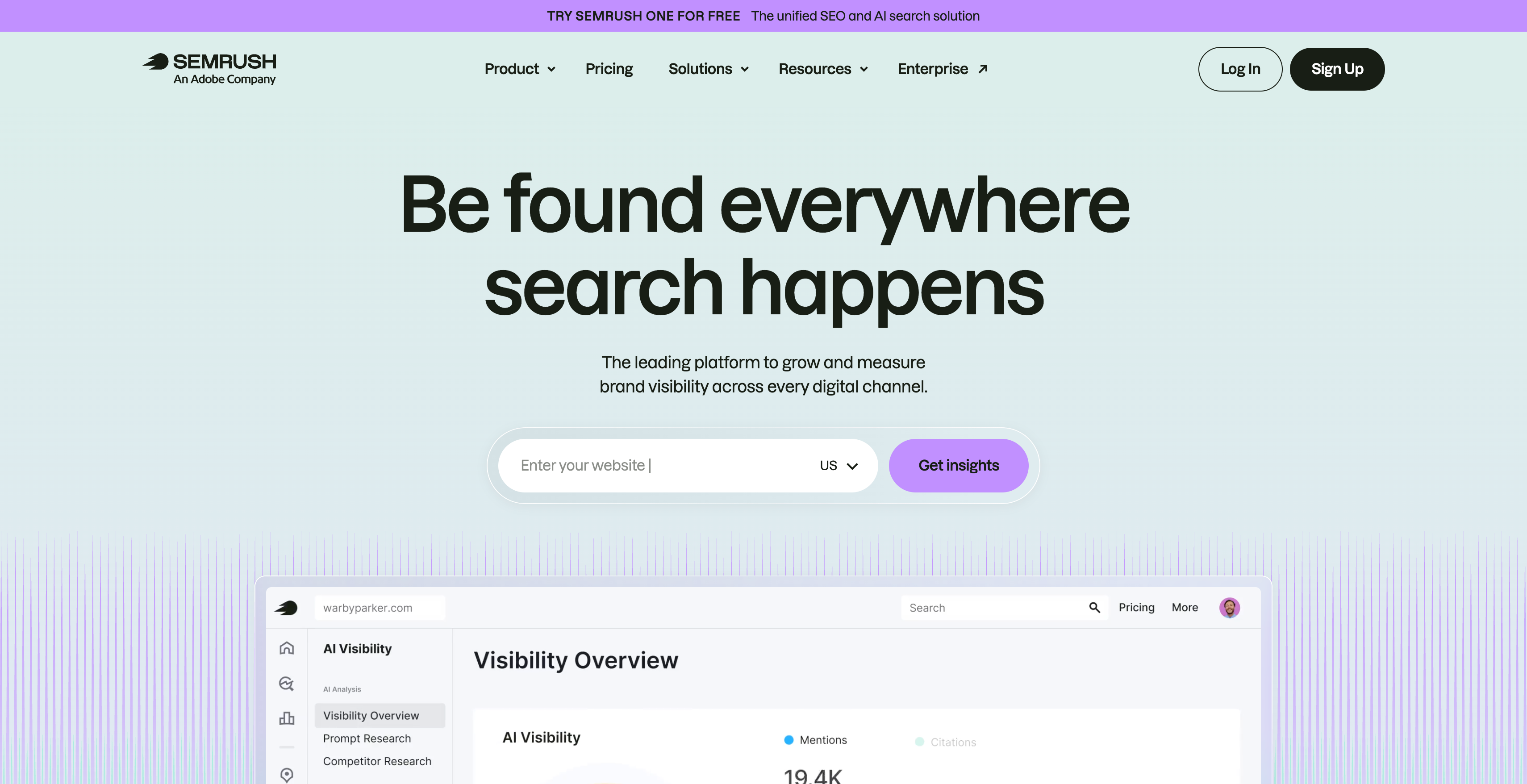
Semrush's AI Visibility Toolkit is the natural pick for teams already inside the Semrush ecosystem who want AI-answer tracking without adding a new vendor.
- Key features: visibility overview, prompt research, competitor research, brand performance, and an AI-readiness site audit, six reports in total. A free AI visibility checker is available with no card required.
- Supported platforms: Google AI Overviews on core plans; broader coverage through the toolkit.
- Pricing: $99/month per domain, one domain, 25 prompts, billed annually as a standalone toolkit, or bundled into Semrush One from $199/month.
- Pros: low friction if you already use Semrush; a genuinely free visibility checker to start with.
- Cons: per-domain, per-seat, and per-prompt add-ons stack fast (+$99/month per extra domain, +$99/month per extra seat, +$60/month per 50 extra prompts); thin methodology disclosure; no crawler logs or content execution.
7. Peec AI
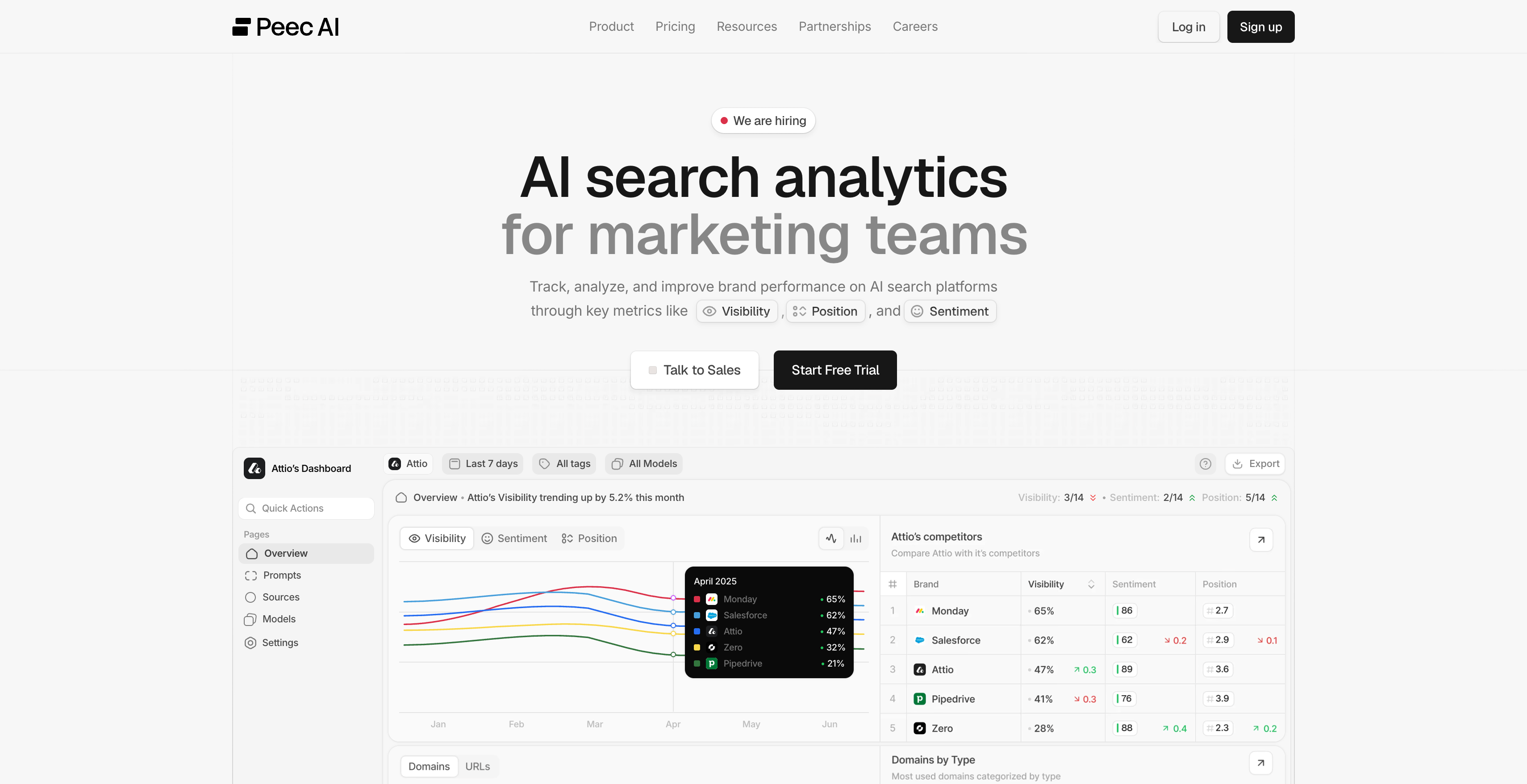
Peec AI is built for teams that want a clean, fast-to-set-up visibility dashboard without a lot of platform overhead.
- Key features: prompt monitoring across a self-serve engine selection, unlimited seats on every plan, clean reporting.
- Supported platforms: 3 of 6 engines on every self-serve tier (chosen from ChatGPT, Perplexity, Gemini, and others). Claude, DeepSeek, Qwen, and Mistral are Enterprise-only; Grok isn't offered at all. Additional engines are a paid add-on ($35–$165/month depending on tier).
- Pricing: Starter $95/month, Pro $245/month, Advanced $495/month. No free tier; 7-day trial only. No API below Enterprise; a Looker Studio connector starts at Advanced ($495/month).
- Pros: clean dashboard, fast setup, unlimited seats on every plan, strong G2 rating (small review base).
- Cons: monitors but doesn't execute, no content generation, no CMS publishing, no crawler logs.
8. Profound
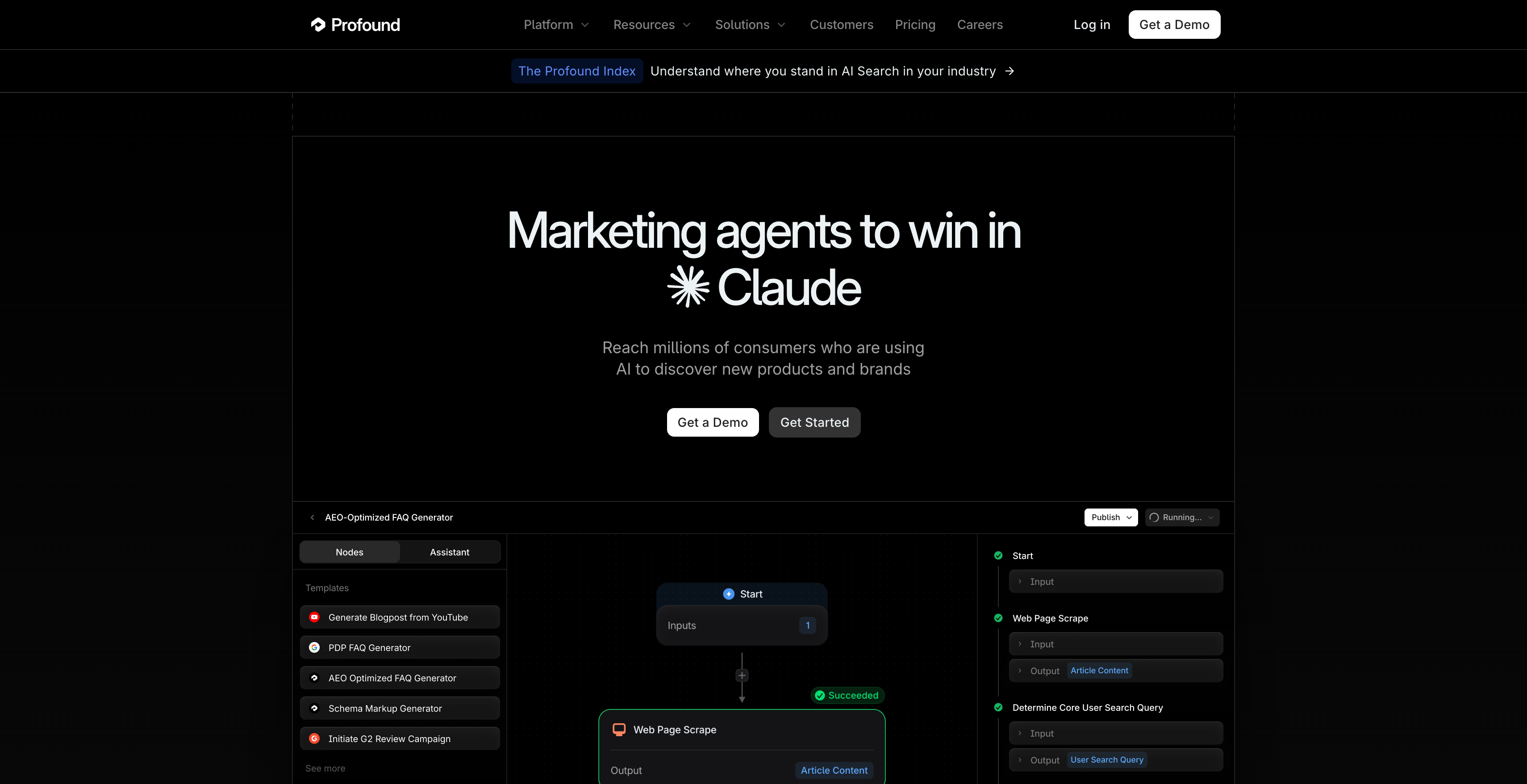
Profound is the most frequently cited name in this category, backed by roughly $155M raised at a ~$1B valuation, with customers including Ramp, MongoDB, Figma, and Walmart.
- Key features: prompt tracking, citation monitoring, and a genuinely unique Prompt Volumes panel built from opted-in consumer data with demographic cuts, something no other tool on this list has.
- Supported platforms: Starter is ChatGPT-only ($99/month). Growth ($399/month) covers 3 engines. Full 10-engine coverage and Prompt Volumes data are gated to Enterprise.
- Pricing: $99/month (Starter, 1 engine) to $399/month (Growth, 3 engines); full coverage is Enterprise-only and custom-priced.
- Pros: unique consumer panel data; strong brand recognition; well-funded and actively developed.
- Cons: both public plans require annual billing; a steeper learning curve than most tools on this list; no white-label reporting. See Promptwatch vs Profound for a full breakdown.
Streamline your LLM visibility with Promptwatch
As AI search continues to shape how users discover brands, visibility in LLM platforms like ChatGPT, Gemini, and Perplexity is no longer optional. The right tool tracks mentions, ties them to actual traffic, and tells you what to fix, not just what happened.
Start a free trial or book a demo to see how Promptwatch tracks all 11 platforms from day one.
FAQ
What's the difference between an LLM visibility tool and a traditional rank tracker?
A rank tracker tells you where a URL ranks in Google's results. An LLM visibility tool tells you whether ChatGPT, Claude, or Perplexity actually name your brand inside a generated answer, a different surface with different ranking factors. Neither replaces the other.
Do I need to track every AI platform, or just ChatGPT?
ChatGPT has the largest user base, but Perplexity, Gemini, and Google AI Overviews behave differently enough that a single-engine snapshot can be misleading. If budget is tight, start with the 2–3 platforms your customers are most likely to use, and expand from there.
Can I just use ChatGPT itself to check my own visibility?
Manually asking ChatGPT a few prompts gives you a single, un-tracked snapshot. It won't tell you about sentiment trends, competitor share of voice, or whether visibility is improving or declining over time, which is the actual point of a dedicated tool.


