Definition
Share of Model is an emerging GEO metric that quantifies how often a brand, product, or organization is mentioned, recommended, or cited in AI-generated responses relative to its competitors. It represents the AI-era evolution of Share of Voice (SOV)—a traditional marketing metric that measured brand visibility across advertising and media channels. As AI-powered search and conversational interfaces become primary channels for information discovery, Share of Model captures a brand's presence in this new landscape.
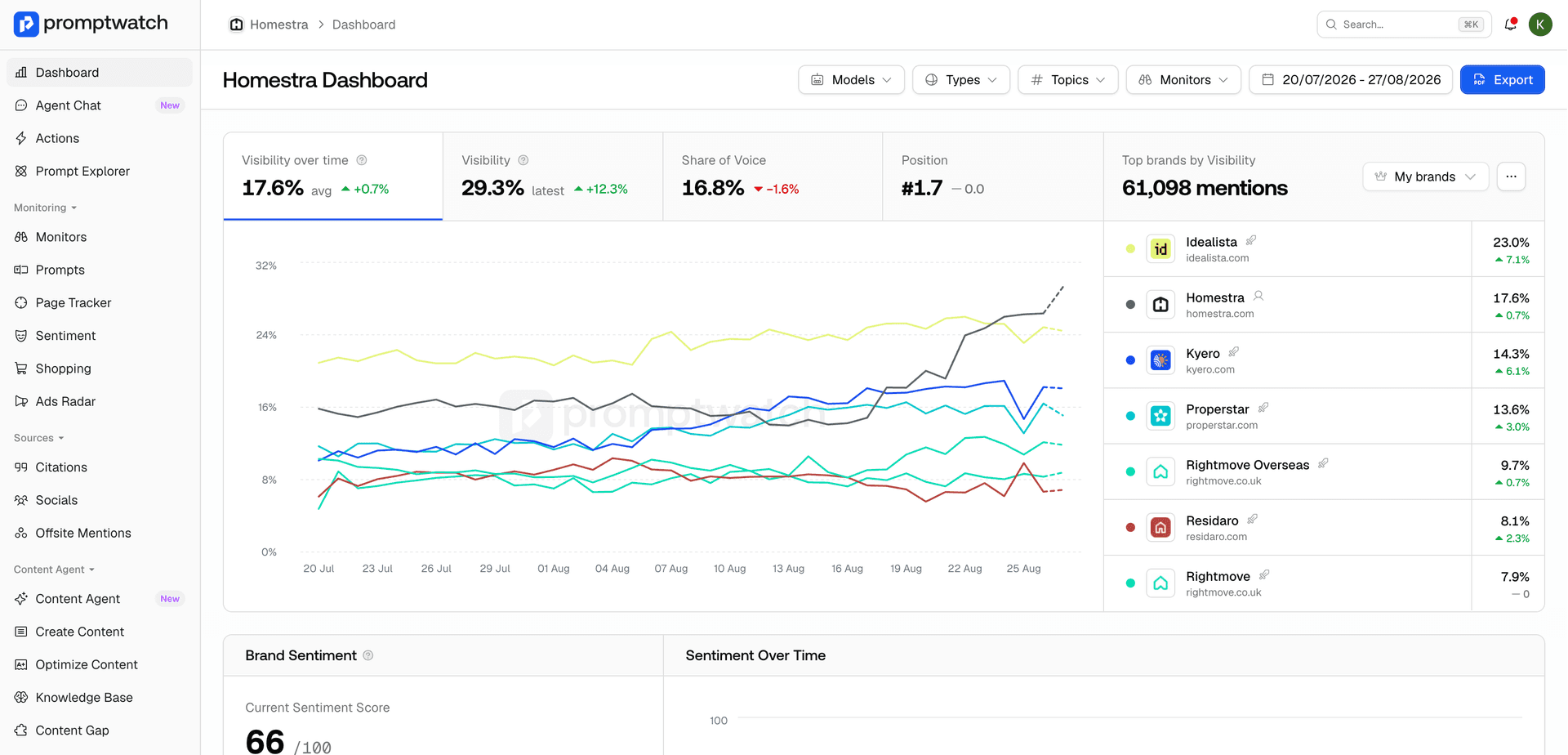
The metric is calculated by monitoring AI responses to relevant queries across major platforms—ChatGPT, Claude, Gemini, Perplexity, and AI Overviews—and measuring how frequently a brand appears compared to competitors in the same category. For example, if a project management tool is mentioned in 35% of AI responses to queries about project management software, its Share of Model for that topic is 35%.
Share of Model differs from traditional Share of Voice in several important ways. Traditional SOV measures paid and earned media exposure across advertising, PR, and social channels—metrics a brand can directly influence through spending and outreach. Share of Model reflects how AI models perceive and represent a brand based on training data, web presence, authority signals, and real-time retrieval. It cannot be directly purchased; it must be earned through content quality, brand authority, and strategic GEO.
The metric is typically tracked across multiple dimensions:
Per-Platform: A brand's Share of Model may vary significantly across AI platforms. A brand might dominate in ChatGPT responses but be underrepresented in Gemini or Perplexity, reflecting differences in training data, retrieval sources, and model architecture.
Per-Topic: Share of Model is most meaningful when measured against specific topics or query categories. A cybersecurity company might have high Share of Model for "endpoint security" queries but low Share of Model for "cloud security" queries.
Per-Response Type: Measuring whether a brand appears as a primary recommendation, an alternative mention, or a cited source provides deeper insight than simple mention counting.
Temporal Trends: Tracking Share of Model over time reveals whether a brand's AI visibility is growing, stable, or declining—and whether specific content or authority-building initiatives are having an impact.
For marketing and GEO teams, Share of Model provides an actionable framework for measuring and improving AI visibility. A low Share of Model for a key topic signals the need for more authoritative content, stronger entity signals, or improved structured data. A declining Share of Model over time might indicate content decay, competitor momentum, or shifts in the AI platforms' source preferences.
The metric also enables competitive benchmarking in the AI channel. Just as brands track their traditional SOV against competitors across media channels, Share of Model allows brands to understand their competitive position in AI-generated recommendations and plan accordingly.
Some practitioners draw an important distinction between Share of Model (how often a brand appears) and related metrics like AI Visibility Score (how prominently a brand appears) and Citation Probability (how likely a brand is to be cited with a source link). Together, these metrics form a comprehensive picture of a brand's AI search presence, but Share of Model remains the most intuitive and accessible entry point for organizations beginning to measure their AI visibility. Our AI share of voice guide explains how the two metrics relate.
Examples of Share of Model
- A CRM software company tracks its Share of Model across ChatGPT, Claude, and Perplexity for 50 key queries and discovers it appears in 42% of responses on ChatGPT but only 18% on Perplexity, prompting a targeted content strategy to improve visibility on underperforming platforms
- A travel booking platform monitors Share of Model for destination-related queries and finds that competitor brands are mentioned 3x more frequently in AI responses about budget travel, leading to the creation of comprehensive budget travel guides designed to increase their representation
- A B2B marketing team presents Share of Model trends in quarterly business reviews alongside traditional metrics like search rankings and media impressions, showing executives that their AI visibility grew from 12% to 28% over six months following a focused GEO initiative
- An agency specializing in GEO uses Share of Model as the primary KPI for client engagements, measuring the percentage of AI responses across relevant queries that mention or recommend their client versus competitors, and tracking improvement month over month
- A GEO team tests share of model by comparing ChatGPT, Perplexity, Google AI Mode, and Microsoft Copilot answers for the same buying prompts, then updates content where the brand is missing or misrepresented.