


Quick summary
This guide covers 8 leading GEO tools like Promptwatch, Rankscale, and Otterly.AI. These platforms help brands track mentions, analyze competitors, and optimize content for visibility in AI-generated answers from ChatGPT, Claude, and Gemini. You'll find key features, pricing, pros, and cons to help you choose the right solution to strengthen your AI search presence.
Struggling to stay visible in AI search results?
AI assistants are becoming a primary discovery surface. Bain & Company research finds 80% of consumers now rely on AI-generated results for at least 40% of their searches, and if a brand doesn't appear in those answers, a competitor usually does instead.
GEO (Generative Engine Optimization) tools exist to close that gap: they track when and where AI assistants mention a brand, surface the content gaps causing missed citations, and in some cases generate or fix the content itself. The category is young enough that pricing pages change monthly and older reviews go stale fast, which is exactly why the numbers below were pulled and re-verified in August 2026 rather than carried over from an earlier pass.
How we evaluated these tools
Promptwatch tracks all 8 of these platforms as competitors inside its own product, which gave us a working view of their pricing and feature changes as they happened through 2026 rather than a one-time snapshot. For this guide, every price, prompt limit, and engine count below was checked directly against each vendor's live pricing page rather than repeated from older articles, and cross-checked against at least one independent, dated third-party source where one existed.
"I tested several tools to measure brand visibility in LLMs, and Promptwatch was the only one that ticked all our boxes. It keeps improving with new features and has become essential for our marketing team." Lucyna Polok, SEO Content Specialist at Octolize
What GEO tools actually measure
Generative Engine Optimization (GEO) tools track how a brand appears inside AI-generated answers rather than how it ranks on a search results page. Instead of a position on a page, the unit of measurement is a mention: does ChatGPT, Claude, Gemini, or Perplexity name the brand when a buyer asks a relevant question, and does it cite a page as the source.
Three capabilities separate a real GEO tool from a rebranded rank tracker.
- Citation tracking shows which of the brand's own pages (and which third-party sources) get cited as evidence.
- Content gap detection flags the specific questions AI models are answering without the brand's content, because that's usually a fixable, not permanent, gap.
- Crawler-log analysis shows whether AI bots can even reach the pages that would answer those questions, which matters because a page can be well-written and still invisible if it's blocked or slow to crawl.
Not every tool in this comparison does all three. Promptwatch does. That's the main axis worth evaluating on, more than the AI platforms tab or the logo count on a pricing page.
Why this now matters for brand visibility
- Real-time visibility tracking shows AI-platform mentions as they happen, rather than after they've already shaped how a buyer perceives the brand.
- Competitive benchmarking shows share of voice against named competitors, not just an isolated visibility number.
- Content optimization turns detected gaps into a specific, prioritized to-do list instead of a vague "improve your content" recommendation.
- Traffic attribution separates AI-referred visits that convert from AI mentions that don't, which is the difference between a vanity metric and a revenue signal.
Promptwatch
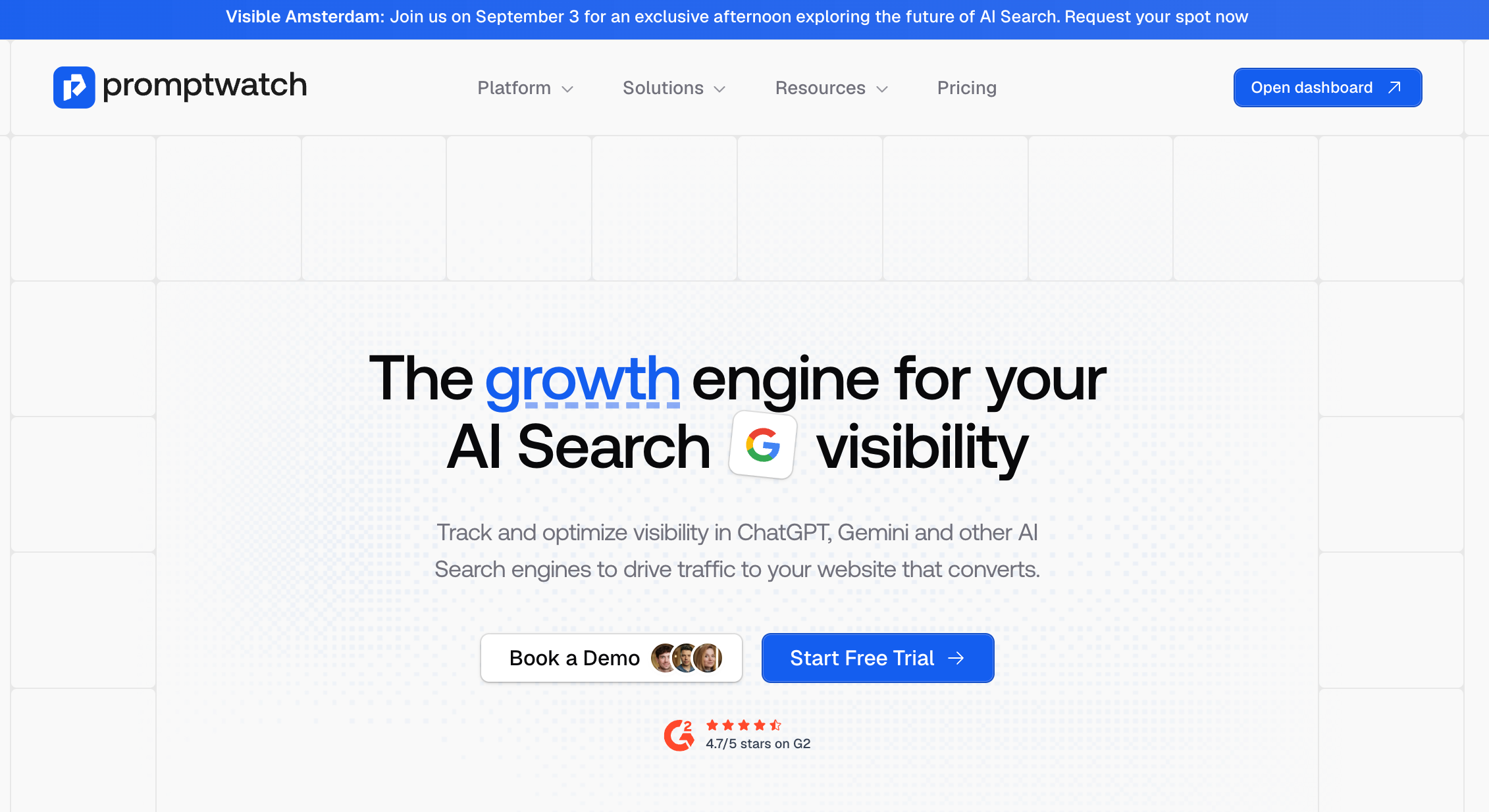
Promptwatch scrapes the real user interfaces of 11 AI platforms, including ChatGPT, Claude, Gemini, and Perplexity, rather than relying only on their APIs. That distinction matters in practice: an API response and what a real person sees in the app can differ in citations, ordering, and localization, so a tool measuring only the API can misreport what's actually visible to a buyer. If you need to track prompts in multiple languages and countries, see how Promptwatch compares with five other tools on markets and languages.
Pricing, verified against promptwatch.com/pricing in August 2026:
- Essential ($95/month): 1 project, 4 of 11 models tracked per project, 50 prompts, 6,000 responses/month, no crawler logs.
- Professional ($245/month): 2 projects, 150 prompts, 18,000 responses/month, 25M crawler-log entries, 5 AEO articles/month.
- Business ($579/month): 5 projects, 350 prompts, 42,000 responses/month, 100M crawler-log entries, 10 AEO articles/month.
What it does well: All 11 platforms are selectable on every plan, including Essential, nothing is gated by tier, only by how many a given project actively tracks. AI crawler logs are joined directly to citations, so a customer sees the crawl-to-citation path, not just raw bot traffic, and native visitor analytics tie that visibility back to actual conversions rather than stopping at a mention count.
Botric
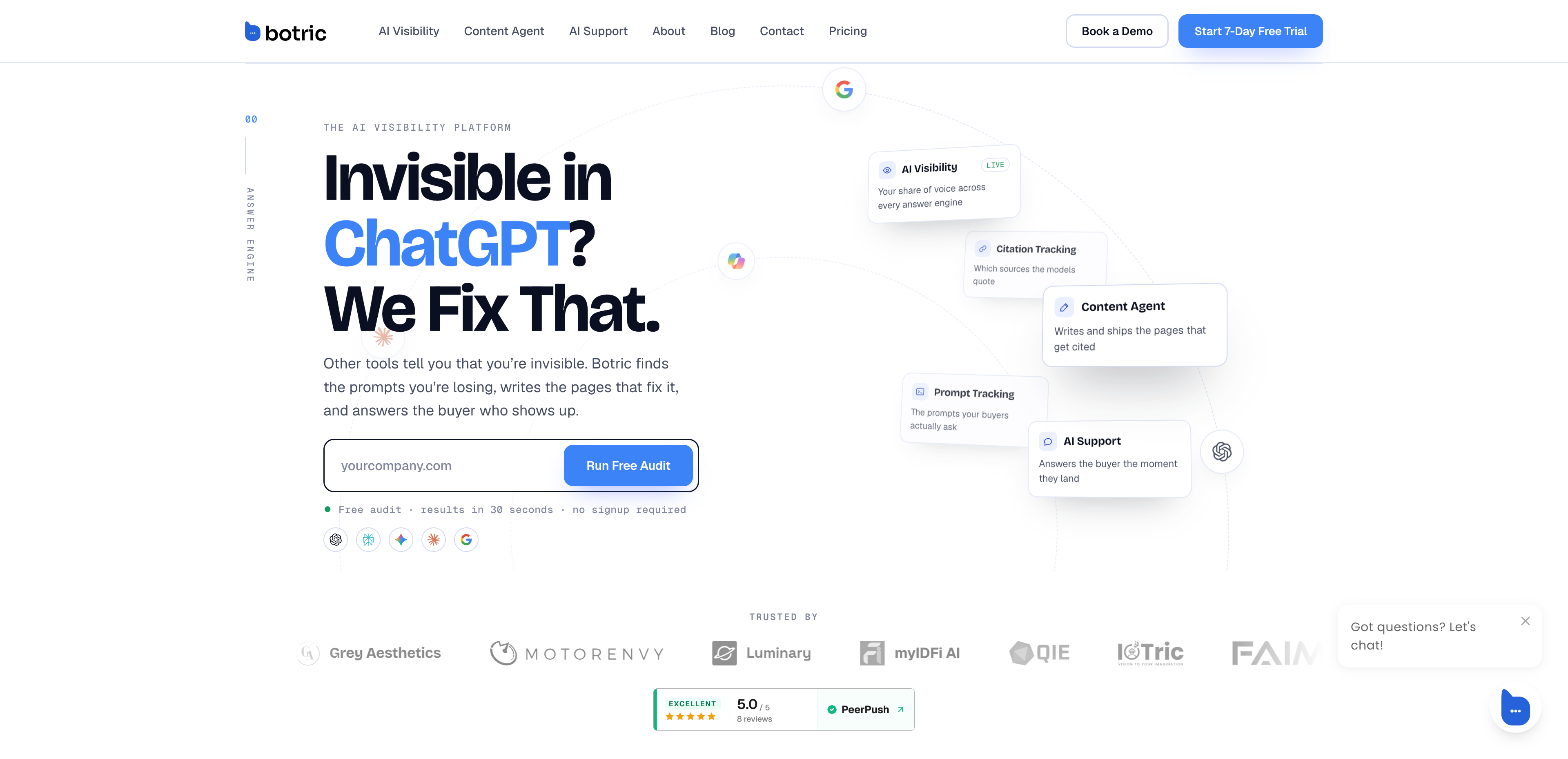
Botric pairs AI visibility tracking with a built-in Content Agent that turns detected citation gaps into publish-ready articles, plus GEO audits covering schema, llms.txt, and AI-crawler access.
Pricing: Free (1 seat, 800 credits, ChatGPT only) · Bit $15/month (10 prompts, ChatGPT + Google AI Overviews) · Byte $49/month (20 prompts, adds Perplexity) · Infinity $149/month (25 prompts, all 5 engines including Claude and Gemini) · Enterprise custom.
What it does well: Tracking, technical audits, and content generation live in one platform, and the free tier is actually usable rather than a locked demo. The $15/month Bit plan is a genuine entry point for teams that would otherwise skip GEO monitoring entirely.
Where it falls short: Entry-tier prompt limits (10-20) are thin for any brand tracking more than a handful of core queries, and BI or CMS integrations lag more established platforms.
Writesonic
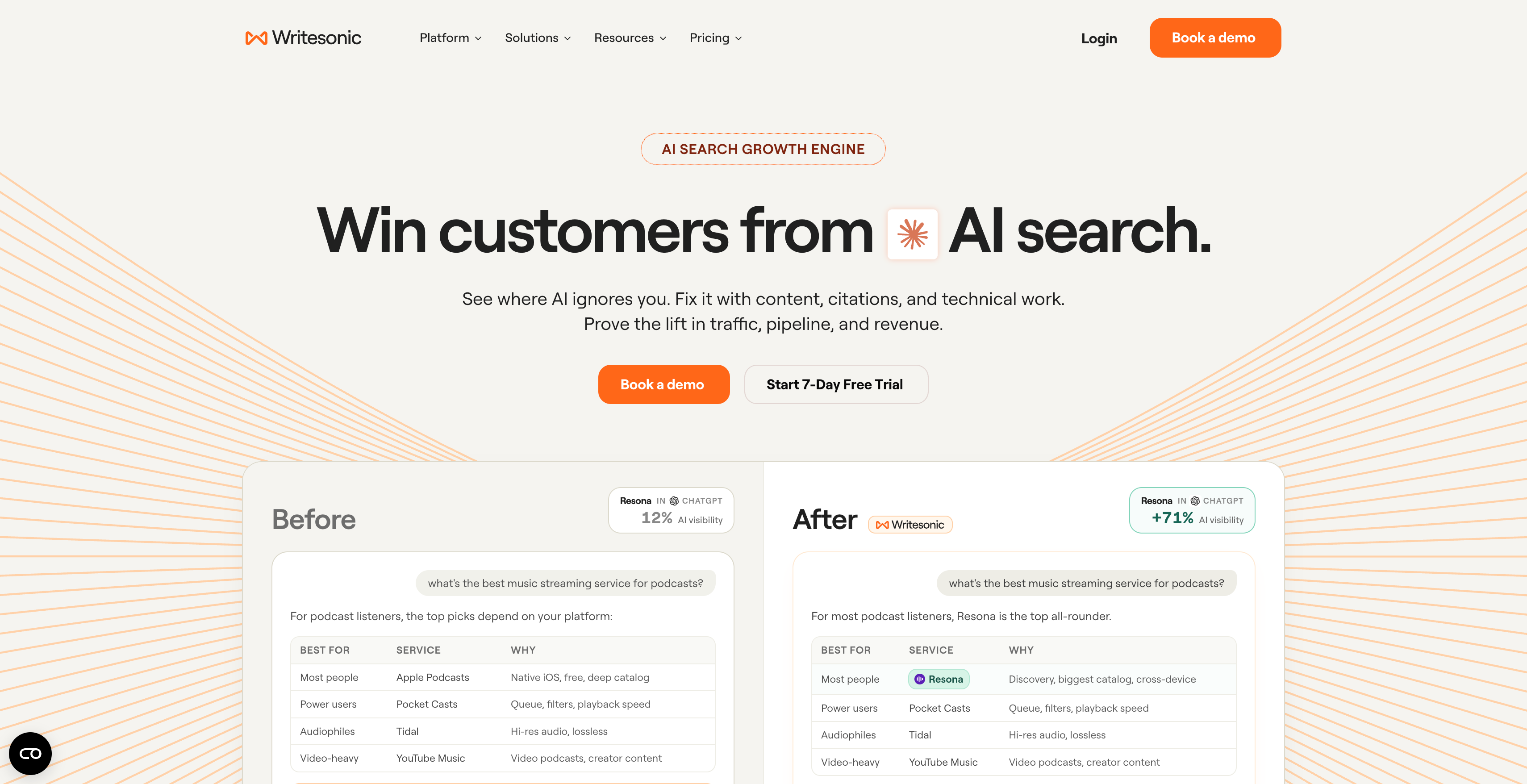
Writesonic repositioned in 2026 from an AI writing tool into what it now calls an AI Search Visibility Platform, layering GEO tracking on top of its existing content and SEO tooling.
Pricing: Starter $79/month (50 prompts, ChatGPT/Gemini/Google AI Overviews only) · Basic $199/month (100 prompts, 2 users) · Growth $399/month (200 prompts, sentiment analysis included, limited Action Center) · Enterprise custom (all 10 platforms).
What it does well: A large proprietary AI-conversation dataset surfaces real user prompts rather than keyword guesses, and WordPress and Google Search Console connect from the entry tier.
Where it falls short: The self-serve tiers, including the $399/month Growth plan, track only ChatGPT, Gemini, and Google AI Overviews. Claude, Perplexity, and Grok require the custom-quoted Enterprise plan, which is a meaningful gap if any of those matter to a brand's audience. For teams that need broader self-serve coverage without an Enterprise contract, our writesonic alternatives comparison covers the options.
Otterly.AI
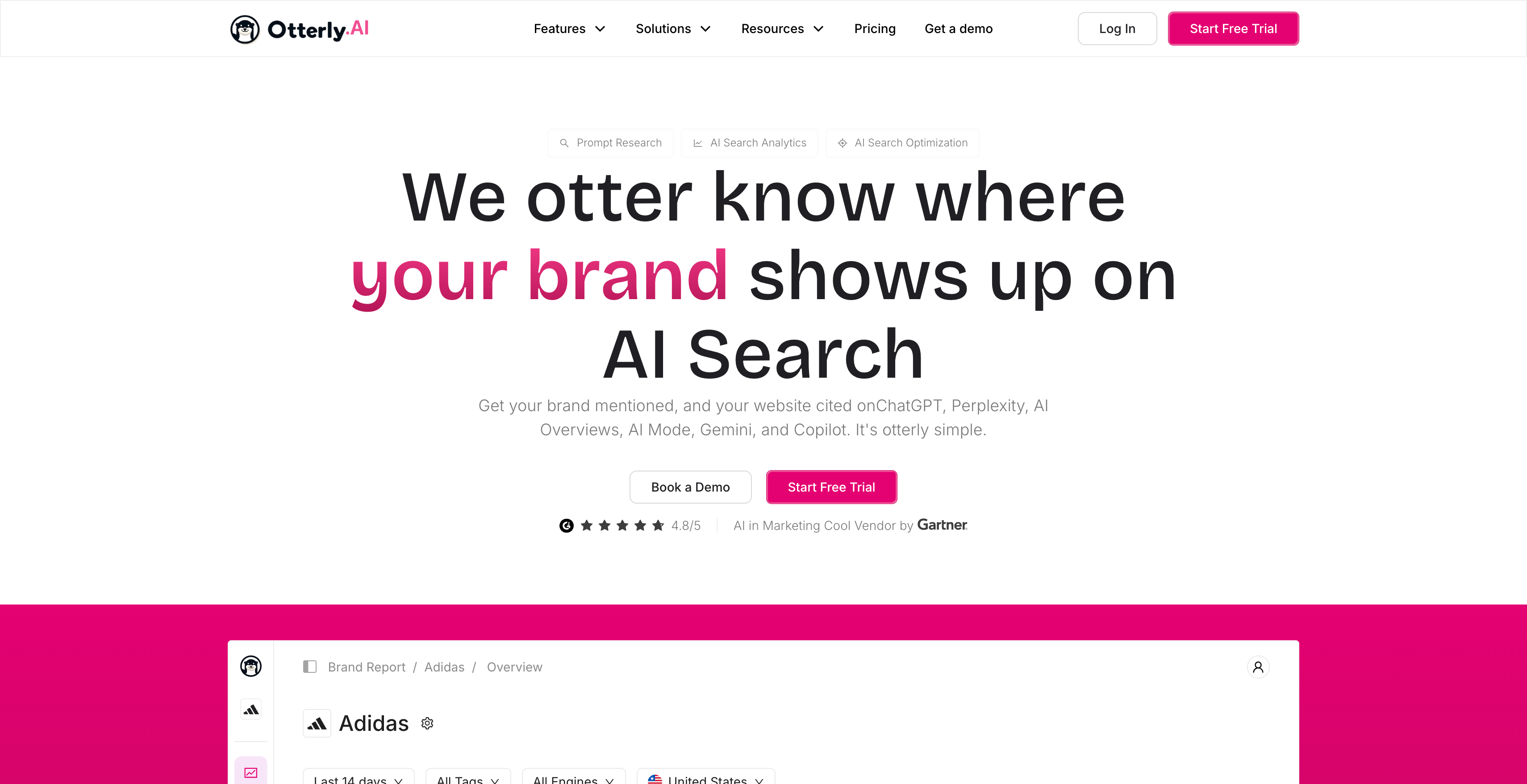
Otterly.AI monitors brand mentions, link citations, and sentiment across ChatGPT, Perplexity, Google AI Overviews, and Copilot, and remains the cheapest credible entry point in the category.
Pricing: Lite $29/month (15 prompts, 4 core engines; Gemini, Google AI Mode, and Claude are paid add-ons) · Standard $189/month (100 prompts, adds MCP/API/Looker Studio) · Premium $489/month (400 prompts) · Enterprise custom. Every plan has unlimited seats.
What it does well: Unlimited seats even on the $29/month tier is unusual in this category, and its recognition as a 2025 Gartner Cool Vendor in AI Marketing reflects real third-party validation, not self-reported praise.
Where it falls short: 15 prompts on Lite with no rollover is tight, Gemini and Claude cost extra even on higher tiers, and there's no content generation, CMS publishing, or crawler-log analysis at any price.
AIclicks
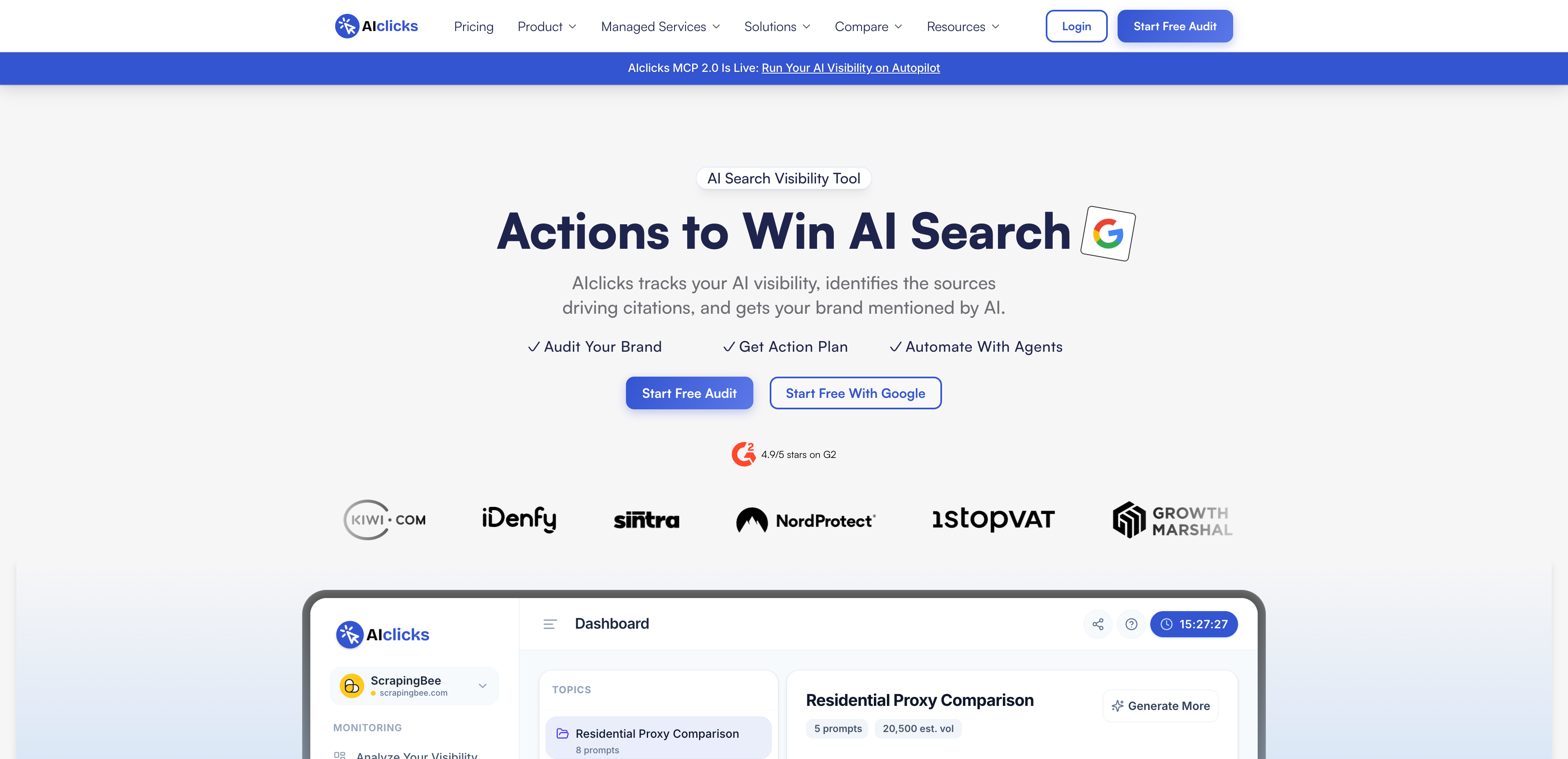
AIclicks tracks 10+ AI platforms and runs every tracked prompt on every enabled engine daily, on all plans including the $59 entry tier, then classifies each cited URL into one of 14 page types so a citation gap reads as a specific page format to build rather than a domain to note.
Pricing: Starter $59/month (30 prompts, 3 engines, 1 website) · Pro $189/month (150 prompts, 4 engines, unlimited websites, read-only API and MCP server, 15 articles/month) · Business $499/month (300 prompts, 6 engines, 30 articles/month) · Enterprise custom. Up to 29% off annually, 3-day trial with no card.
What it does well: Daily refresh isn't gated by tier, which is rare below $100/month, and article credits with direct publishing to WordPress, Webflow, Shopify, or Framer close the gap from detection to published fix inside one subscription. Unlimited websites with isolated client workspaces from Pro suits agencies splitting a prompt pool across accounts.
Where it falls short: No crawler-log analysis, so the crawl-to-citation path has to be inferred rather than proven. The 3-day trial is the shortest in this comparison but the team can extend if needed.
Scrunch AI
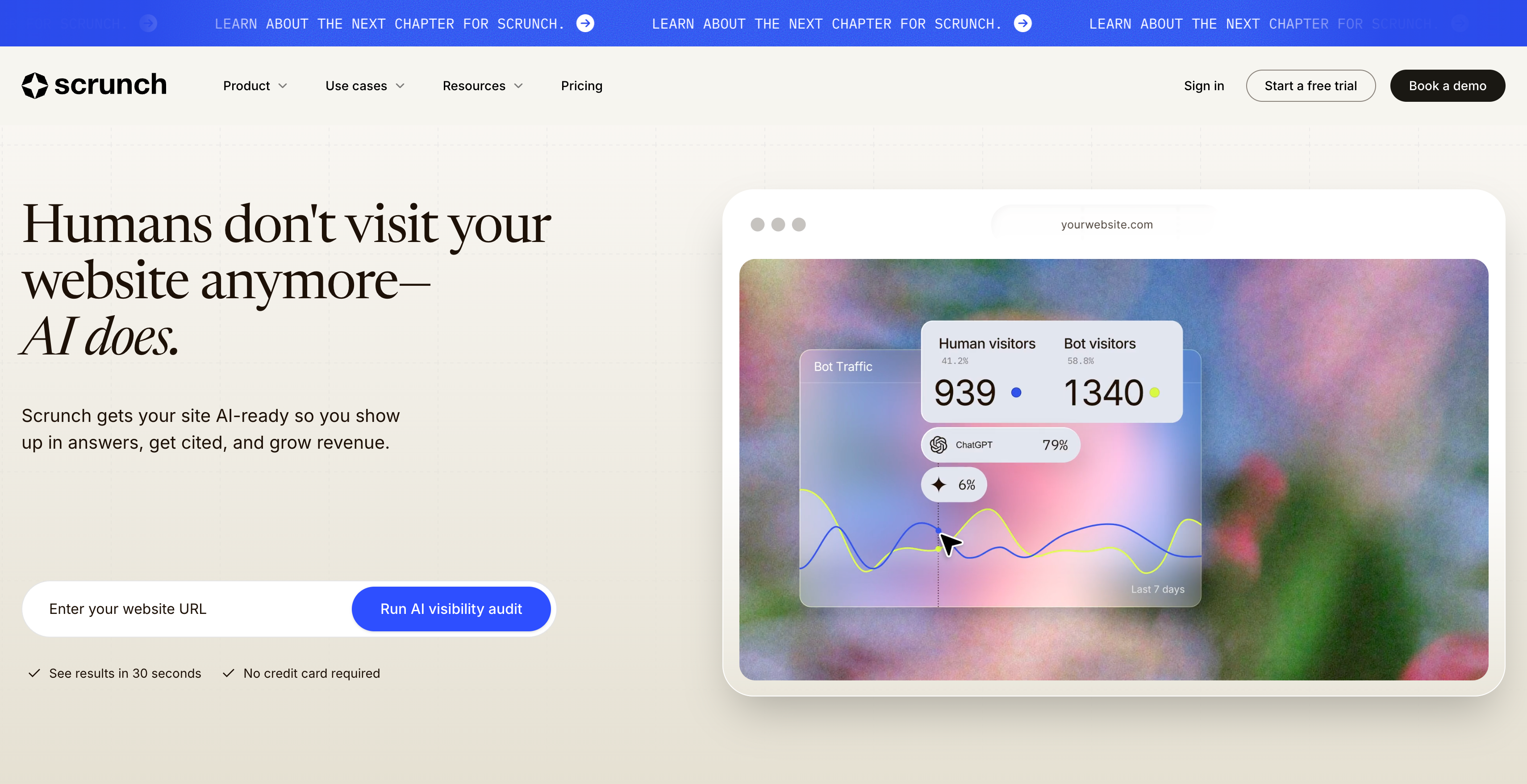
Scrunch AI combines brand monitoring with an Agent Experience Platform and misinformation detection. Sitecore announced its acquisition of the company on June 3, 2026, at a price Bloomberg reported around $225 million, and Scrunch continues to sell self-serve.
Pricing: Starter $300/month ($250 billed annually, 3 seats, 350 custom prompts, 3 personas, 5 page audits) · Growth $500/month ($417 annually, 5 seats, 700 prompts, 5 personas, 10 audits) · Enterprise custom, with a 7-day free trial and no card required on Starter. Third-party reviews from the same window disagree on how many engines self-serve plans cover, citing figures anywhere from 4 to 8, and at least one reviewer documented Scrunch serving two different pricing and feature lineups to different visitors on the same day in mid-July. Confirm current engine count directly on the pricing page before comparing.
What it does well: Misinformation detection catches places where AI actively misrepresents a brand, not just where it's silent, and persona/geography filtering supports more targeted monitoring than one blended national score.
Where it falls short: $300/month for 350 prompts is steep relative to everything else in this list, plan packaging and engine counts have shifted and been reported inconsistently through the year, and there's no confirmed Google AI Mode or Copilot coverage as of mid-2026. For a fuller breakdown, see our scrunch ai alternative roundup or the direct promptwatch vs scrunch comparison.
ZipTie.dev
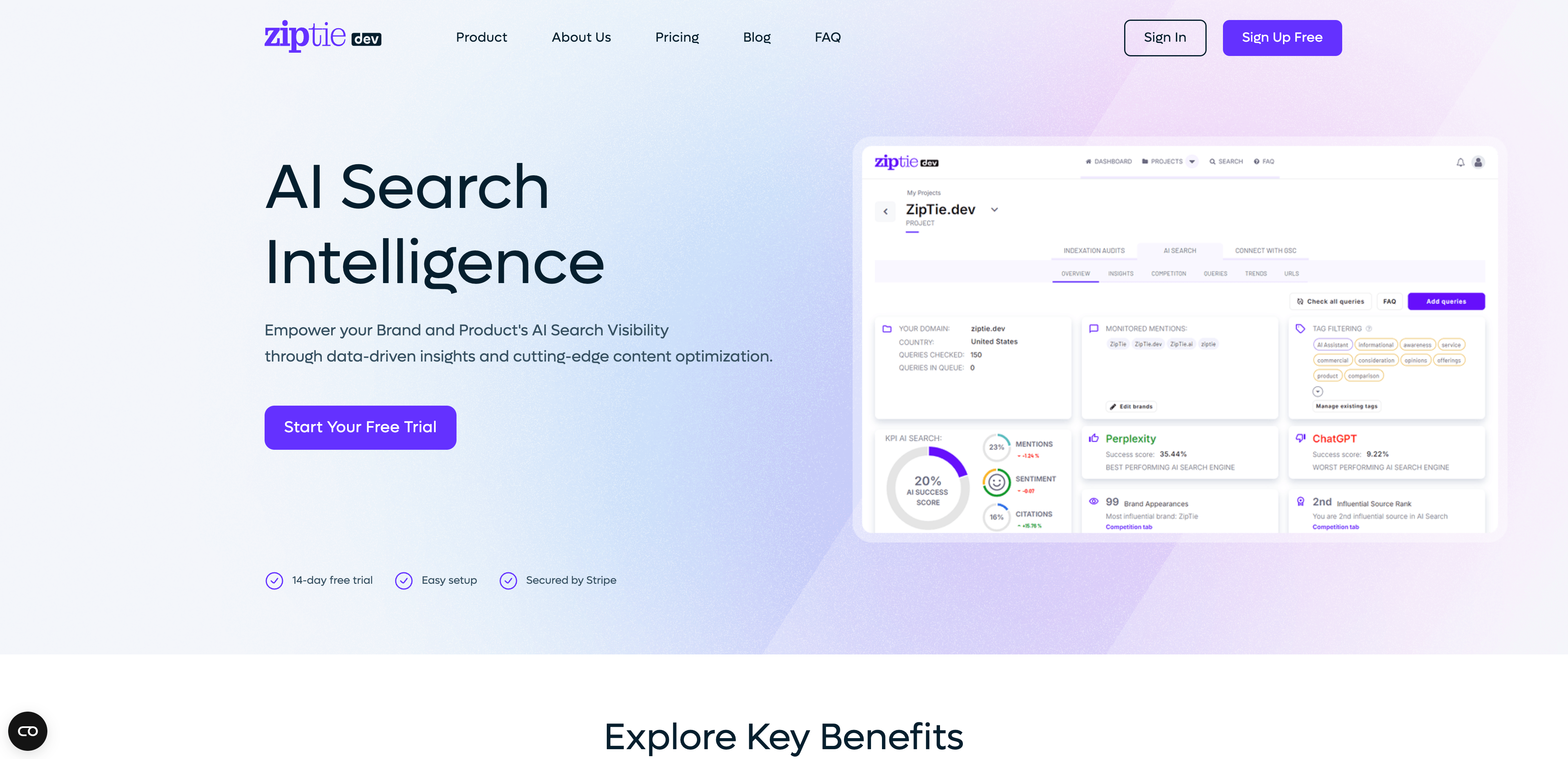
Built by the founders of Onely, a technical SEO agency, ZipTie.dev deliberately covers only three engines (Google AI Overviews, ChatGPT, and Perplexity) in exchange for measurement accuracy, including downloadable screenshot evidence of the actual AI answer.
Pricing: Basic $69/month (500 AI search checks) · Standard $99/month (1,000 checks) · Pro $159/month (2,000 checks). Every paid tier, including Pro, ships with a single seat.
What it does well: Screenshot evidence of the rendered AI answer is a reporting feature most competitors skip, and pricing is straightforward checks-based with no per-engine surcharges.
Where it falls short: Three fixed engines with no add-on path means no Claude, Gemini, or Copilot at any price, and the single-seat cap on every tier, including the $159/month Pro plan, creates real friction for agencies needing multiple people logged in independently.
Anvil
Anvil, a Y Combinator-backed platform founded in 2025, tracks brand visibility across ChatGPT, Gemini, Claude, and others, with query discovery that surfaces category-relevant AI questions a brand isn't yet answering.
Pricing: Basic $99/month (3,000 prompts) · Starter $249/month (10,000 prompts) · Growth $499/month (3 seats, 50,000 prompts).
What it does well: Prompt ceilings are high even at the mid tier, useful for brands tracking a large query set, and the product has iterated quickly as a recently funded company.
Where it falls short: Optimization recommendations stay surface-level next to platforms with dedicated content-generation tooling, there's no crawler-log or advanced attribution analytics, and the two lower tiers are capped at a single seat.
Choosing the right GEO tool for your team
The honest answer is that no single tool here wins on every axis. A team that only needs to know whether it's mentioned can start with Otterly.AI's $29/month tier or Rankscale's $20/month entry point and upgrade later. A team that needs to close the loop from citation gap to published content, with crawler logs proving the fix actually got crawled, needs a platform built for that end to end. If your evaluation is specifically about answer engines rather than the broader GEO category, the calculus shifts slightly, see our breakdown of the best AEO platforms for how Promptwatch stack up on that narrower question.


