

- Which of your pages AI systems view as authoritative.
- How your brand is being represented within generative answers.
- Where your competitors are being cited instead of you.
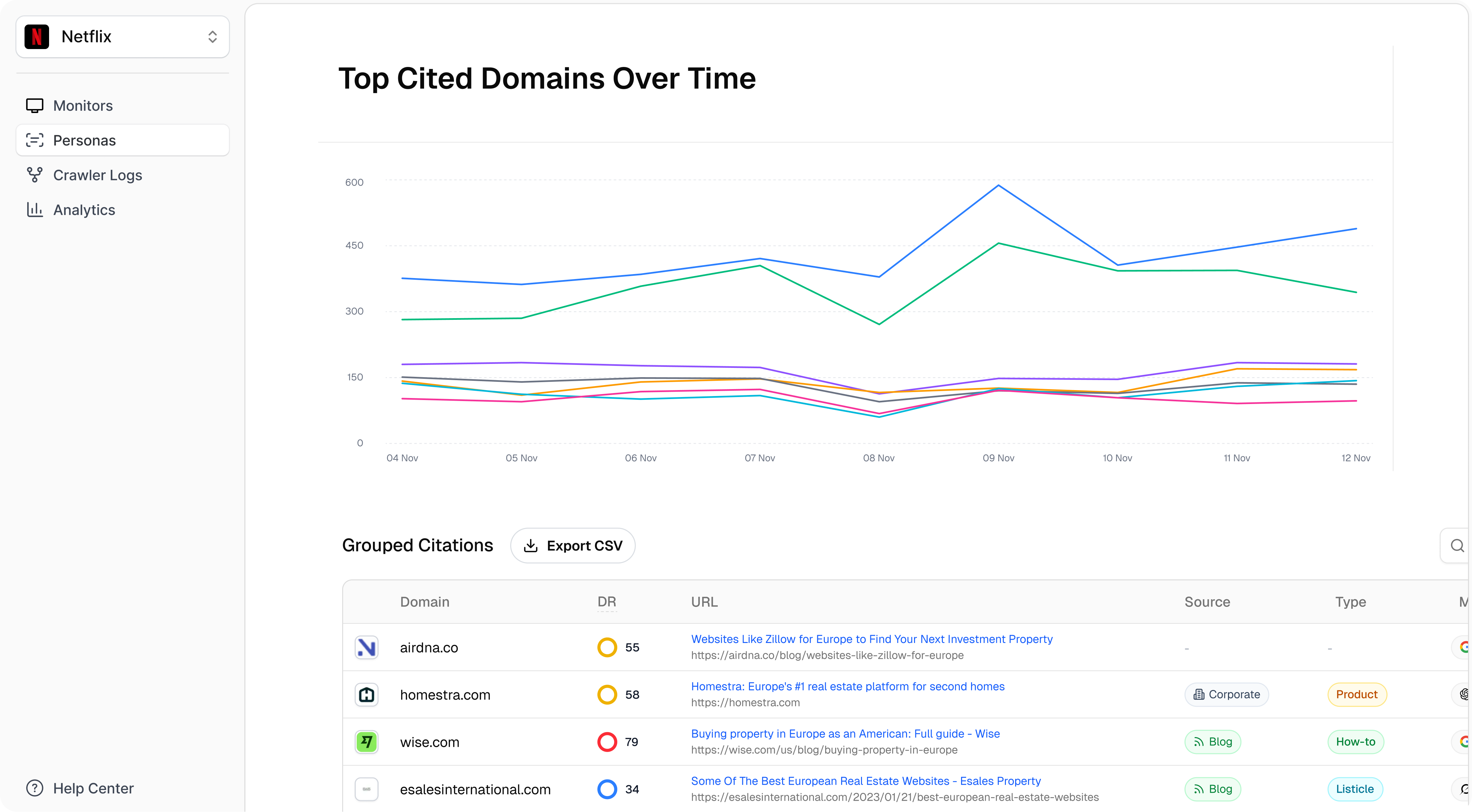
- Which AI model provided the citation (ChatGPT, Claude, Perplexity, etc.)
- The exact URL or domain mentioned
- How frequently that page is cited
- Whether your competitors are cited for the same query
- Create Definitive Resources: Publish in-depth, data-rich content that AI models can confidently reference. Pages that answer questions directly and include verifiable facts are far more likely to be cited.
- Use Structured Content: Format content with clear headings, definitions, and lists. AI crawlers parse and extract structured information more easily than dense paragraphs.
- Target High-Intent Prompts: Review your monitors to find which prompts generate citations, and which don’t. Focus new content around unclaimed or weakly-cited prompts to increase exposure.
- Build Third-Party Authority: AI models look for consensus. When multiple trusted sites reference your content, the likelihood of citation rises. Encourage mentions in partner blogs, reviews, and comparison sites.
- Update and Enrich Frequently: Fresh, recently crawled pages are favored by AI models. Regular updates signal ongoing relevance and accuracy.
- Double down on success: Identify which pages are already cited and expand similar content clusters.
- Close competitor gaps: Review prompts where rivals are cited and you’re not, then optimize or create competing assets.
- Refine content tone: Compare how AI excerpts your pages. If summaries misrepresent your brand, adjust phrasing and metadata for clarity.
- Track changes over time: Citations can rise or drop as AI models update. Continuous monitoring helps you respond early.