


TL;DR: Best Profound Alternatives
Promptwatch is best for teams that want to act on AI visibility data, not just monitor it. It starts on a free tier and reaches $95/month for four of eleven AI platforms chosen freely, including Claude and Grok from day one, compared with Profound's $99 ChatGPT-only Starter plan or $399 Growth plan for three engines, and adds AI crawler log analysis plus content that publishes to your CMS.
Quick Comparison Table
| Tool | Best For | AI Engines Covered | Starting Price |
|---|---|---|---|
| Promptwatch | Teams that need execution, not just monitoring | ChatGPT, Claude, Gemini, Perplexity, Grok, DeepSeek, Meta Llama, AI Overviews, AI Mode, OpenCode, Claude Code (all 11 selectable; 4 tracked per project) | Free tier; $95/mo |
| Peec AI | Mid-market teams wanting real-UI accuracy on a self-serve plan | 3 of 6 per tier (Claude, DeepSeek Enterprise-only) | ~$95/mo |
| Otterly.ai | Solo operators and small teams on a tight budget | ChatGPT, AI Overviews, AI Mode, Perplexity, Gemini, Copilot | ~$29/mo |
| Scrunch AI | Enterprise brands treating agent traffic as its own channel | Multi-engine | ~$250/mo |
| AthenaHQ | Teams that need AI visibility joined to analytics | Sales-led; free sampler | Native GA4 integration |
| Semrush AI Visibility Toolkit | Teams already living in Semrush | ChatGPT, Google AI Mode, Gemini (broader claims contested) | $99/mo per domain |
| Ahrefs Brand Radar | Existing Ahrefs customers | Multi-engine | $398 to $699/mo add-on |
Why Look for Profound Alternatives?
Four reasons teams look elsewhere come up repeatedly in G2 reviews and public buyer discussion.
- The entry tier is limited. Starter is $99/month and covers ChatGPT only, with 50 prompts. Multi-engine tracking starts at the Growth plan, $399/month (roughly $332.50 billed annually).
- Reliability and support. G2 reviews mention bugs, tracking issues, billing errors, slow data exports, extended support response times, and a learning curve.
- No white-label reporting. White-label reporting for agencies presenting branded visibility reports to clients is not available.
- Content generation is limited. Profound identifies visibility gaps and its agents can draft content against them, but content generation is capped and insights still require manual prioritization.
These gaps matter specifically when your goal is to improve AI visibility rather than report on it.
How We Evaluated These Alternatives
We didn't assemble this list by skimming landing pages. Every tool was assessed against one question: does it help a team change how AI models talk about their brand, or only observe it?
Four criteria:
- AI engine coverage on the base plan. Not the marketing page's list: what you actually get without an add-on. Several tools in this category advertise five to seven engines and gate three of them.
- Real monthly cost. Including add-ons, per-domain multipliers, and annual-billing requirements. Per-domain pricing is the single most commonly missed cost for agencies.
- Actionability. Does the data produce an instruction (update this page, target this prompt cluster), or does it fill a dashboard?
- Data collection method. Scraping real model interfaces shows you what users see. API queries show you something adjacent to it.
Pricing and feature coverage verified August 2026 against each vendor's public pricing page, supplemented by G2 review analysis. We evaluated AI search visibility specifically, not traditional SEO capability. Several tools here are strong at SEO and that isn't scored. Pricing in this category changes frequently; confirm before you buy.
The 7 Best Profound Alternatives
Ranked by overall fit for teams that want to improve AI visibility rather than only measure it. Each solves a different problem, so the right answer depends on which part of the job you can't currently staff.
1. Promptwatch: Best Overall Profound Alternative
Profound and Promptwatch both scrape real AI interfaces rather than querying APIs, which puts them in a small group where the visibility numbers reflect what a user would actually see. The difference is what happens after the measurement. Profound shows you where you appear and drafts against the gaps. Promptwatch adds the layer underneath (server-side crawler logs showing which pages AI bots actually fetched) and the layer on top: content that ships to your CMS under an approval gate you control. It also starts at a free tier rather than a single-engine $99 plan.
Promptwatch has: all 11 AI platforms selectable from the $95 entry plan (the free Explore plan is ChatGPT-only), full URL-level page tracking, off-site mention tracking across Reddit, YouTube and third-party sources, and native visitor and conversion tracking. Profound doesn't: engine coverage beyond ChatGPT below the $399 Growth plan, page tracking beyond citation URLs, or off-site mention tracking.
Key features
- All 11 AI platforms available to select from on every plan (ChatGPT, Claude, Gemini, Perplexity, Grok, DeepSeek, Meta Llama, Google AI Overviews, Google AI Mode, OpenCode and Claude Code), with 4 tracked per project at a time, and prompt tracking refreshed daily, not weekly
- Real-UI scraping, so visibility reflects what users see rather than an API approximation
- AI crawler log analysis through direct integrations with Akamai, AWS CloudFront, Cloudflare, Fastly, Google Cloud CDN, Netlify and Vercel: this is the piece almost nobody else has, and it's how you get the actual elapsed time between a bot fetching a page and an engine quoting it
- Visitor analytics and conversion tracking for AI-referred human traffic, kept separate from crawler activity, so you see both what AI can read and what actually converts
- Citation source mapping at URL level, separating your own pages from third-party sources, plus offsite mentions where AI cites a source that discusses you without linking to you
- Content Agents that write against measured gaps and publish directly to Webflow or Framer (any other CMS is a manual export), moving through review, approval and scheduling states with configurable autonomy and budget caps
- Multi-market tracking on every plan: country, state and city-level prompt targeting in local languages, including on Essential (some customers run 6,000+ prompts across 17 markets)
- Actions and Agent Chat: Actions turns visibility data into prioritized next steps, each assignable to a team member as owner, and Agent Chat lets you ask about performance and act on the answer in one conversation
- REST API on every paid plan, plus an MCP server
Pros
- Broader engine coverage than Profound's Growth tier at a quarter of the price
- Free tier means you can baseline before spending anything, rather than paying $99 for ChatGPT-only data
- Crawler logs answer the question no prompt tracker can: whether AI bots reached the page at all
- Content ships under a gate: approval states and budget caps, which matters when software has write access to your live site
- White-label and multi-client workflows are first-class for agencies, not an enterprise upsell
Cons
- Profound's Prompt Volumes panel data, drawn from opted-in consumers with demographic cuts, goes deeper than Promptwatch's keyword-based prompt volumes
- Crawler logs start on Professional ($245/mo), not on the $95 Essential plan
- Team seats are metered (1, 2 and 5 by tier), and Microsoft Copilot and Mistral aren't in the Promptwatch catalogue
Verdict
- Best for: Teams that need to change AI visibility, not just report on it without a five-figure annual commitment or a single-engine starter plan.
- Why it wins: Profound tells you where you appear. Promptwatch tells you whether AI bots reached the page, what they cited, and ships the fix. Both scrape real interfaces; only one closes the loop at both ends.
2. Peec AI
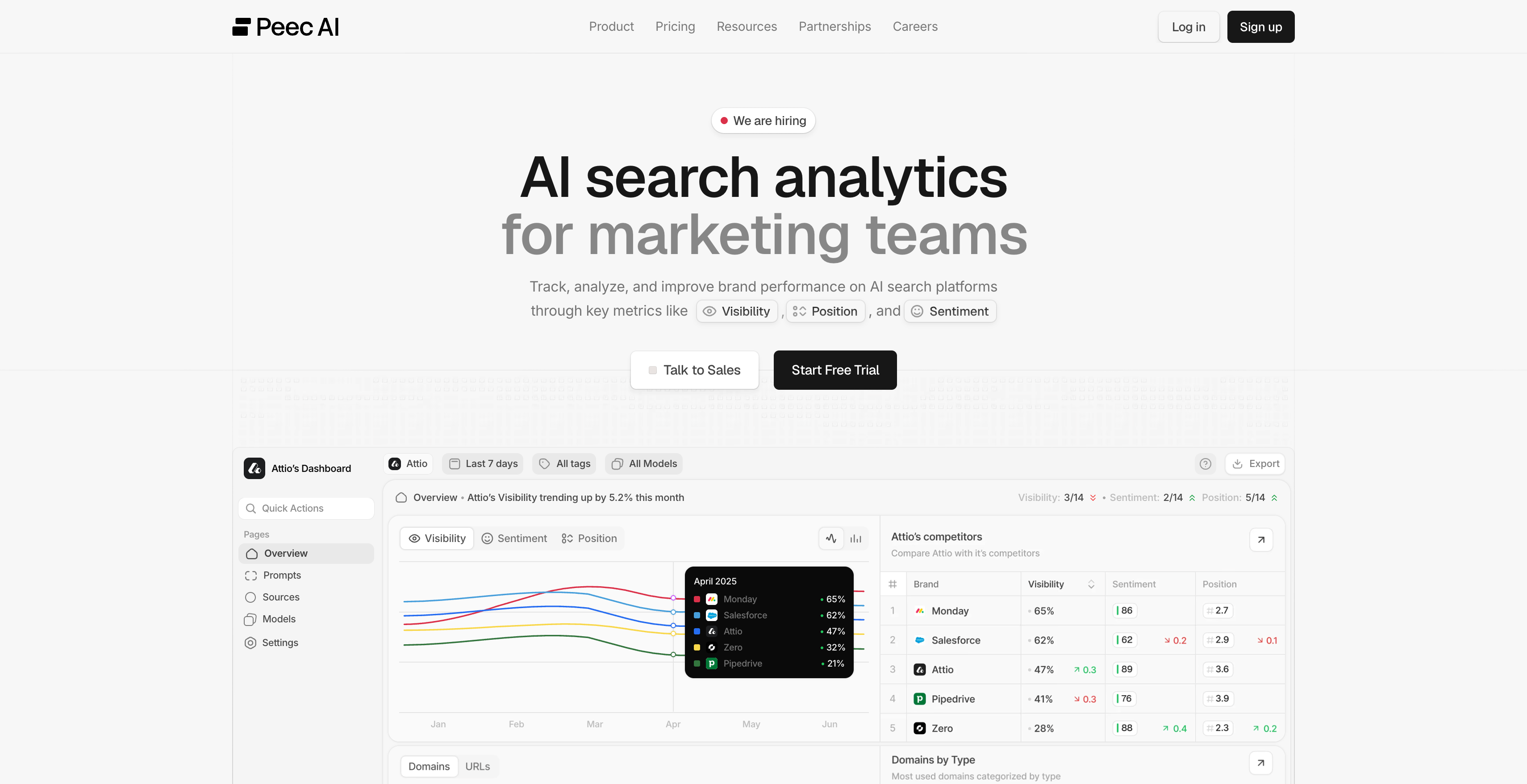
Peec AI also scrapes real model interfaces rather than APIs, at roughly $95/month compared with Profound's $399 Growth tier.
Key features
- UI scraping across 3 of 6 possible engines per self-serve tier; Claude and DeepSeek are Enterprise-only
- 115+ language support
- Competitor benchmarking and share-of-voice tracking
- Onboarding does not require a sales call
Pros
- Uses real-interface data collection, available at self-serve pricing tiers
- 115+ language support for international brands
- Designed to be run by a single marketer
Cons
- Monitoring-focused, with no content generation or CMS publishing product
- No server-side crawler visibility, so you can't tell whether AI bots reached a page
- No API access below Enterprise
Verdict: If Profound's real-UI methodology is the fit and its price is the obstacle, Peec covers the same approach. It does not include a content-execution layer.
3. Otterly.ai
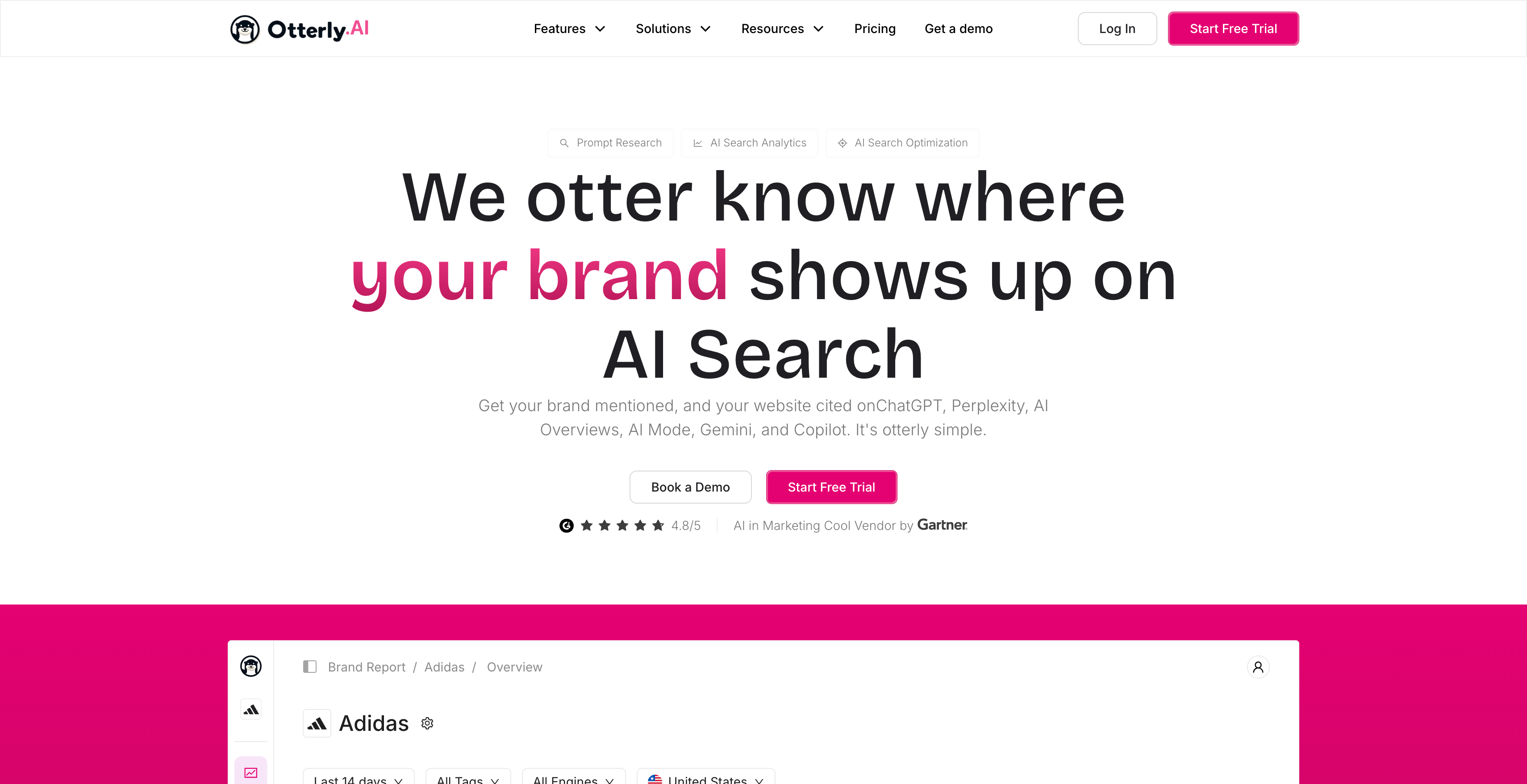
Otterly is priced at roughly $29/month and covers six engines on the base plan (ChatGPT, AI Overviews, AI Mode, Perplexity, Gemini and Copilot), compared with Profound's single-engine $99 tier. It monitors 40+ countries.
Key features
- Six AI engines on the entry plan
- GEO audit analysing 25+ on-page factors
- 40+ country monitoring
- 14-day free trial
Pros
- Six engines are included at the $29/month tier
- Setup does not require a sales call
Cons
- Monitoring only: no content execution or CMS publishing
- Prompt volumes are capped low, which limits it to watching your brand and a few competitors rather than mapping a category
Verdict: If budget is the binding constraint and a baseline is enough, Otterly fits. Execution work (content generation, CMS publishing) requires a different tool.
4. Scrunch AI
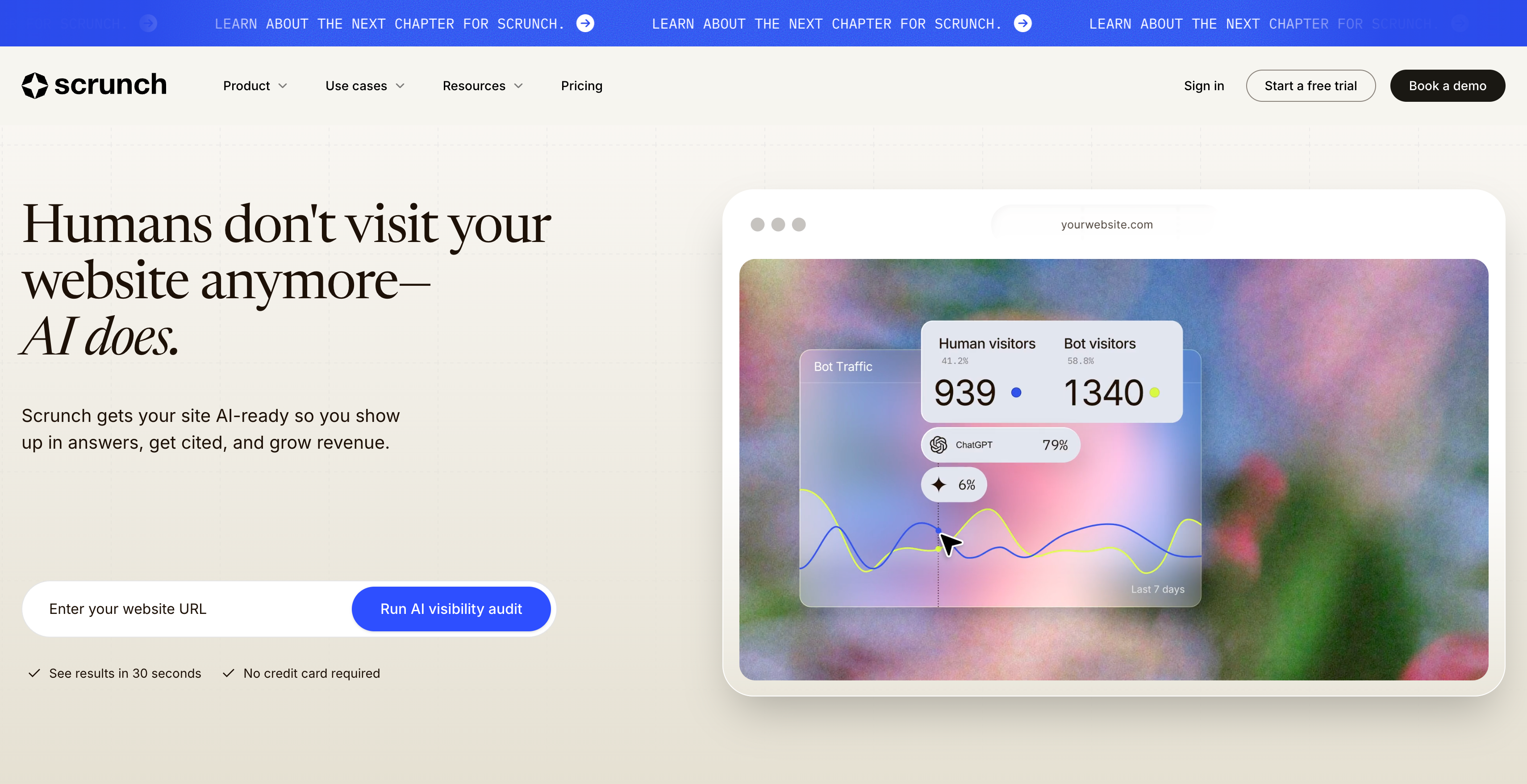
Scrunch focuses on the experience AI agents have when they arrive at a site, rather than only tracking what AI answers say. It has raised $26M and uses a dual-web strategy, optimizing separately for human and agent visitors.
Key features
- Multi-engine visibility tracking
- Agent-experience layer covering how AI systems read and navigate your site
- Enterprise-oriented reporting
Pros
- Addresses agent traffic as a distinct tracking category
- Enterprise-oriented reporting
Cons
- Priced at roughly $250/month, billed annually
- The dual-web approach requires additional implementation work
Verdict:Scrunch fits teams treating agentic traffic as a distinct, board-level channel, separate from prompt-level citation tracking.
5. AthenaHQ
GA4 and Google Search Console connect on AthenaHQ's self-serve plan, joining AI visibility data with traffic and conversion data. A free sampler tier is available.
Key features
- Native GA4 and Search Console integrations on self-serve
- Multi-engine visibility tracking with an action centre
- Free sampler tier
- Attribution-oriented reporting
Pros
- Native GA4 and Search Console integration on self-serve plans
- Free entry point
Cons
- Pricing is sales-led at the upper tiers, so budgeting requires a call
- No server-side crawler data, so attribution stops at the referral rather than the crawl
Verdict: AthenaHQ's analytics integration is suited to reporting AI visibility alongside revenue data. It does not include content production tools.
6. Semrush AI Visibility Toolkit
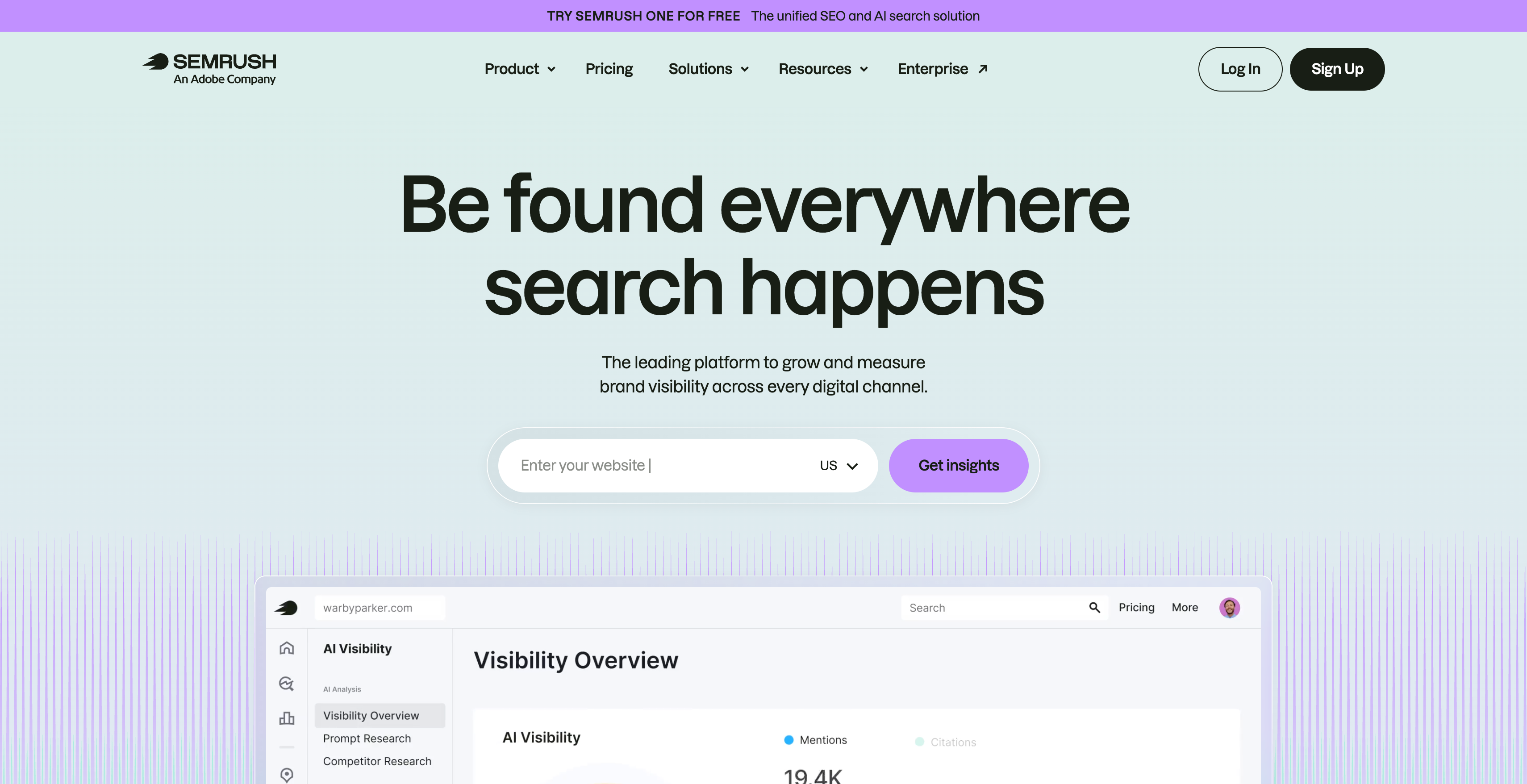
Sold standalone at $99/month per domain (25 prompts, billed annually) or bundled into Semrush One from $199/month. Six reports cover prompt tracking, brand performance and visibility overview. A free AI visibility checker is also available at no cost.
Key features
- Six AI visibility reports inside the familiar Semrush interface
- Prompt Research draws on Semrush's existing keyword and prompt database
- Free checker with no card required
- Traditional SEO data in the same login
Pros
- Uses the existing Semrush interface for teams already using Semrush
- A free checker is available as an initial diagnostic
- Combined SEO and AI visibility reporting in one export
Cons
- The MCP connection is read-only: it retrieves data but cannot create or modify content
- Engine coverage is unclear: Semrush's own documentation lists Prompt Tracking across ChatGPT, Google AI Mode and Gemini, broader marketing includes AI Overviews and Perplexity, and independent mid-2026 reviews disagree about what's live
- Pricing is per-domain, which increases cost for agencies managing multiple sites
Verdict: Suited to teams that already use Semrush and treat AI visibility as a secondary reporting line. Teams for whom AI visibility is the primary channel may find the add-on's caps limiting.
7. Ahrefs Brand Radar
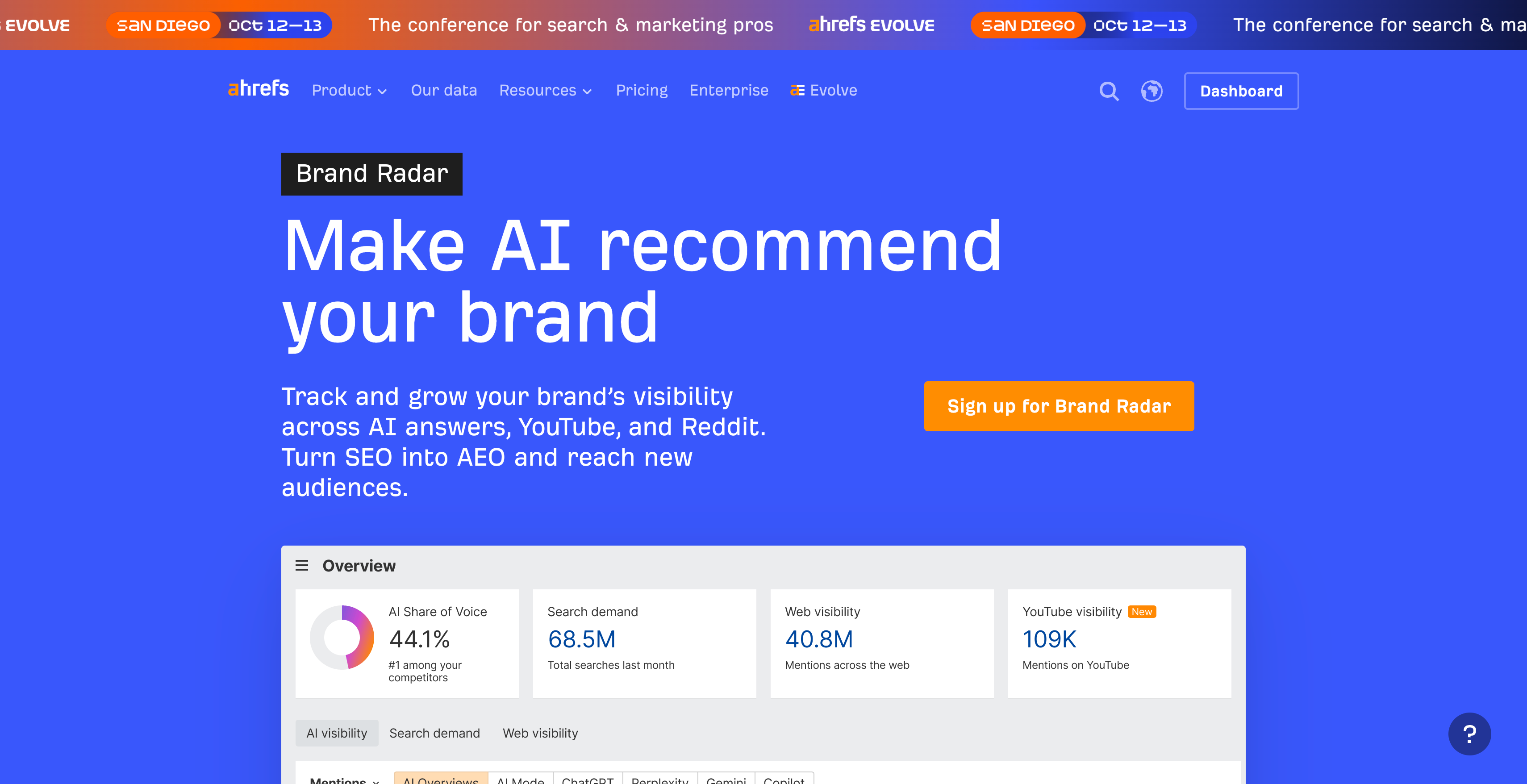
Brand Radar tracks brand presence in AI answers on top of Ahrefs' index. As a $398 to $699/month add-on requiring an existing Ahrefs plan, the all-in cost lands between roughly $527 and $1,148/month for teams already on an Ahrefs plan.
Key features
- AI answer brand tracking built on Ahrefs' crawl index
- Shared data with Ahrefs' backlink and keyword tooling
- Enterprise-grade reporting
Pros
- Ahrefs' index can be used to cross-reference AI visibility with organic performance data
- One vendor relationship instead of two
- Can correlate AI citations with traditional ranking data
Cons
- The marginal cost is high for teams without an existing Ahrefs subscription
- Monitoring-oriented, with no content execution or CMS publishing
Verdict: Suited to teams already using Ahrefs. Teams starting fresh would pay for two overlapping capabilities separately.
How to Choose the Right Profound Alternative
For most teams, Promptwatch hits the sweet spot: eleven AI platforms to choose from, real-UI data, AI crawler log analysis across seven CDN integrations, and content that ships to your CMS, starting free. But the best tool is the one that fits your workflow. Use the table above to shortlist, then use the free tiers. Every tool here except Scrunch and Ahrefs has one.
Frequently Asked Questions
Why do people look for Profound alternatives?
Four reasons come up repeatedly: the $99 Starter plan covers ChatGPT only so functional pricing starts at $399/month, G2 reviews report bugs and slow support, there's no white-label reporting for agencies, and the platform identifies gaps more effectively than it closes them.
Is Promptwatch a good Profound alternative?
Yes. It uses the same real-UI scraping methodology, tracks ten AI platforms instead of Profound's single-engine entry tier, adds server-side crawler logs from seven CDN integrations that show whether AI bots actually reached your pages, and publishes content to your CMS under an approval gate. It starts with a free tier rather than $99 for ChatGPT-only data. The trade-off is a longer onboarding.
What AI engines should a good visibility tool cover?
The realistic minimum in 2026 is five: ChatGPT, Google AI Overviews, AI Mode, Perplexity and Gemini. Claude matters for B2B and technical audiences. Tools gating two or three of these behind add-ons have lower base coverage than their marketing suggests, so always check what's included before the upgrade.
How much do Profound alternatives cost?
Roughly $29/month at the bottom (Otterly) to over $1,000/month all-in at the top (Ahrefs Brand Radar with an existing Ahrefs plan). Most self-serve tools land between $89 and $250/month for meaningful multi-engine coverage. Budget $100 to $200/month for a real program, and check whether pricing is per domain, per prompt, or per engine before comparing.
Do I need crawler data as well as prompt tracking?
It answers a question prompt tracking can't: whether AI bots reached the page at all.


