TL;DR
- Google AI Overviews select passages through dense retrieval and query fan-out, not simple keyword ranking, so a page can rank #1 organically and still be skipped by the Overview.
- Citation relevance in AI search holds for roughly 8-14 weeks before a refresh helps, even when nothing on the page has technically broken.
- AI Overviews and AI Mode are citation-heavy by design; the standalone Gemini app is not, so the same content strategy shouldn't be judged by the same citation counts across both.
- Promptwatch tracks Google AI Overviews as one of 11 platforms on every plan, pairing citation data with crawler logs so you can see whether Google's bots can even reach the page you're trying to optimize.
Google AI Overviews Don't Rank Pages, They Retrieve Passages
Traditional SEO optimizes for a ranking algorithm that compares whole pages against a query and returns a list of links. Google AI Overviews work differently: they break your query into a set of related sub-queries (a process usually called query fan-out), retrieve the passages that best answer each one, and stitch the results into a synthesized answer with citations attached.
That distinction matters because it changes what "optimized" means. A page can hold the #1 organic position and still be left out of the Overview, because the Overview isn't asking "which page is most authoritative for this query", it's asking "which passage, anywhere on the indexed web, answers this specific sub-question well enough to quote." Ranking well is correlated with getting cited, but it isn't the same test.
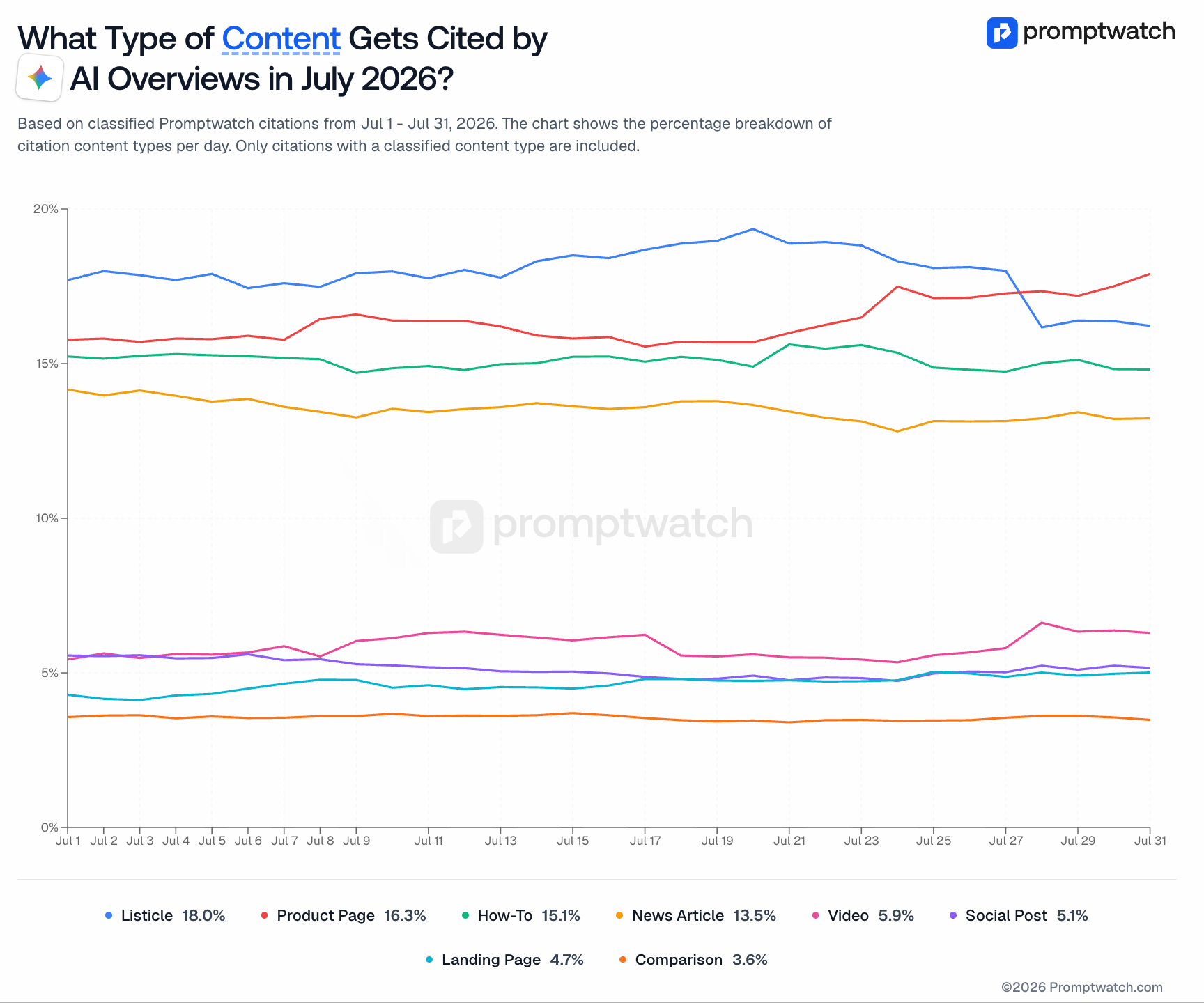
Promptwatch's tracked breakdown of AI Overview citation types shows this pattern in practice: the mix of what actually gets cited shifts month to month as Google's retrieval behavior evolves, not as a reflection of who's ranking best.
This is also why generic "add more keywords" advice doesn't move the needle much here. The unit of competition shifted from the page to the passage, and from ten blue links to a handful of citations.
Don't Conflate AI Overviews With AI Mode or the Gemini App
One of the most common mistakes in AI Overview optimization content is treating "Google's AI" as one thing. It isn't, and the difference changes how you should read your own citation data:
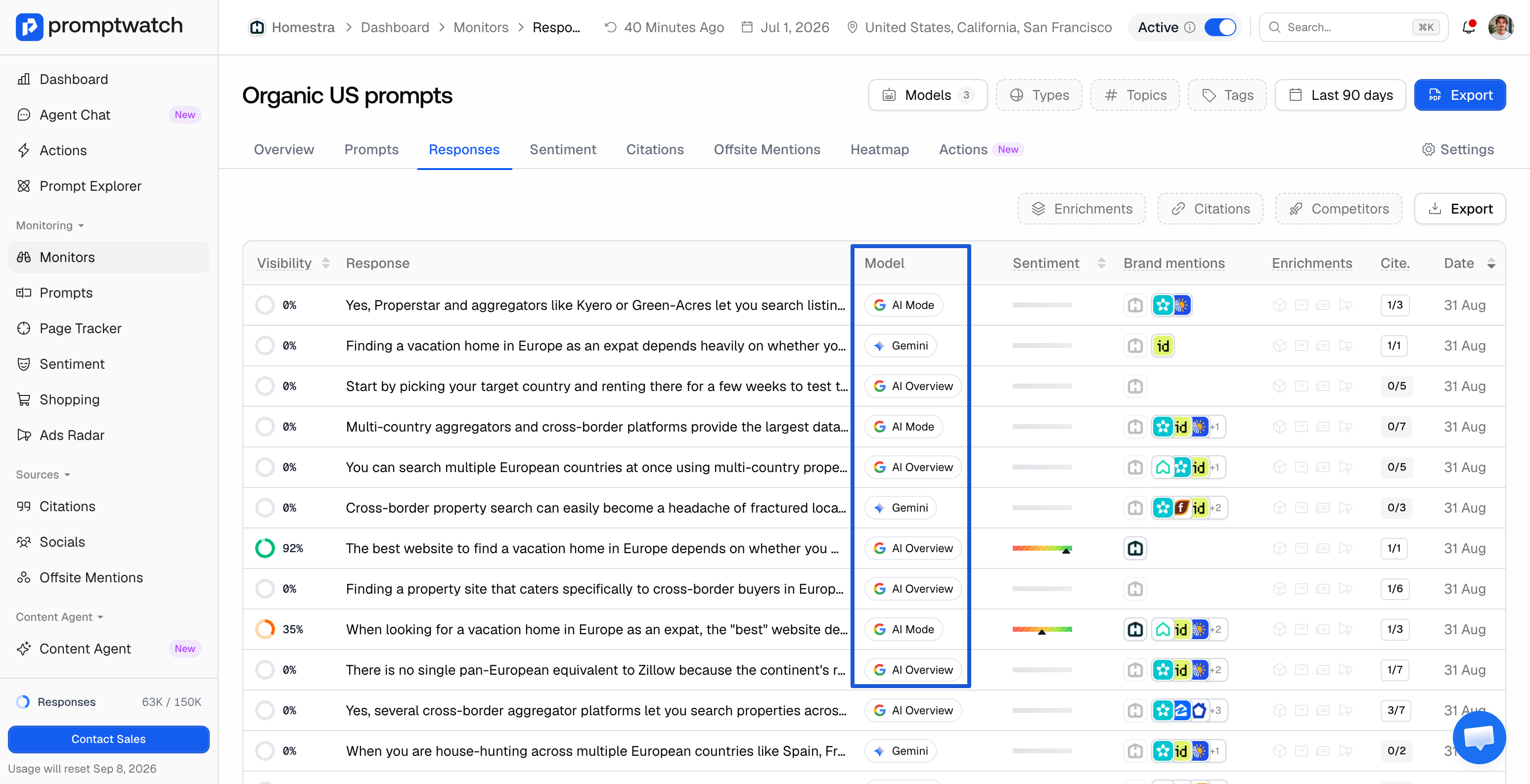
- Google AI Overviews and Google AI Mode appear inside Google Search itself and are citation-heavy by design, they're built to show sources, because they're still part of the search results page. Promptwatch's data on average sources per response tracks exactly how citation-dense each platform is, which is where this pattern shows up most clearly.
- The standalone Gemini app synthesizes answers with few or no visible source links. That's Gemini's own product behavior, not a sign that your content is failing to get through.
If you're benchmarking visibility across both, don't expect Gemini's citation counts to look anything like AI Overview's. For Gemini specifically, brand mention and visibility metrics are a better signal to lead with than citation volume. Conflating the two makes an optimization program look like it's failing in one channel when it's actually just measuring the wrong thing.
In Promptwatch: Google AI Overviews, Google AI Mode, and Gemini are three of the 11 platforms tracked separately, each with its own visibility, citation, and sentiment numbers. That keeps a citation-heavy surface (AI Overviews) from getting averaged together with a citation-light one (Gemini) into a single misleading trend line.
Start By Reading the AI Overview That Already Exists
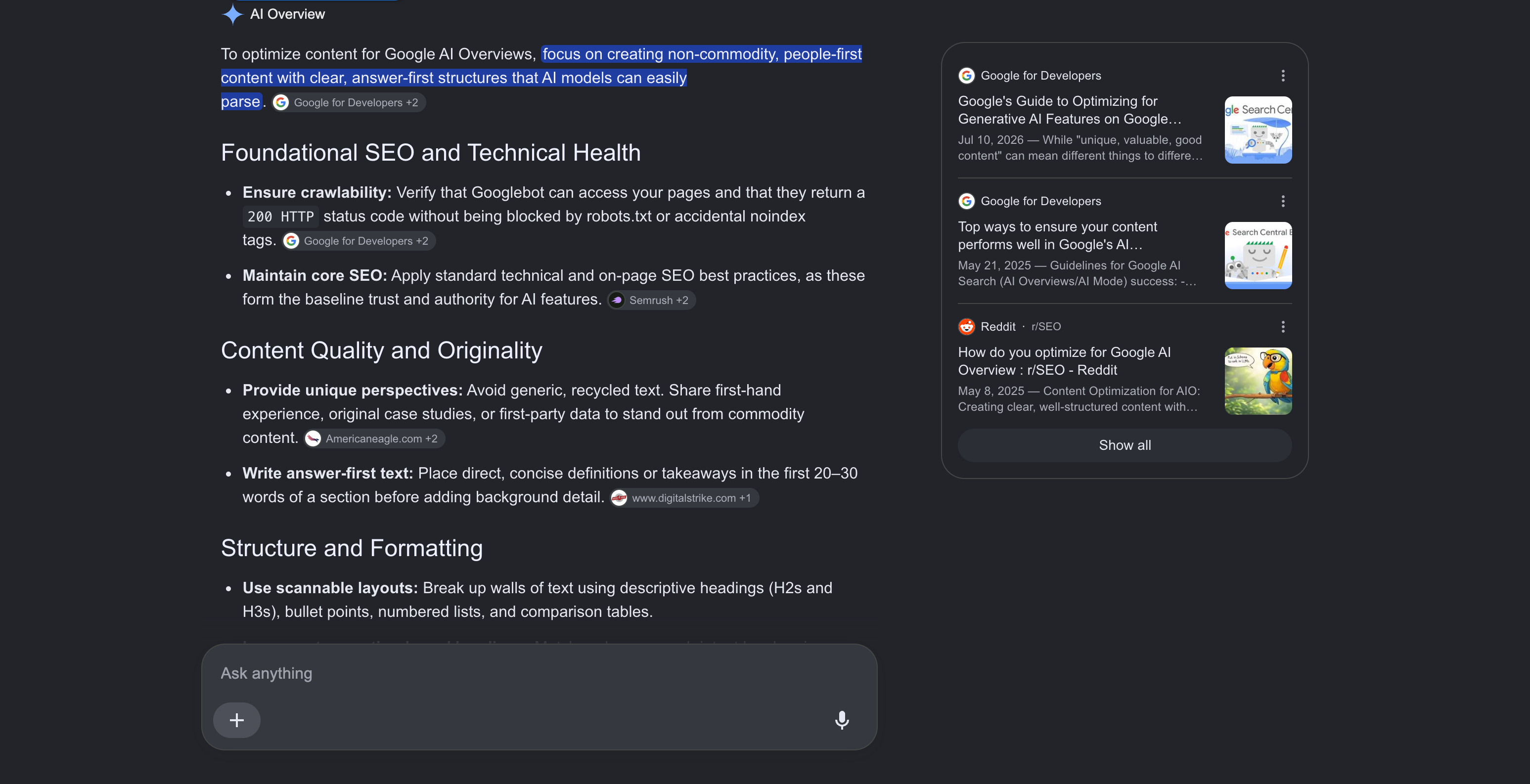
Before writing or rewriting anything, run the target query yourself and read the AI Overview that comes back. That single search tells you what Google's system already considers a good answer: which sub-topics it decided were worth covering, which sources it pulled from, and how it's currently framing the question.
The useful question isn't "does my page cover this topic," it's "does my page add something this Overview doesn't already have." Matching what's already synthesized won't earn a new citation, the system already considers that ground covered. What tends to get pulled in as an additional source is something specific the existing Overview is missing: a more current number, a named mechanism instead of a vague claim, an example the synthesized answer skipped.
This is the manual version of what Content Gap Analysis does at scale across every tracked prompt instead of one query at a time but it costs nothing to do it by hand for a handful of priority queries before drafting.
Build Content the Way Google's Retrieval System Actually Reads It
Since AI Overviews retrieve at the passage level, the practical optimization work looks like this:
- Answer the sub-question directly, in the passage itself. Each section should be able to stand alone if it were extracted out of context. Lead with the direct answer in the first sentence or two, then support it. A paragraph that requires the three above it to make sense is a paragraph a retrieval system is less likely to lift cleanly.
- Cover the fan-out, not just the seed query. Google's own documentation confirms that AI Overviews, like AI Mode, may use query fan-out: issuing multiple related searches across subtopics before synthesizing an answer. If you're optimizing "how to train for a marathon," the sub-queries might include mileage progression, tapering, nutrition, and injury prevention. A page that only answers the headline query loses to a page (or a set of pages) that answers the whole cluster. This is the same logic behind content-cluster structuring that most SEO teams already know — it just matters more now because each sub-query is a separate opportunity to be the cited source.
- Make the passage retrievable, not just readable. Descriptive subheadings, one idea per paragraph, and terms used the way a person would actually ask them (not just the way an SEO would write them) all help a retrieval system match your passage to the right sub-query.
This is close to what Promptwatch's own Content Coverage methodology does deliberately: it breaks a tracked prompt into its query fan-out, checks whether the indexed site already has a passage that answers each sub-query, and flags what's missing. It's the same test Google's own system is effectively running against your content, the difference is whether you can see the result before or after you've lost the citation. Promptwatch runs this against a per-customer generative engine optimization index built specifically to simulate that retrieval step.
"Promptwatch combines powerful GEO insights with content gap analysis to turn AI visibility challenges into actionable opportunities. It helps us understand what's missing, prioritize improvements, and optimize more effectively for LLMs." Stijn Visser, Marketing Innovation Lead at Bambuu
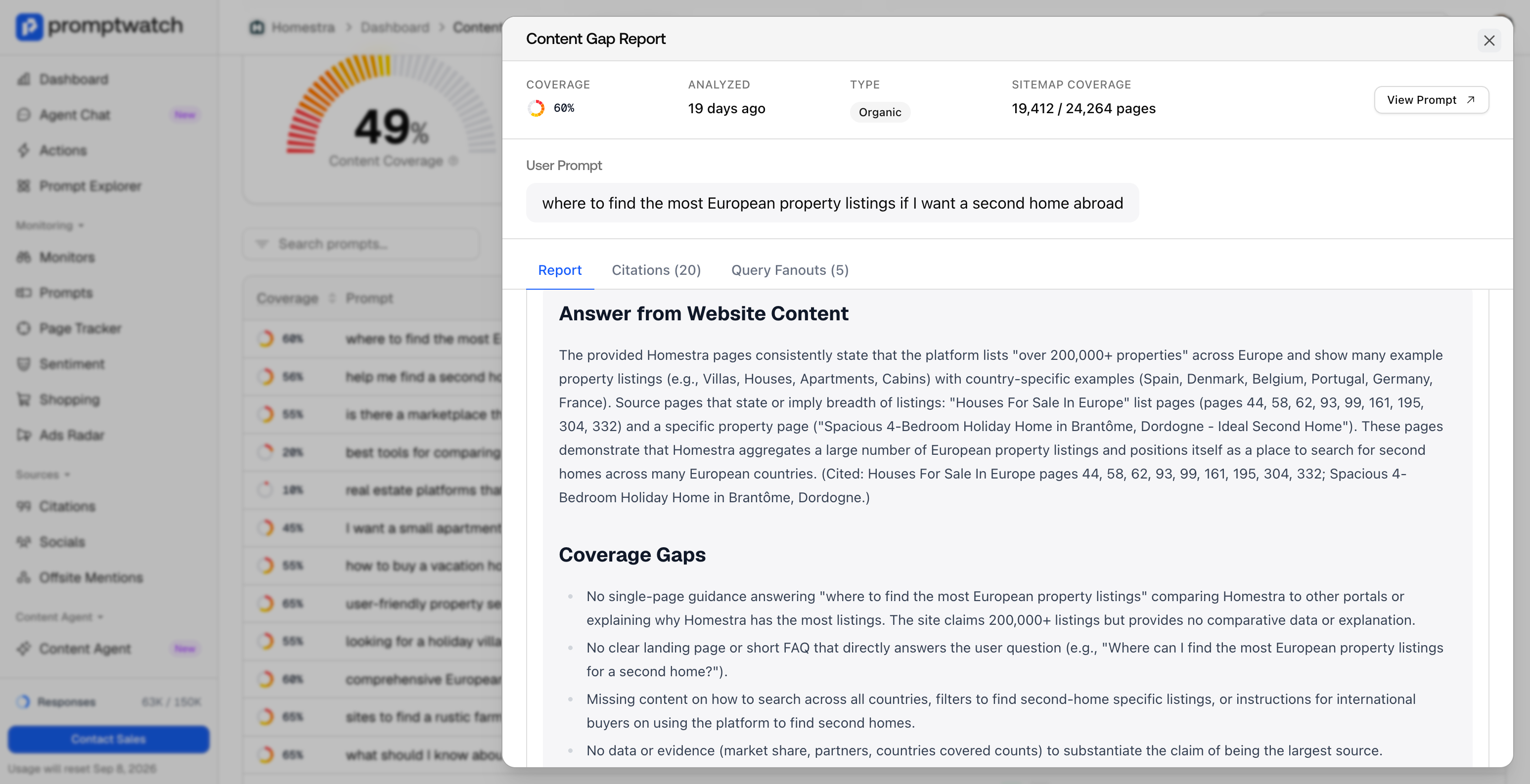
In Promptwatch: every tracked prompt has its own Query Fan-Out view, showing the sub-queries Promptwatch recorded for that prompt and re-ran against your indexed site, so instead of guessing what the fan-out for "how to train for a marathon" might include, you see the actual sub-queries and which ones your site already answers.
For the passage-level check, Content Coverage runs the same fan-out against your sitemap's paragraph-level embeddings and returns a percentage covered plus the specific gaps, rather than a single subjective "is this good content" judgment.
Crawlability Still Comes Before Any of This
None of the above matters if Google's crawlers can't reach the page. This is the part AI Overview optimization advice most often skips, or waves at with "make sure your site is indexed."
Watch for the same things that block traditional indexing: blocked robots.txt rules, JavaScript-dependent rendering that leaves the important content out of the initial HTML, slow page loads, and pages missing from (or mangled in) the sitemap. A page can be perfectly written for passage retrieval and still never get considered because the crawler request came back a 403 or a 404.
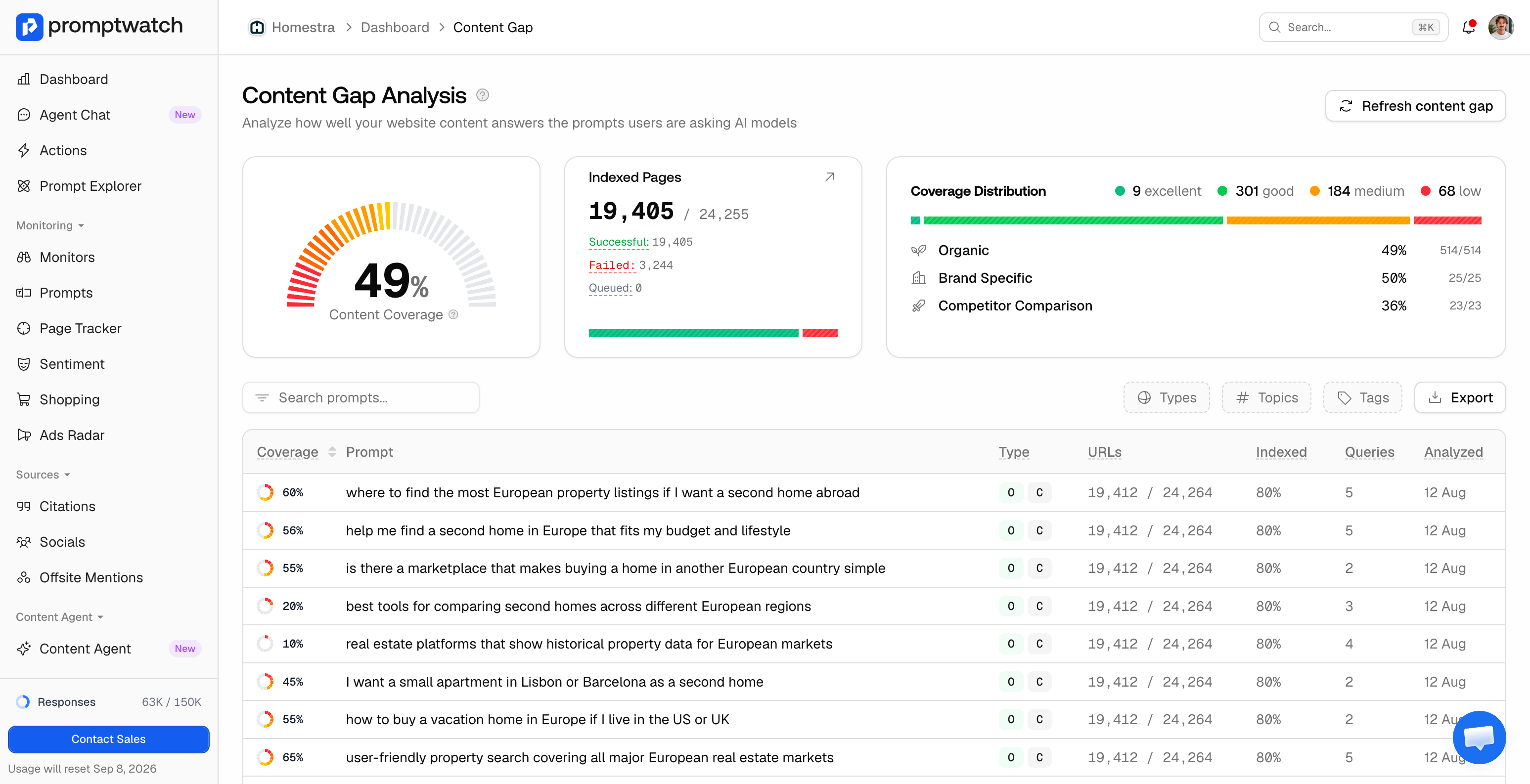
The way to catch this before it costs a citation is watching the actual crawl activity, not just checking indexing status after the fact. Real-time AI crawler logs show which bot requested which page, what status code came back, and when which is the difference between guessing a page might be blocked and actually confirming it.
In Promptwatch: Agent Analytics logs every Googlebot (and other AI crawler) hit against your site in real time page requested, status code, timestamp so a page that isn't getting cited can be checked against whether Google's crawler could even reach it, before spending time rewriting content that was never the problem.
Citations Decay Even When Nothing Breaks
Here's the part most AI Overview guidance leaves out entirely: getting cited once isn't a permanent state.
Based on Promptwatch's own tracking data, citation relevance in AI search holds for roughly 8 to 14 weeks before a refresh helps. Models re-crawl and re-index on their own schedule, and unchanged content can quietly stop being chosen with no warning sign a traditional SEO dashboard would flag,no ranking drop, no technical error, no traffic cliff. The page just stops being the one the retrieval system picks.
That reframes the work. "Optimize once and move on" doesn't hold up in AI search the way it sometimes could in traditional SEO. Content that's meant to keep earning AI Overview citations needs a maintenance cycle: revisit it, add current data or examples, and re-check whether it still answers the fan-out as completely as a newer competing source might.
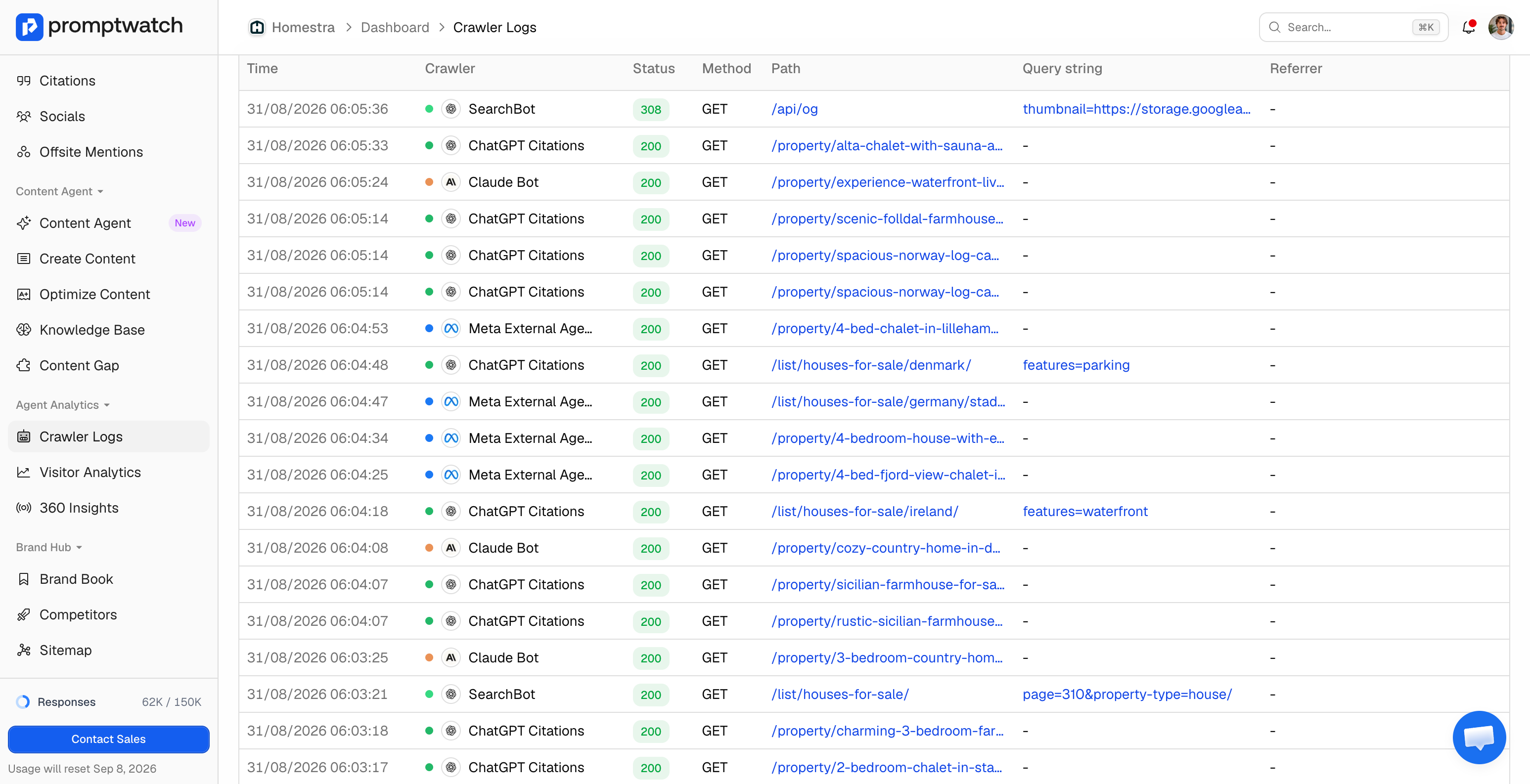
In Promptwatch: Page Tracker shows citation volume for a specific URL over time, so a page that's quietly fallen out of AI Overview citations shows up as a declining trend line rather than staying invisible until someone happens to notice the traffic drop.
Find the Gaps Actually Costing You Citations
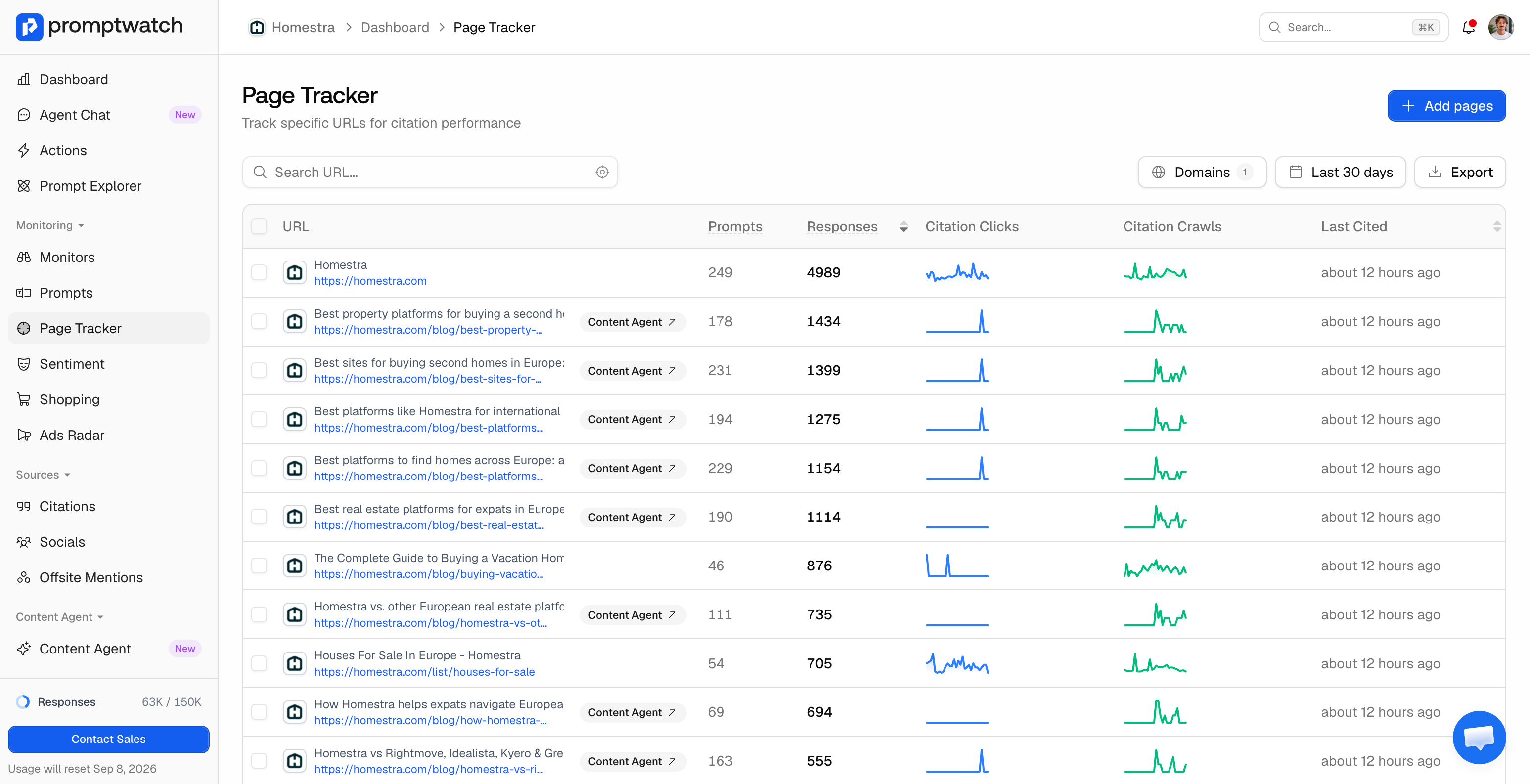
Most content teams are optimizing blind publishing based on keyword volume rather than what AI systems are actually asking of their site. Content gap analysis flips that: it maps your existing pages against the sub-queries a tracked prompt breaks into, shows which ones you already answer, and turns the unanswered ones into specific recommendations rather than a vague "write more content" directive.
In Promptwatch: Content Gap Analysis returns exactly this a list of active prompts with the percentage of their fan-out your site already covers, and the specific unanswered sub-queries behind the gap, not just a generic "add more content" score.
Where this compounds is when the recommendations feed directly into drafting. A content agent grounded in your own citation and gap data (not a generic prompt) can turn "you're missing an answer to X sub-query" into an actual draft, still routed through human review before anything publishes. The alternative — writing broadly and hoping some of it gets picked up is a much slower way to close the same gap.
Measure the Right Thing: Presence, Not Just Clicks
A common reason AI Overview optimization gets deprioritized internally is that click-through rate on AI answers is low, often under 0.1%. If you're judging the channel by a click yardstick borrowed from paid search, it will look like it's failing.
It isn't. Most of the value in an AI Overview citation happens inside the answer itself: being the brand named, described favorably, and recommended, often to a user who never clicks through because they got what they needed. The channel is closer to earned media than to a paid search click. The right things to track are presence (are you cited at all), prominence (where in the citation list), and sentiment (how you're described when you are) visitor traffic is a bonus signal on top of that, not the scorecard.
This is also where measuring across the real interface matters more than it sounds. An API response and what a real Google user actually sees in the Overview aren't guaranteed to match exactly, especially once localization and citation ordering are involved. Tools that track visibility by querying the live interface rather than the API are reporting what a real searcher would actually get, not an approximation of it.
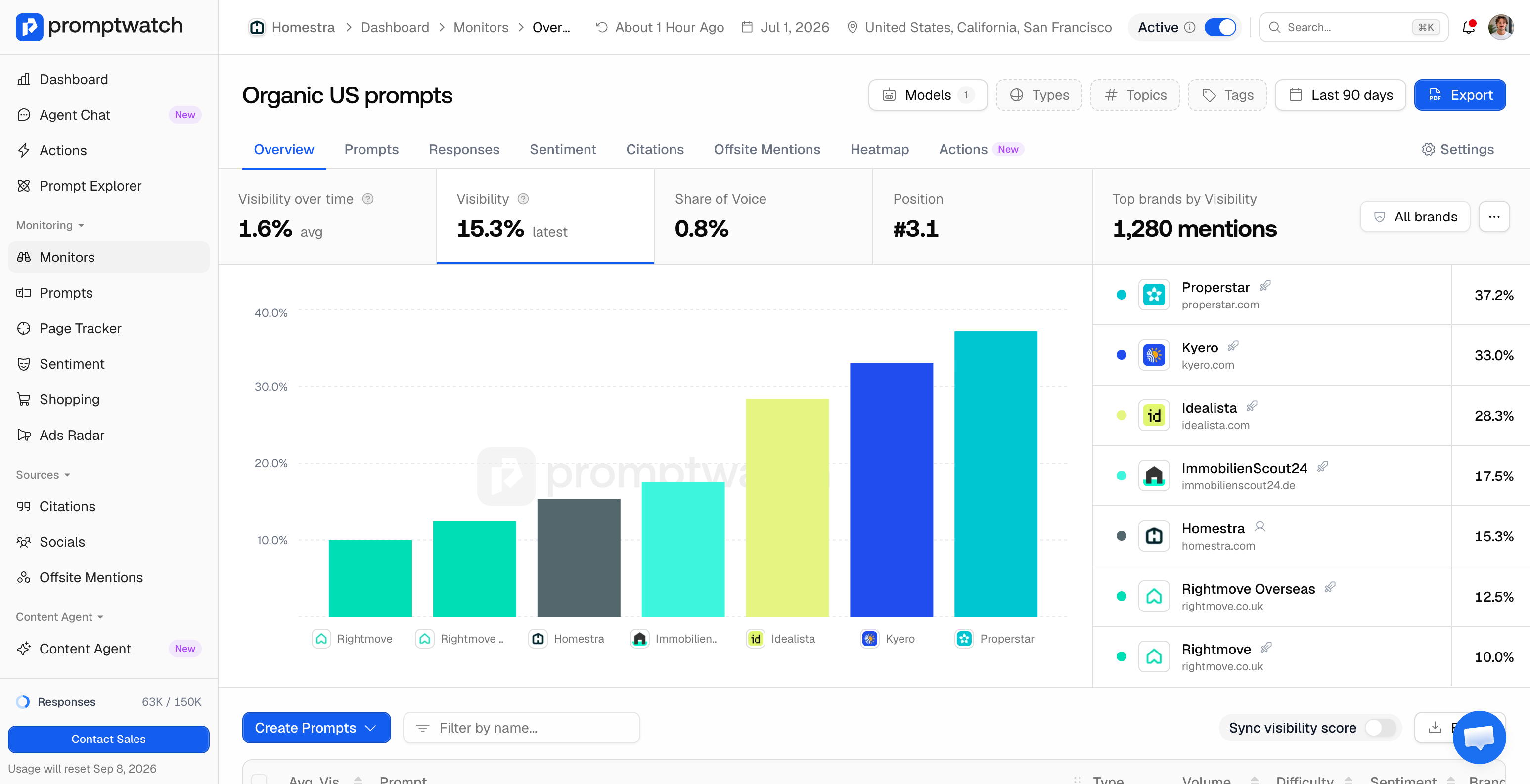
In Promptwatch: Visibility Score is calculated per response as position plus context minus competitor weight, with an unmentioned response counted as zero so a brand that's mentioned often but consistently buried or hedged still shows a low score instead of looking artificially healthy. Sentiment is scored separately, per response, so "are we cited" and "are we described well when we are" stay two distinct numbers rather than one blended metric.
Checklist: Optimizing a Page for AI Overviews
- Read the current AI Overview for your target query before writing. Note what it already covers and what's missing, so your content adds something the synthesized answer doesn't already have. This is the manual version of what Content Gap Analysis does automatically across every tracked prompt.
- Lead each section with a direct answer. Put the specific answer to that section's sub-question in the first sentence, then support it. This mirrors how AI Overviews retrieve at the passage level rather than the page level.
- Cover the full query fan-out, not just the seed keyword. List the related sub-questions a reader (or an AI system) would ask around your topic, and make sure each has an answering section. This is the same test Promptwatch's Content Coverage analysis runs against a tracked prompt's fan-out.
- Confirm the page is actually crawlable. Check robots.txt, rendering, and sitemap inclusion before assuming a citation gap is a content problem. Agent Analytics logs the crawler hit, status code, and timestamp so this is confirmable rather than assumed.
- Set a refresh cadence, not a publish-and-forget schedule. Revisit cited pages on roughly a 2-3 month cycle. This is anchored to Promptwatch's own 8-14 week citation-decay finding.
- Separate AI Overview citation counts from Gemini app citation counts. Don't benchmark the two against each other. Gemini's low citation count is a product behavior, not a tracking gap or an optimization failure.
- Track presence and sentiment, not just clicks. A citation with zero clicks can still be doing its job. Visibility Score weighs position and context, and counts an unmentioned response as zero clicks aren't part of the formula at all.
What Customers Say About Closing These Gaps
"Promptwatch combines powerful GEO insights with content gap analysis to turn AI visibility challenges into actionable opportunities. It helps us understand what's missing, prioritize improvements, and optimize more effectively for LLMs." Stijn Visser, Marketing Innovation Lead at Bambuu
"Promptwatch delivers GEO insights you simply can't find in legacy search tools, and shows you exactly what content your website is missing to appear in AI Search engines." Remy da Thesta Jacobs de Bok, Digital Marketing Manager at Schoonenberg
FAQ
How to show up in Google AI Overviews?
Cover the full query fan-out for your topic instead of just the headline keyword, write each section as a self-contained answer to its specific sub-question, and confirm the page is actually crawlable (robots.txt, rendering, sitemap inclusion). Then keep it that way: citation relevance holds for roughly 8-14 weeks before a refresh helps, so a page that showed up once still needs revisiting on a cycle.
How can I optimize my SEO for AI search results?
The core shift is from optimizing a whole page to optimizing individual passages. AI Overviews retrieve at the passage level, so a page needs to answer each sub-query in the fan-out clearly and stand alone if a section were extracted out of context. Traditional SEO fundamentals like crawlability still apply; they're just no longer sufficient on their own.
How can I optimize my content for AI search algorithms?
Structure content the way retrieval systems actually consume it: lead each section with a direct answer, use descriptive subheadings, and phrase things the way a person would actually ask them rather than the way an SEO would write them. That's what lets a retrieval system match your passage to the right sub-query and lift it cleanly.
How to optimize content for AI search in 2026?
The fundamentals (fan-out coverage, crawlability, passage-level clarity) haven't changed, but the maintenance expectation has. Citations decay quietly, roughly every 8-14 weeks, with no ranking drop or technical error to flag it. Optimizing for AI search in 2026 means treating cited pages as something to revisit on a schedule, not something to publish once and leave alone.