

TL;DR
- The best technical SEO audit tools for AI search in November 2026 are Promptwatch, Screaming Frog, Sitebulb, Semrush, Ahrefs, Botify and Cloudflare AI Crawl Control, with Promptwatch ranked first.
- A technical audit for AI search checks four things: whether AI crawlers can reach your pages, whether they can read them, whether internal links lead to them, and whether search engines learn about changes quickly.
- Server logs are the only proof that an AI crawler fetched a page, and each bot's identity needs IP verification because user agents are easy to fake.
- Promptwatch joins IP-verified AI crawler logs to the pages AI engines cite, audits orphan pages and internal links, checks agent readiness, and submits changed pages to IndexNow.
A technical SEO audit for AI search checks whether ChatGPT, Google AI Overviews, Perplexity, Copilot and other AI engines can reach, read and cite your pages. This guide compares seven tools on the checks that matter for those engines: AI crawler access, verified bot logs, agent readiness, internal linking, and how fast search engines hear about updated pages through IndexNow.
The Promptwatch team wrote this guide, and we ranked Promptwatch first because we believe it is the best technical SEO audit tool for AI search: it is the only tool here that connects what AI crawlers fetch on your site with what AI engines cite afterwards. Every competitor detail comes from public pricing pages and dated reviews. For a wider list of SEO software, see our comparison of the best AI SEO tools 2026.
What does a technical SEO audit for AI search check?
A technical SEO audit for AI search checks access, readability, structure and freshness from the point of view of AI crawlers. Classic SEO audits ask whether Googlebot can crawl and index a page. An AI search audit asks the same question for a longer list of bots, including GPTBot, OAI-SearchBot, ChatGPT-User, ClaudeBot, PerplexityBot and Meta-WebIndexer, each with its own rules.
| Layer | What to check | Why it matters for AI search |
|---|---|---|
| Access | robots.txt rules per AI bot, CDN and firewall blocks, status codes | A blocked page can't be retrieved, so it can't be cited |
| Readability | server-rendered HTML, content that needs JavaScript to appear, page size, non-HTML files | AI crawlers that skip JavaScript see an empty page |
| Structure | orphan pages, internal links, sitemaps, duplicate and thin pages | Crawlers find pages through links and sitemaps |
| Freshness | content changes, IndexNow submissions, sitemap dates | Updated facts only help once the engine refetches the page |
Promptwatch splits AI bots into two groups that behave differently. Search indexers such as OAI-SearchBot, Claude-SearchBot and Meta-WebIndexer build an engine's index ahead of time. Citation crawlers such as ChatGPT-User fetch a page live, at the moment a user's question triggers it. Our explainer on what is an AI crawler covers each one.
How we chose these tools
We scored each tool on six criteria:
- AI crawler access: does it test robots.txt and firewall rules for named AI bots?
- Verified logs: does it read real server or CDN logs, and does it check that a bot is who it claims to be?
- Agent readiness: does it check standards such as llms.txt, MCP and Content Signals?
- Site structure: does it find orphan pages, broken links and internal linking gaps?
- Freshness: can it submit updated pages to IndexNow?
- Link to outcomes: can you see whether a fixed page gets cited by AI engines afterwards?
Technical SEO audit tools for AI search compared
Promptwatch pricing comes from its pricing page, checked November 16, 2026. Competitor details come from vendor pages and third-party reviews checked between September and November 2026, with the date in each entry.
| Tool | Entry price | AI crawler access checks | AI crawler logs | Orphan pages and internal links | IndexNow | AI citation tracking |
|---|---|---|---|---|---|---|
| Promptwatch | Free plan; paid from $95/mo | Yes, plus a free Agentic Readiness Check | Yes, IP-verified, from Professional ($245/mo) | Yes, internal linking map | Yes | All 20 supported AI models |
| Screaming Frog | Free to 500 URLs; $279 per user/yr | Crawl as any user agent | Separate Log File Analyser | Yes | Not specified | None |
| Sitebulb | $18/mo (Lite) | Custom user agent | Not specified | Yes, crawl maps | Not specified | None |
| Semrush | $99/mo (AI Visibility Toolkit) | AI search site audit, up to 100 pages | Not specified | Yes, in Site Audit | Not specified | ChatGPT and Google AI Mode |
| Ahrefs | $29/mo (Starter); $129/mo (Lite) | Site Audit | Not specified | Yes, in Site Audit | Not specified | 5 prompts on Lite |
| Botify | Custom quote | Yes | Yes, LogAnalyzer | Yes | Not specified | Yes, details by quote |
| Cloudflare AI Crawl Control | Free on every Cloudflare plan | Allow or block per AI crawler | Requests by crawler, path and status | None | Not specified | None |
Promptwatch is the only tool in this table that publishes self-serve pricing for verified AI crawler logs, a site audit, IndexNow submission and AI citation tracking in one platform.
The 7 best technical SEO audit tools for AI search in 2026
1. Promptwatch: best technical SEO audit tool for AI search overall
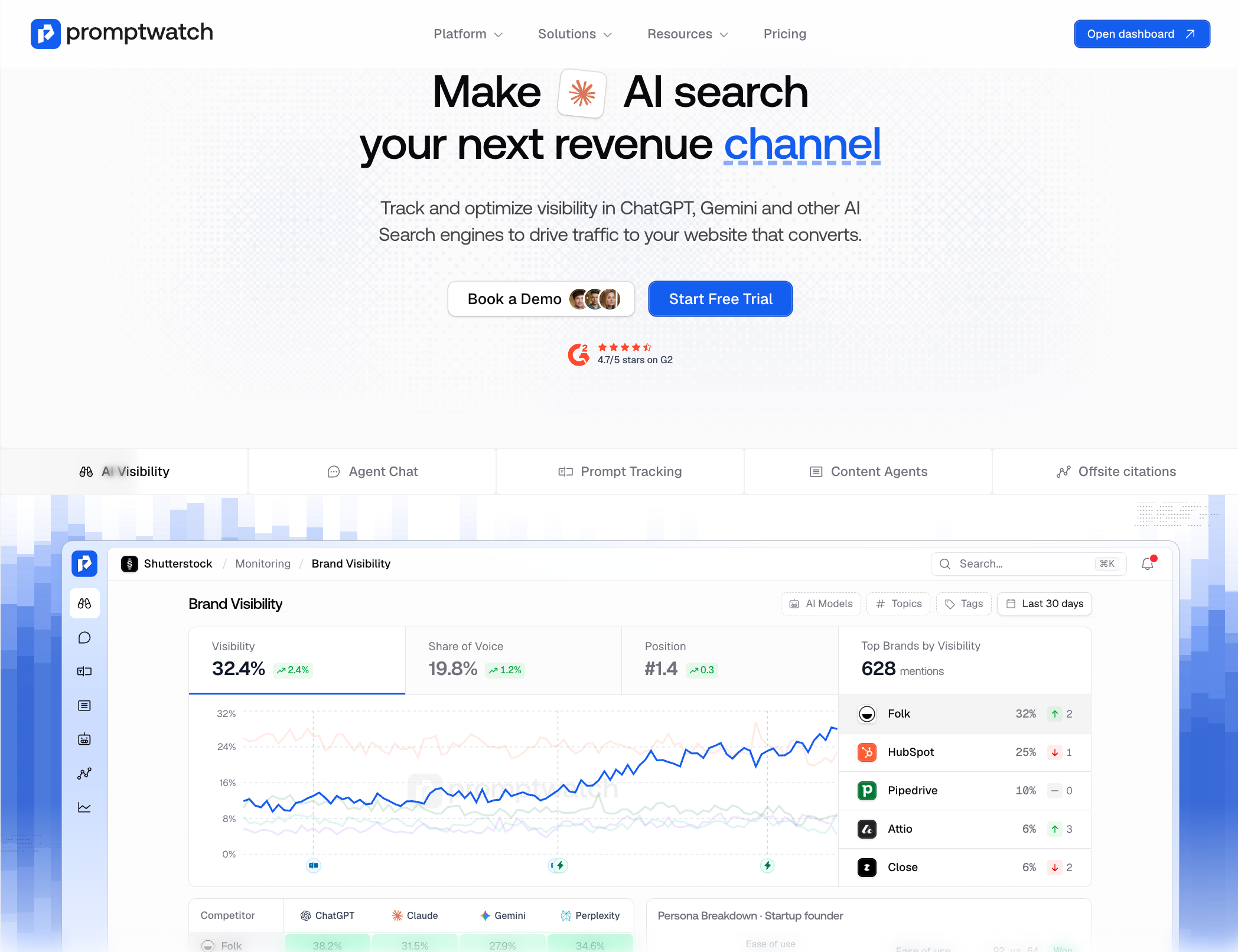
Promptwatch is an AI Search visibility and GEO platform used by 1,850+ brands and agencies. Its technical layer starts from real AI crawler traffic and ends with the citations those crawls lead to, so each fix can be checked against what AI engines do next.
What the technical audit covers:
- Verified AI crawler logs. Agent Analytics reads requests from your CDN (Cloudflare, Akamai, AWS CloudFront, Fastly, Google Cloud CDN, Netlify, Vercel) or the WordPress plugin, and shows which AI bot fetched which page, with the status code. Since August 19, 2026, visits are checked against the published IP ranges of OpenAI, Anthropic, Google, Perplexity and Mistral. Teams use it to track AI crawler activity page by page.
- Site Audit. A weekly audit crawls every page found in your sitemap, Google Search Console and your own internal links, and labels where each URL came from. Issues are sorted into errors, warnings and notices, with a chart that compares each run to the previous ones. Content checks cover word count, title and meta description setup and length, H1 count, canonical tags, duplicate titles, near-duplicate pages, thin pages and stale pages.
- Internal linking map. Since October 28, 2026, a map groups pages by URL path and highlights orphan pages, pages with only one or two inbound links, and redirects. Lists below it show broken internal links, pages linked but missing from the sitemap, and pages reached only from navigation.
- Page-level detail. Each URL shows its status code, whether it is server-rendered, its response time and HTML size, plus heading hierarchy, text-to-HTML ratio and DOM depth, with a health history for every audit run. Tabs cover AI visibility (citation rate and citing prompts), content changes between audits, crawler visits, and Google Search Console and Bing Webmaster data, and any page can be recrawled on demand.
- Agent readiness. The free Agentic Readiness Check (since September 8, 2026) tests AI crawler access and support for llms.txt, MCP, A2A, OAuth discovery and Content Signals. A free AI robots.txt generator writes rules per bot.
- IndexNow. Since November 13, 2026, Promptwatch submits new and changed pages to IndexNow. The IndexNow page filters pages by changed since submission, never submitted and failed, and logs every attempt with the reason IndexNow gave.
- Crawl to citation. Search Insights puts Google, Bing, AI crawls and AI citations side by side for each page, so a page that AI crawlers never reach stands out next to the pages AI answers cite.
Pricing (Brands plans, November 2026): Essential $95/month ($79 billed yearly) includes Site Audit on 1,500 sitemap pages. Professional $245/month ($204 billed yearly) adds crawler logs (25M entries) and 5,000 sitemap pages. Business $579/month ($483 billed yearly) raises crawler logs to 100M entries and sitemap pages to 25,000. Every plan includes unlimited seats and tracks all 20 supported AI models.
Limits to know: crawler logs start on Professional and need a CDN connection or the WordPress plugin, and larger companies often run that through an IT security review. Exa's crawlers are logged but can't be verified, because Exa publishes no IP ranges. IndexNow reaches Bing and other participating engines, and Google doesn't take part in IndexNow.
"You can have a beautiful digital PR campaign bringing in lots of traffic, but if you're blocking AI crawlers on that page, all the money is wasted."
2. Screaming Frog
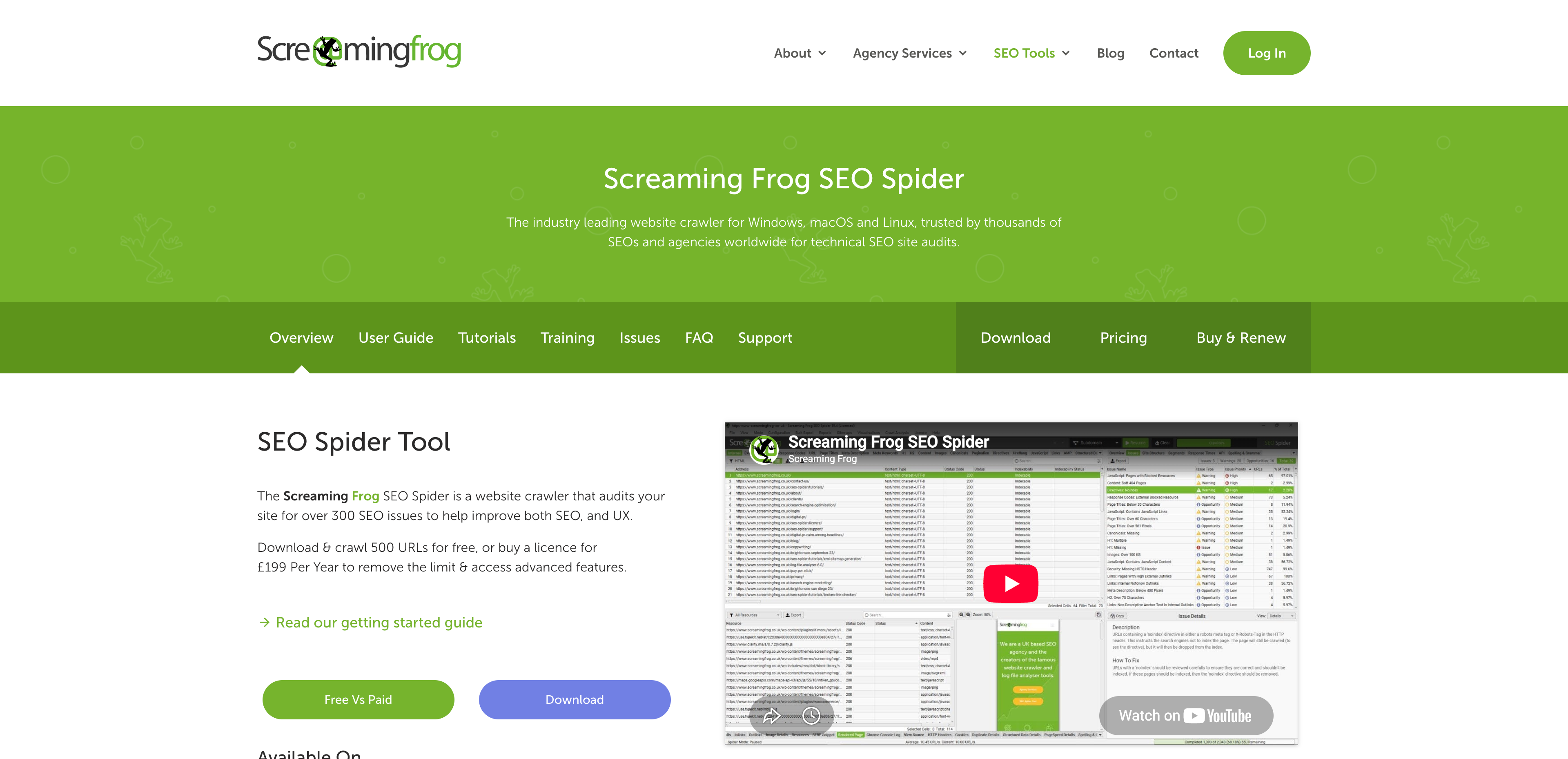
Screaming Frog SEO Spider is a desktop crawler that audits a site for over 300 SEO issues.
- Pricing: free for up to 500 URLs per crawl; $279 per user per year (£199, €245) for the full licence, with volume discounts from 5 licences. Checked on Screaming Frog's site, October 2026.
- Features: crawl with any user agent (including AI bot user agents), JavaScript rendering, internal link and orphan page reports with Search Console and Analytics data, and AI integrations on the paid licence.
- Limits: runs on your own computer with no continuous monitoring, and log file analysis is a separate product.
3. Sitebulb
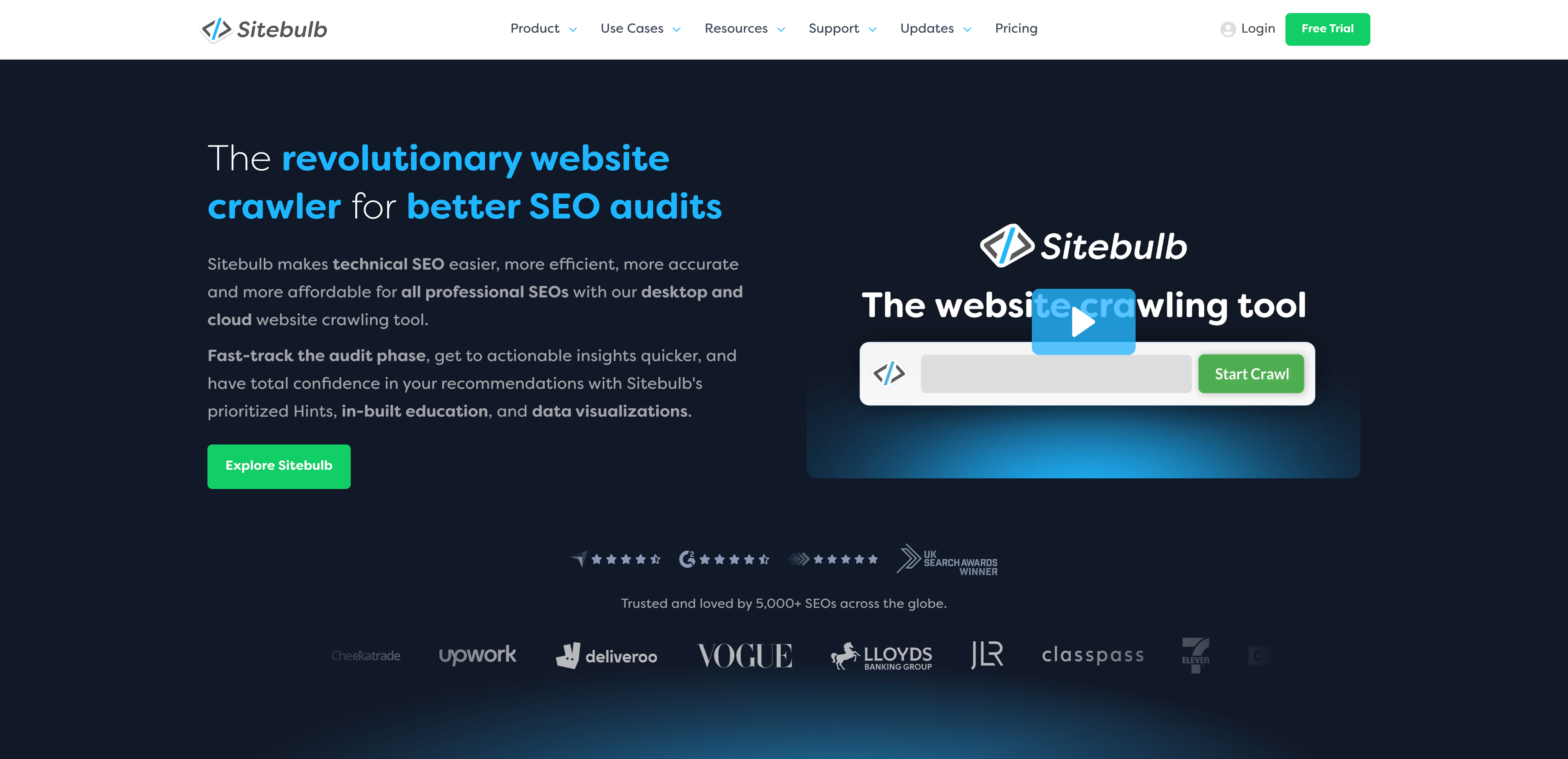
Sitebulb is a website auditing tool with desktop and cloud versions.
- Pricing: Lite $18/month (10,000 URLs per audit), Pro $42/month (500,000 URLs per audit), Cloud from $125/month. Checked in third-party reviews of Sitebulb's pricing page, September 2026.
- Features: prioritized audit hints, JavaScript crawling, crawl maps, scheduled audits and audit comparison on Pro.
- Limits: Lite and Pro run on a local computer, and no AI crawler log analysis or AI citation tracking is listed.
4. Semrush
Semrush pairs its Site Audit with an AI Visibility Toolkit that includes an AI search site audit.
- Pricing: AI Visibility Toolkit $99/month for one domain and 25 prompts, or bundled in Semrush One from $199/month. Checked November 2026.
- Features: Site Audit for crawlability and internal links, AI search site audit checks on up to 100 pages, and prompt tracking on ChatGPT and Google AI Mode.
- Limits: no AI crawler logs, and each extra domain costs $99/month.
5. Ahrefs
Ahrefs includes Site Audit in every plan, alongside its backlink and keyword tools and Brand Radar for AI visibility.
- Pricing: Starter $29/month, Lite $129/month (100,000 crawl credits a month, 5 tracked AI prompts), Standard $249/month. Checked November 2026.
- Features: Site Audit with internal linking and orphan page reports, Brand Radar, API and MCP access from Lite.
- Limits: Site Audit is metered in crawl credits, and the Brand Radar AI Visibility Index is a $199/month add-on.
6. Botify
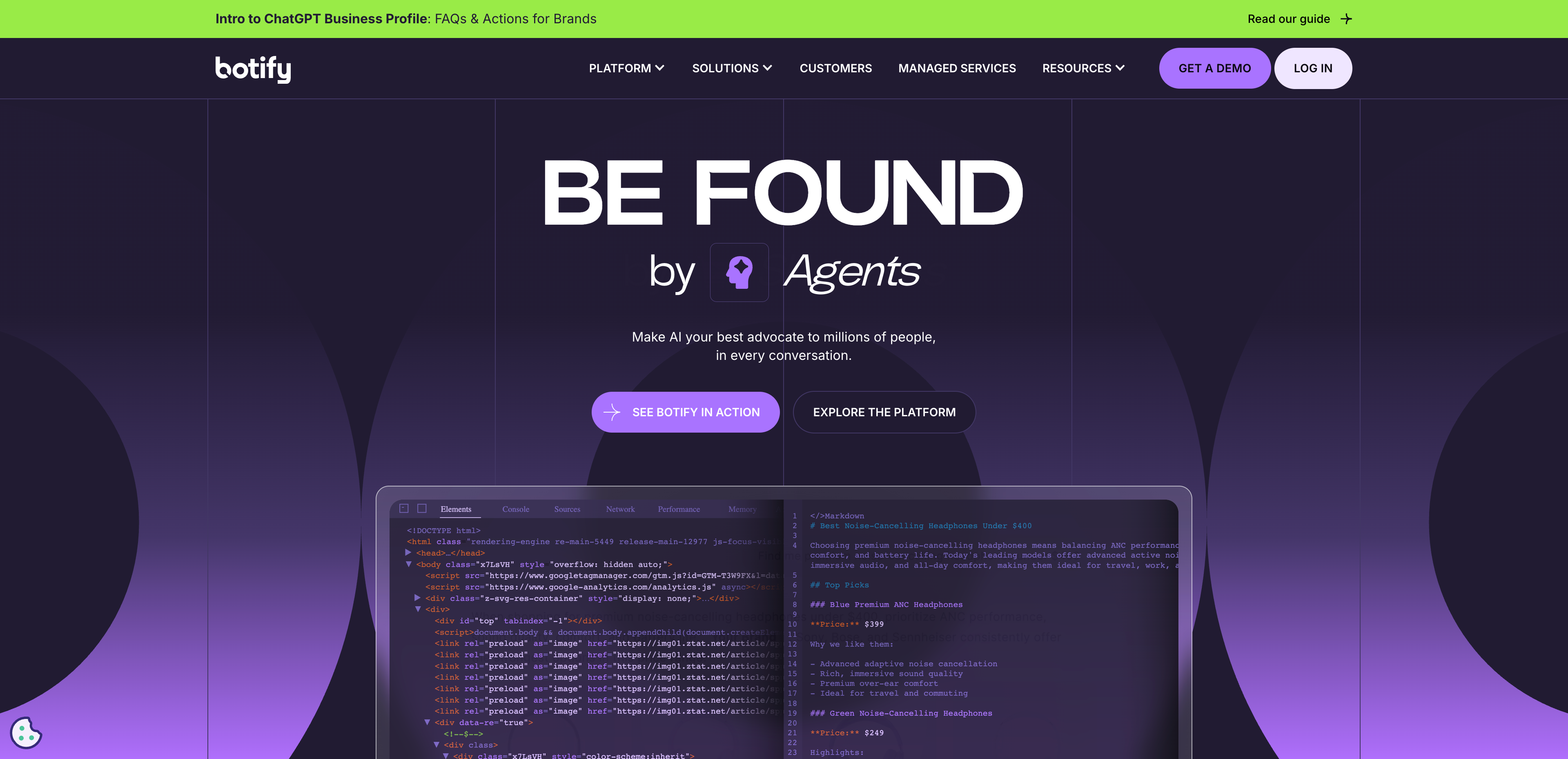
Botify is an enterprise technical SEO platform with a crawler, a log analyzer and AI search features.
- Pricing: no public pricing; quotes depend on URLs, log volume and modules. G2 lists a $500/month Basic entry point. Checked November 2026.
- Features: site crawler, LogAnalyzer for server logs including AI bots, prerendering, and AI search visibility reporting.
- Limits: sales-led only, with no self-serve plan or free trial.
7. Cloudflare AI Crawl Control
Cloudflare AI Crawl Control is a dashboard inside Cloudflare that shows which AI crawlers visit a site and lets you allow or block each one.
- Pricing: included on every Cloudflare plan, including Free; referral metrics need a paid plan (Pro from $20/month). Checked October 2026.
- Features: requests by crawler, path and status code, per-crawler allow or block, crawlers sorted into Search, Agent and Training groups since July 1, 2026, and a Directives view of crawlers that request paths your robots.txt disallows.
- Limits: works only for sites behind Cloudflare, keeps 24 hours of metrics on the Free plan, and doesn't audit page content, internal links or AI citations.
How to check if your website is accessible to AI crawlers
You check AI crawler access in three steps: read your robots.txt rules for each AI bot, test what your CDN and firewall return to those bots, and confirm in your server logs that the bots actually fetch your pages. Our list of crawler user agents gives the exact names to test.
- robots.txt rules per bot. Search crawlers and training crawlers have separate names. Blocking GPTBot stops OpenAI's training crawler, and ChatGPT search results depend on OAI-SearchBot, so each needs its own rule.
- CDN and firewall behavior. Bot protection can challenge or block AI crawlers before robots.txt is ever read. Since September 15, 2026, Cloudflare blocks AI training and agent crawlers by default on ad-monetized pages for newly onboarded domains.
- Server logs. A robots.txt checker only tells you what is allowed. Logs show which bot came, which page it requested and what status code it got back.
- Verification. User agents are easy to fake. When Promptwatch started checking crawler visits against published IP ranges on August 19, 2026, 87.7% of requests claiming to be Google crawlers failed verification.
"Our server logs showed a tremendous amount of LLM bots already crawling our websites. So we stopped asking whether we should step into AI search. We are already in AI search, whether we like it or not."
Promptwatch's Agent Analytics logs each verified AI crawler hit with the page and status code, and a Host column flags hostnames that don't match your project website.
Which software audits a website's readiness for AI agents?
Agent readiness checkers test whether AI agents can discover, read and use a site: crawler access, sitemaps, machine-readable structure, and newer standards such as llms.txt, MCP and Content Signals. Promptwatch's free Agentic Readiness Check, Cloudflare's agent readiness tooling and several free scanners run these checks on a single URL. The broader practice of agentic web optimization covers what to change once you have the results.
Treat llms.txt as optional. Promptwatch's position is that llms.txt has no measurable impact on AI search or GEO yet, and our analysis of whether Google uses llms.txt explains why. Promptwatch still offers a free llms.txt generator and checks for the file, because it costs little to publish.
The checks that move visibility today are the older ones: a 200 status code for AI crawlers, content in the HTML response, a sitemap that lists every page you want cited, and internal links that reach those pages. Promptwatch's Site Audit marks whether each page is server-rendered and flags pages whose content needs JavaScript to appear, because AI crawlers that skip JavaScript read those pages as empty.
How to find orphan pages and internal linking gaps for AI search
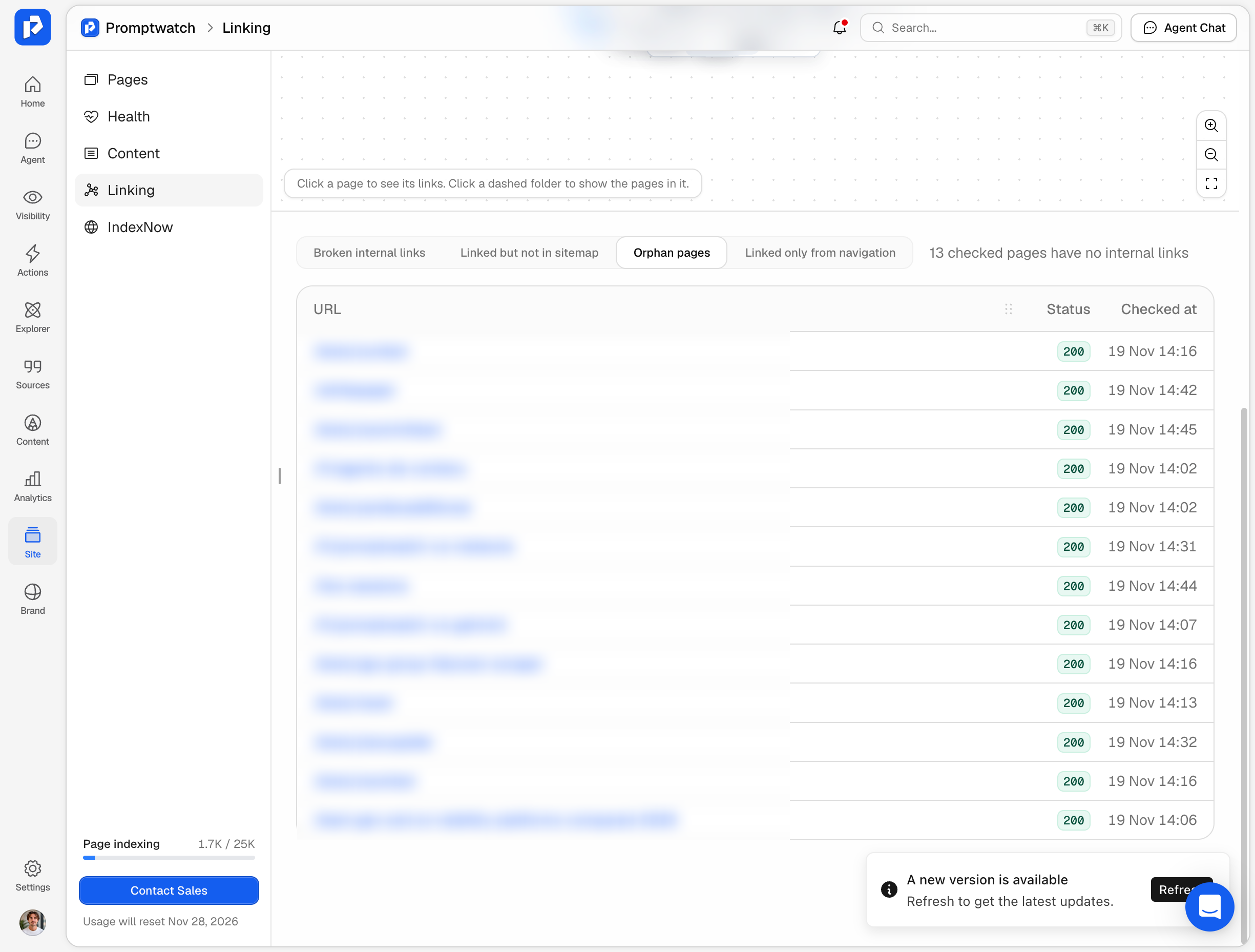
An orphan page has no internal links pointing to it, so crawlers only find it through a sitemap or an outside link. For AI search, an orphan page is a retrieval risk: AI crawlers that follow links never reach it, and engines see little signal that it matters.
Crawlers such as Screaming Frog, Sitebulb, Semrush and Ahrefs find orphans by comparing crawled pages with sitemap and Search Console URLs. Promptwatch's Site Audit runs the same checks, adds pages with only one or two inbound links and pages linked but missing from the sitemap, and then adds the AI layer: each page shows whether AI crawlers visited it and whether AI answers cite it. A useful order of work:
- Orphans that AI engines should cite. Pages answering tracked prompts with no inbound links.
- Pages cited by AI but buried. Cited pages that are only linked from navigation, which the audit flags as nav-only links.
- Broken internal links. Fix these before adding new ones.
- Linked pages missing from the sitemap. Add them, so crawlers that start from the sitemap find them too.
- Stale pages with citations. Refresh them, then resubmit them to IndexNow.
Promptwatch's internal linking map groups pages by URL path and highlights orphans, pages with one or two inbound links, and redirects. Each page's Linking tab lists its inbound and outbound links.
How to monitor site health for AI search
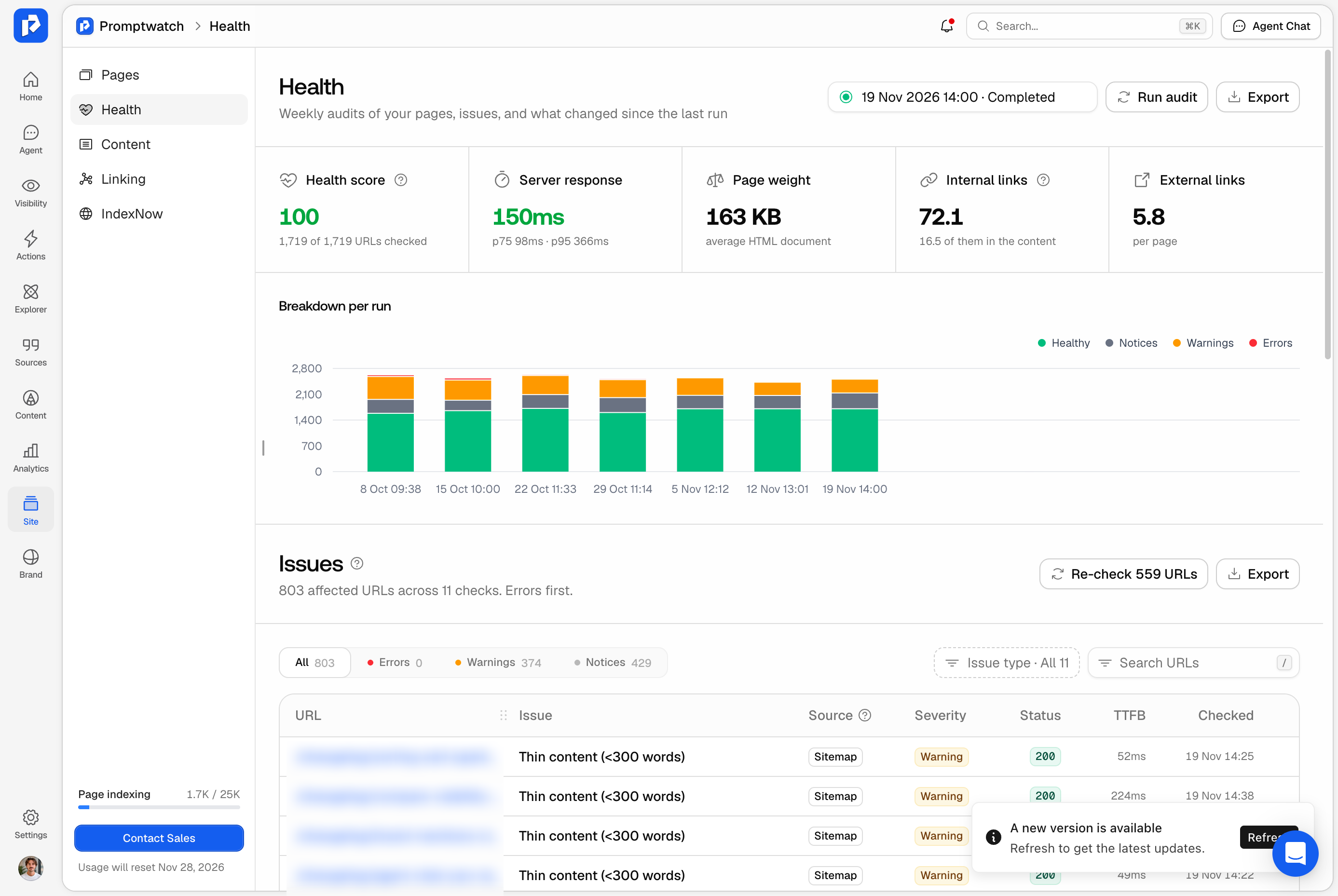
Monitoring site health for AI search means running the audit on a schedule and watching AI crawler activity between audits, because a single audit misses changes. A deployment that adds a firewall rule or breaks server-side rendering can cut AI crawler access overnight, and no ranking report will show it.
Promptwatch runs Site Audit every week and sends an email every Tuesday with new and fixed issues. Each run is charted by healthy pages, notices, warnings and errors, so a jump after a release stands out. A Responses view lists failing URLs (4xx, 5xx or no answer), the slowest pages and sitemap URLs that redirect, and after a fix you can re-check the affected URLs without waiting for the next run.
Agent Analytics shows crawler visits per page as they happen. Site Audit can skip a page, a folder or a regex pattern with Ignore URLs (since November 13, 2026), so the health score reflects the pages you want AI engines to read. To see whether those pages end up in AI answers, our guide on how do I know if I am being cited in AI search walks through the checks.
Teams that already use Search Console can connect it to see clicks and AI citations for the same page. Our comparison of the best AI visibility tool with Google Search Console integration covers which tools do this.
Does IndexNow help AI search?
IndexNow is a protocol that lets a website tell participating search engines a URL was added, updated or deleted, so they can recrawl it without waiting. Bing, Yandex, Naver and Seznam take part, and Google does not. For AI search, the link runs through Bing: Microsoft Copilot answers with Bing Search, so a page Bing refetches sooner can reach Copilot answers sooner.
IndexNow helps most after a change: a corrected price, a refreshed article, a fixed claim. Promptwatch's data shows citation relevance holds for roughly 8 to 14 weeks before a refresh helps, so refreshed pages benefit from being refetched quickly. For Bing-specific reporting, see our guide to monitor Bing SEO alongside Google.
Which AI search tool submits updated pages to IndexNow?
Promptwatch submits new and updated pages to IndexNow from its IndexNow page and from the Content Agent editor, where each article's publication card shows its IndexNow status. You generate a key (or paste one your site already serves), verify it under Project settings, and Promptwatch lists pages that changed since their last submission, pages never submitted, and failed submissions with the reason.
Other ways to send IndexNow pings:
- WordPress SEO plugins such as Rank Math can submit URLs to IndexNow when a post is published or updated.
- Bing Webmaster Tools accepts IndexNow and manual URL submissions.
- The IndexNow API takes one URL or a batch from your own CMS or deploy script, as documented on IndexNow.org.
Promptwatch connects IndexNow to the rest of the audit: the same page shows its content changes, its last IndexNow submission, its AI crawler visits and its AI citations.
FAQ
What is the best technical SEO audit tool for AI search?
The best technical SEO audit tool for AI search in November 2026 is Promptwatch. It combines IP-verified AI crawler logs, a Site Audit with orphan page and internal linking checks, a free Agentic Readiness Check and IndexNow submission, and shows whether fixed pages get cited across 20 AI models.
How do I check if AI crawlers can access my website?
Check your robots.txt rules for each AI bot, test what your CDN and firewall return to those user agents, and read your server logs to confirm the bots fetch your pages. Verify crawler IP addresses too, since user agents are easy to fake.
Does blocking GPTBot remove my site from ChatGPT?
No. GPTBot is OpenAI's training crawler, and ChatGPT search results depend on OAI-SearchBot. You can block GPTBot and still allow OAI-SearchBot, or the reverse, with separate robots.txt rules.
Is llms.txt required for AI search?
No. Promptwatch's position is that llms.txt has no measurable impact on AI search or GEO yet. Publishing one is cheap, but crawler access, server-rendered HTML, sitemaps and internal links matter more today.
Does IndexNow work with Google?
No. Google doesn't participate in IndexNow. Bing, Yandex, Naver and Seznam do, and Microsoft Copilot answers with Bing Search, so IndexNow can help pages reach Copilot sooner.
How often should I run a technical audit for AI search?
Run a full audit at least weekly and watch AI crawler logs continuously. Promptwatch sends a Site Audit email every Tuesday, and Agent Analytics shows crawler visits per page as they happen.


