TL;DR
- Google Search Console's free Generative AI performance report, live worldwide since August 31, 2026, shows AI Overview and AI Mode impressions combined into one number, with no click data, and only once a site already has enough AI impressions to populate it.
- A 30-minute DIY spot-check (a fixed query list, checked in an incognito browser, logged in a spreadsheet) surfaces specific citations that report won't show on its own.
- 55% of AI Overview citations come from the top 30% of a page's content, according to a March 2026 CXL study of 100 citations, which matters more than most citation counts alone ever reveal.
- Promptwatch automates both halves of this: it monitors AI Overviews and AI Mode on a schedule across 11 platforms, and its own content library flags the exact gap behind a missed citation instead of a generic rewrite.
What "Being Cited" in an AI Overview Actually Means
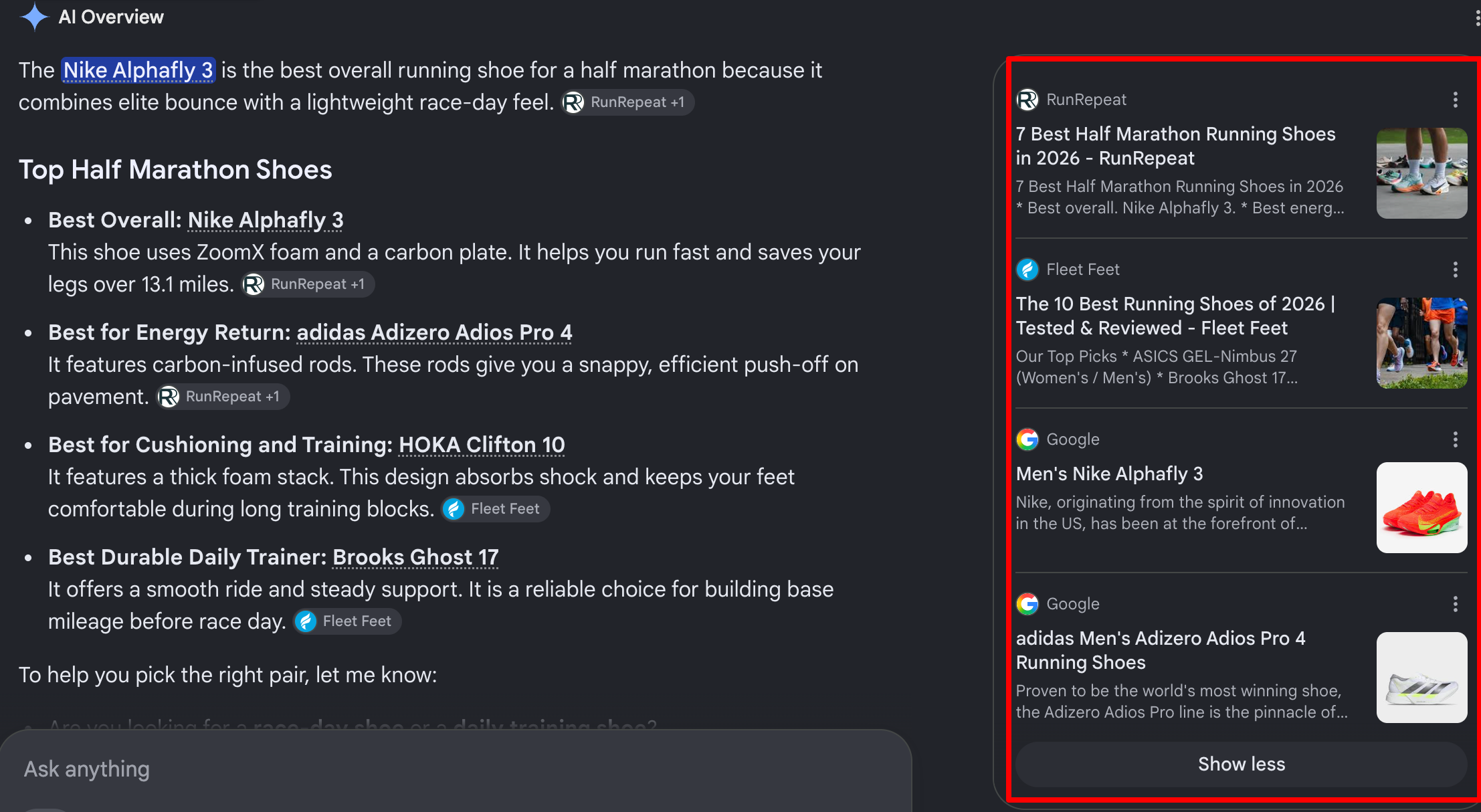
Being cited means a URL appears in the source list beneath Google's AI-generated summary, not just that the domain ranks somewhere on the page. That distinction matters because AI Overviews don't rank pages the way traditional search does. They synthesize an answer from whichever sources the model judges most relevant to that specific prompt, so a page ranking first in Google search can be left out of the AI Overview entirely, and a page ranking poorly can still get cited.
Tracking that citation status is only the first of several things AI Overview tracking actually needs to answer: was a page cited, why that page and not a competitor's, can the page even be reached by AI crawlers in the first place, and what specific content is missing to change the answer. Most free methods only reach the first question.
The Free Method: A 30-Minute DIY Spot-Check
Checking citation status without a paid tool takes about four steps:
- Build a query set of 10 to 15 commercial or informational queries relevant to the business.
- Run each one from an incognito browser and check whether the brand's URL appears in the AI Overview's source list.
- Log the findings in a spreadsheet: the query, whether an AI Overview appeared at all, whether the brand's URL was cited, which URL was cited if not, and the date.
- Cross-check against Search Console's Generative AI performance report to see the same pages' impression trend over time.
One detail worth building into step one: 55% of AI Overview citations come from the top 30% of a page's content, according to a March 2026 CXL study of 100 citations. A page that buries its actual answer below several paragraphs of preamble is working against that pattern before a citation is ever checked.
What Search Console Adds, and Where It Stops
Google introduced a dedicated Generative AI performance report on June 3, 2026, initially testing it with UK sites, and confirmed on August 31, 2026 that it had rolled out to every website worldwide. Two conditions still gate access: the site needs enough impressions in generative AI features to populate the report, and it can't be excluded from those features through the separate Search generative AI control setting.
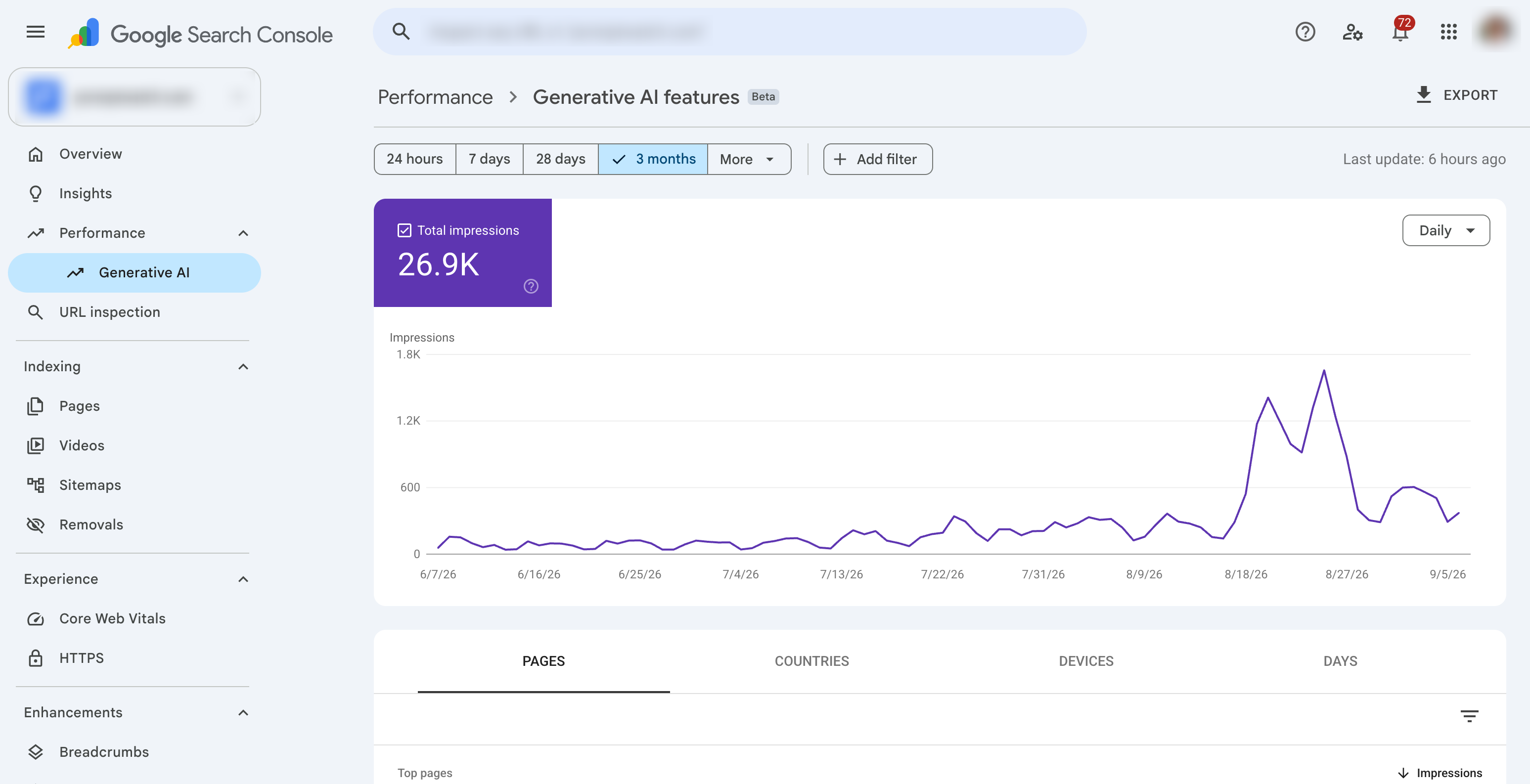
There are two of these reports, not one unified dashboard. The Search report shows impressions from AI Overviews and AI Mode combined into a single number, by page, country, device, and date, without breaking the two apart. Discover gets its own, separate generative AI performance report. Either way, it has no click data at all, so a page can show rising AI Overview impressions with no way to tell whether any of those impressions turned into a visit, and no tool anywhere, Promptwatch included, can currently attribute a visit specifically to an AI Overview citation, since Google doesn't expose a distinguishable referrer for one.
| Search Console (free) | Promptwatch | |
|---|---|---|
| AI Overview and AI Mode impressions | Yes, but combined into one number, and only once a site has enough AI impressions to populate the report | Yes, tracked as two separate platforms |
| Other AI engines (ChatGPT, Claude, Perplexity, Gemini) | No | Yes, 11 platforms total |
| Competitor citation view | No | Yes |
| Which AI crawlers can reach a page | No | Yes, real-time |
| Specific content gap behind a missed citation | No | Yes |
There's also a crawl-side blind spot worth naming directly. Google doesn't run a separate, identifiably-named crawler for AI Overviews the way OpenAI runs GPTBot or Anthropic runs ClaudeBot: AI Overviews are generated from passages already sitting in the same Search index that Googlebot builds, and any request tied to that feature carries the same Googlebot user-agent as regular search crawling. The only opt-out lever Google offers is the nosnippet family of directives, or the "Search generative AI" toggle inside Search Console, not a robots.txt rule aimed at a distinct bot. Seeing that crawl activity at all requires a separate source, such as AI crawler logs pulled directly from a site's CDN.
Three Things to Do With What You Find
Once the spot-check or the Search Console report turns up an answer, it falls into one of three situations, each with a different fix.
- Visible but not cited. The page ranks in traditional search but never shows up in the AI Overview for the same query. This is usually a content-structure problem rather than an authority one, given how heavily citations skew toward the top 30% of a page, and it's worth checking whether the actual answer is buried too far down.
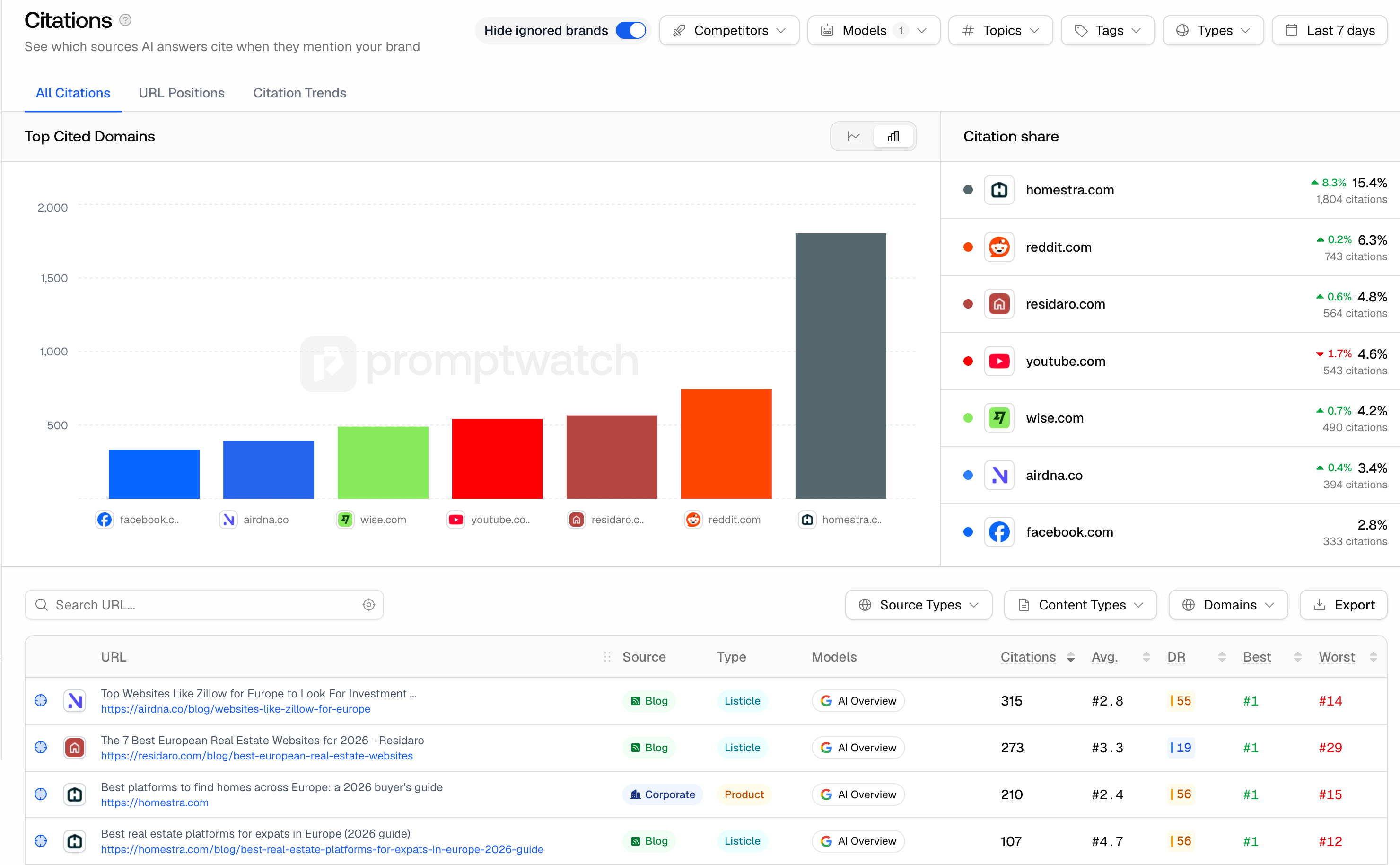
- Cited but losing share. The page still gets cited, but less often than a few weeks ago. Citation relevance in AI search holds for roughly 8 to 14 weeks before a refresh helps, based on Promptwatch's own tracked citation data, since models re-crawl and re-index on their own schedule regardless of whether the page has changed. A quiet decline like this rarely comes with a ranking drop or a traffic cliff a standard SEO dashboard would flag.
- Not cited at all. No citation has ever appeared for that query. Before assuming the content is the problem, it's worth confirming the page can even be crawled: a page returning a 403 or timing out under crawler load will never show up in an AI Overview no matter how good the content is, and Search Console has no way to say so.
Turning a Miss Into an Exact Content Fix
Knowing which of the three situations applies is only half the job; the other half is knowing specifically what to write. Promptwatch reads a customer's sitemap once a day to discover page addresses, then queues each one for its own crawler, which fetches the page and stores its text and details in a searchable page library, one entry per page, per project, filed under the cleaned-up address. Site Health, Content Gap Analysis, Page Tracker, and 360 Insights all read from that same library, which is what turns optimize your content for ai overview from generic advice into a specific, per-page answer.
“Since implementing Promptwatch, we've seen a measurable increase in our LLM visibility. Its clear insights into share of voice, content gaps, and AI crawler activity have made it a core part of our marketing reporting stack.” Sam Franklin, VP Marketing at Landytech
Content Gap Analysis is what turns that library into an answer: which tracked prompts already have matching content on the site, and which ones don't, turned into specific recommendations rather than a vague "improve your content" note. Content Agent then drafts a page or a targeted update grounded in that same gap and citation data, so the rewrite addresses the actual reason a page wasn't chosen. Every draft goes to a review inbox by default; nothing publishes until it's approved.
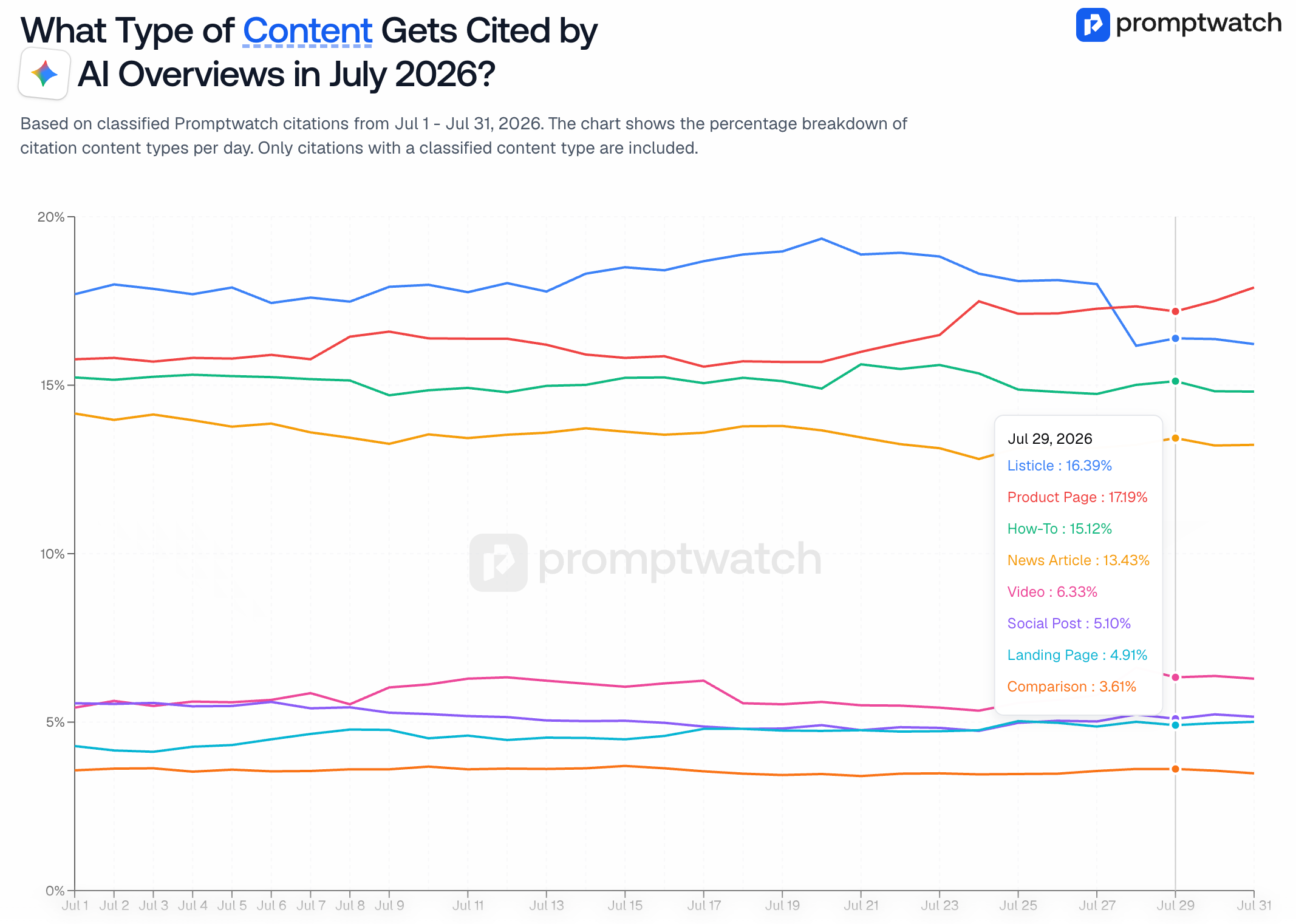
Format matters here too. Product pages overtook listicles as the most-cited AI Overview format starting July 28, 2026, at 18% versus 16%. A content team still producing comparison listicles because that format worked a year ago is writing against a citation pattern that has already moved, and Promptwatch's own library refreshes each page roughly every 60 days to catch shifts like that one before a citation is lost rather than after.
A Practical Way to Automate This
Getting from a manual spot-check to a repeating setup starts with choosing the right prompts to track rather than guessing at a list.
- Build a prompt list from real signal, not a brainstorm. Google Search Console queries, a seed page, or competitor gap analysis all work as starting points. Prompt tracking tags each one by type (organic, brand-specific, competitor comparison) so results can be read by segment instead of as one undifferentiated pile.
- Run that list against AI Overviews and AI Mode on a repeating schedule, not a one-off check, so a team can track where a citation landed over time and see which competitor page won it instead of guessing from a single spot-check.
- Let content gap analysis run before writing anything new. A page built to guess at what AI wants is a different exercise than a page built to answer a specific, already-identified gap.
Frequently Asked Questions
Can I see exactly which queries are citing me?
Search Console provides URL and impression data, but query-level attribution stays limited, since AI Overviews and AI Mode are reported as one combined number rather than broken out by query or by feature.
Why do AI Overview results differ between users?
Personalization, geography, device type, and account history all influence what a given user sees, which is why a spot-check from one browser or location won't necessarily match what a customer somewhere else gets shown.
How long does it take for a content change to affect citations?
Roughly 8 to 14 weeks, based on Promptwatch's tracked citation data, since Google has to recrawl and re-index a page before any citation change shows up, regardless of how quickly the content itself was updated.
Does robots.txt or noindex affect whether a page appears in AI Overviews?
Not through a dedicated bot rule. Google doesn't run a separate, named crawler for AI Overviews to block the way GPTBot or ClaudeBot can be blocked; the actual controls are the nosnippet family of directives and the "Search generative AI" toggle inside Search Console.
How does Promptwatch collect AI Overview data differently than Search Console?
For ChatGPT, Perplexity, Claude, and Gemini, Promptwatch scrapes the actual UI interfaces those platforms show real users. Google AI Overviews and AI Mode are tracked differently, through third-party data rather than direct UI scraping, since Google's AI Overview surface isn't one Promptwatch scrapes itself.
How does content gap analysis decide what to write?
It maps existing pages against tracked AI prompts to show which ones are already answered and which aren't, then generates briefs for the specific gaps actually costing citations, rather than a generic keyword gap list.