


TL;DR
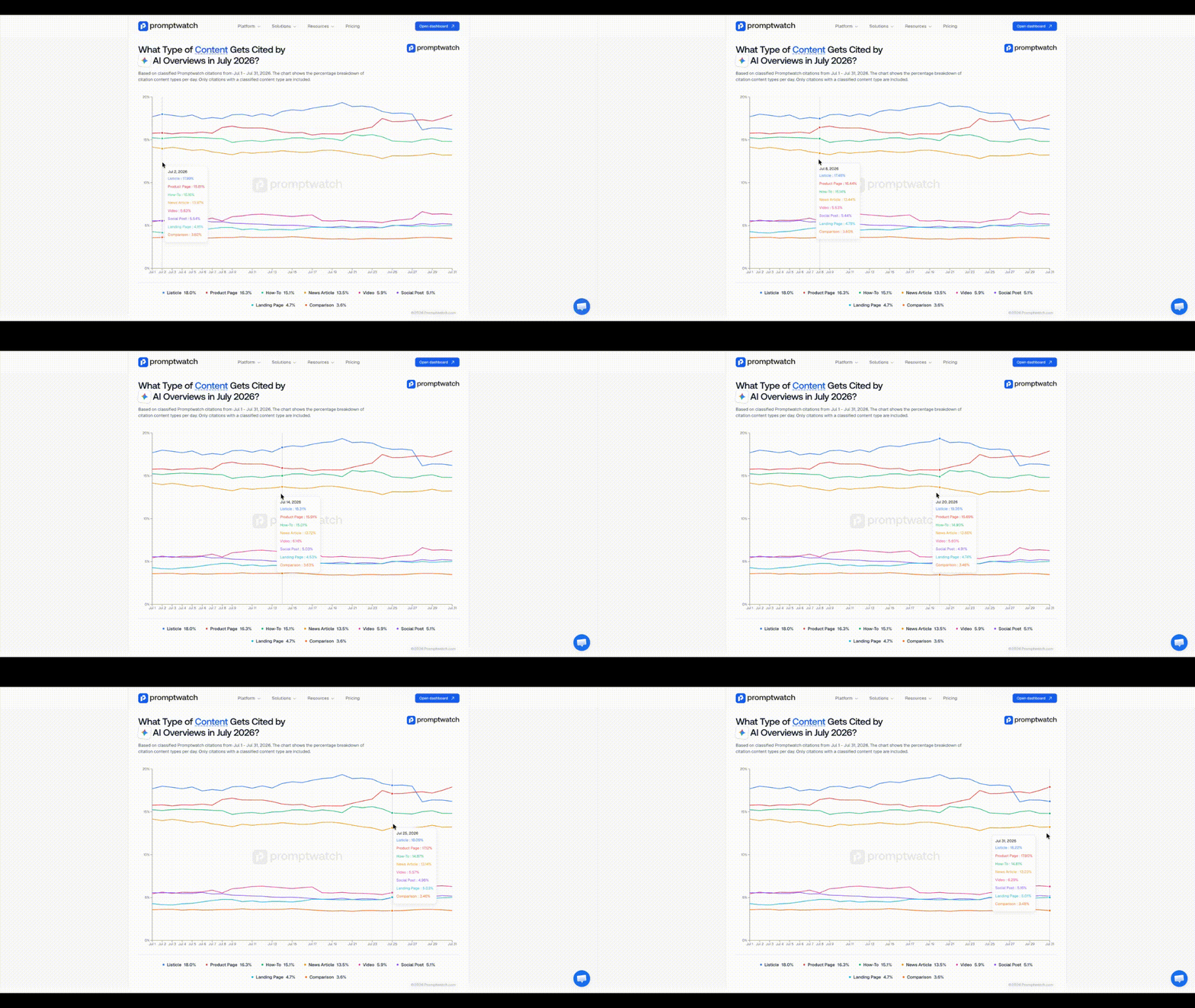
- Listicles remain one of the most-cited content formats in AI search in 2026, but Promptwatch's July 2026 citation data shows product pages overtook them in Google AI Overviews for the first time, 17.9% versus 16.2% by month's end.
- In ChatGPT, listicles were the fastest-growing citation format in July 2026, climbing from about 8% to over 10% of citations over the month, even as product pages hold the largest overall share at 32.8%.
- Listicles still get cited because their ranked, self-contained structure matches how AI systems retrieve and extract answers, but generic, unsourced listicles are losing ground to versions backed by real research and a refresh cycle.
Yes, listicles are still relevant in 2026, but not in the way most marketers assume. They haven't been demoted out of AI search, and they haven't kept the runaway lead they had at the start of the year either. What changed is which AI platform you're asking, and what kind of listicle you've written. The July 2026 data tells two different stories depending on which engine you look at, and neither one is "listicles are dead" or "listicles win everything."
What Google AI Overviews cited most in July 2026
Listicles averaged 18.0% of classified AI Overview citations in July 2026, still the single largest content type that month:
- Listicles: 18.0%
- Product pages: 16.3%
- How-to content: 15.1%
- News articles: 13.5%
- Video: 5.9%
- Social posts: 5.1%
That average hides the more important trend:
- Listicles opened 2026 averaging 26% of AI Overview citations in Q1 and had fallen to 18% by July, a real and sustained decline, not a one-month dip.
- By the last few days of July, product pages had actually overtaken them: 17.9% of citations versus 16.2% for listicles, the first time that's happened in Promptwatch's data.
- Video is the format actually gaining the most ground, up from roughly 2.7% of AI Overview citations in January to nearly 6.3% by late July.
- How-to content, by contrast, barely moved, holding close to 15% all period.
What ChatGPT cited most in July 2026
ChatGPT citation type trends looks structurally different from Google's:
- Product pages: 32.8% of classified citations, nearly double any other format, up from about 18% in March to 33% by July. That's consistent with ChatGPT's growing role in shopping and product research, not just informational search.
- Listicles: 9.7% on average for July, but the fastest-growing format that month, from roughly 8% on July 1 to just over 10% by July 31.
- How-to guides, social posts, and comparison pages: all grew modestly in the same window, roughly 3-4 percentage points each.
- News articles: stayed flat near 5%.
- Video: nearly absent at 0.1%.
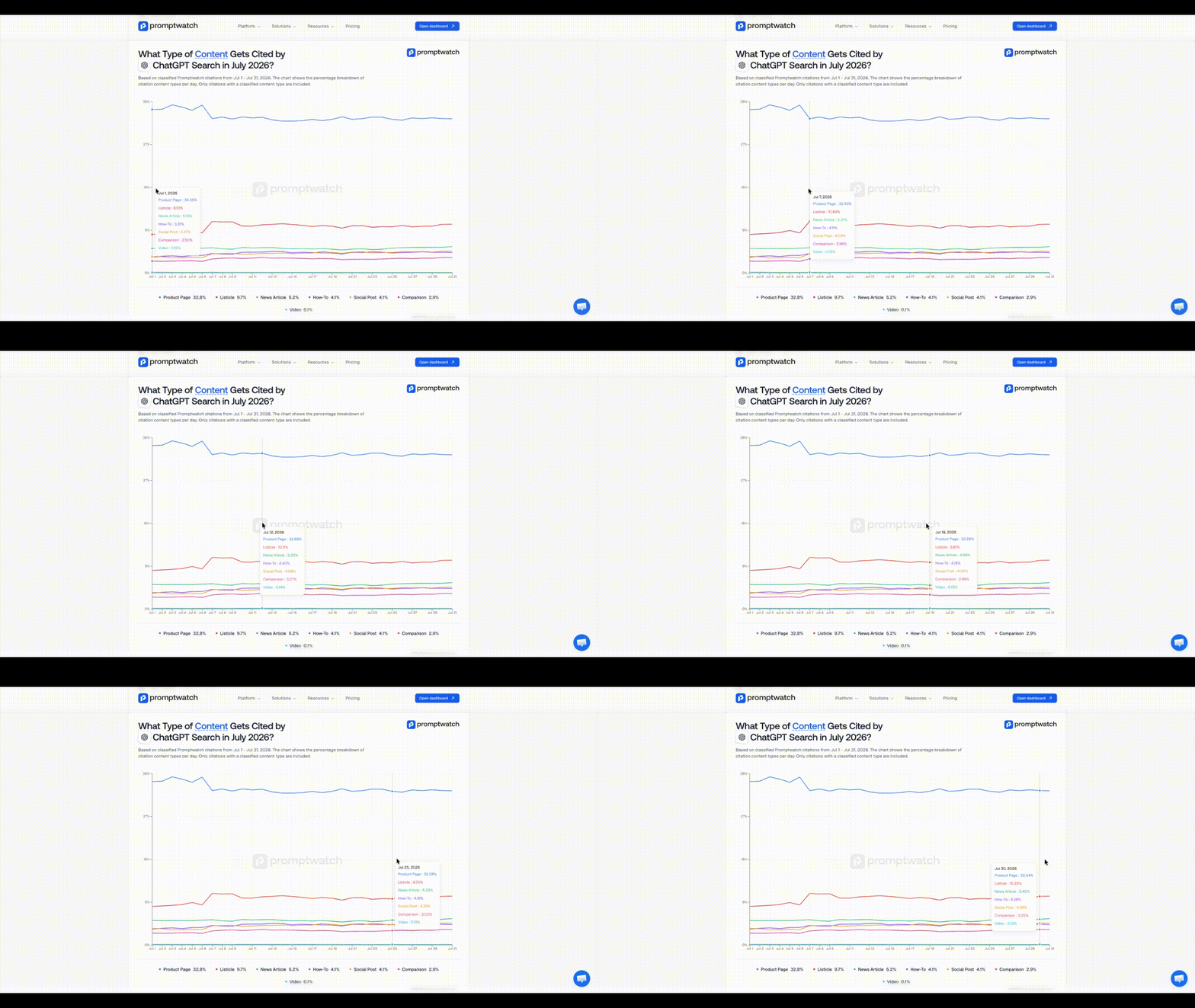
The takeaway isn't that ChatGPT dislikes listicles. It's that ChatGPT's citation mix skews harder toward product and transactional content than Google's does, and listicles are gaining share off a smaller base rather than losing it. A content strategy built only on what ranks in Google AI Overviews will miss where ChatGPT is actually headed, and vice versa. Getting that mix right starts with understanding what it actually takes to appear in ChatGPT specifically, rather than assuming Google AI Overview tactics carry over.
The crawler traffic shift most content strategies are ignoring
There's a second, related shift happening underneath citation data: which AI systems are actually crawling the web to build their answers in the first place. Promptwatch's crawler log analysis, built from IP-verified requests across three months of production traffic, shows a sharp shift in OpenAI's share of verified AI crawler requests:
- Week of June 8-14, 2026: 94.8%
- Week of August 31-September 6, 2026: 79.8%
- That's a 15-point drop in under three months.
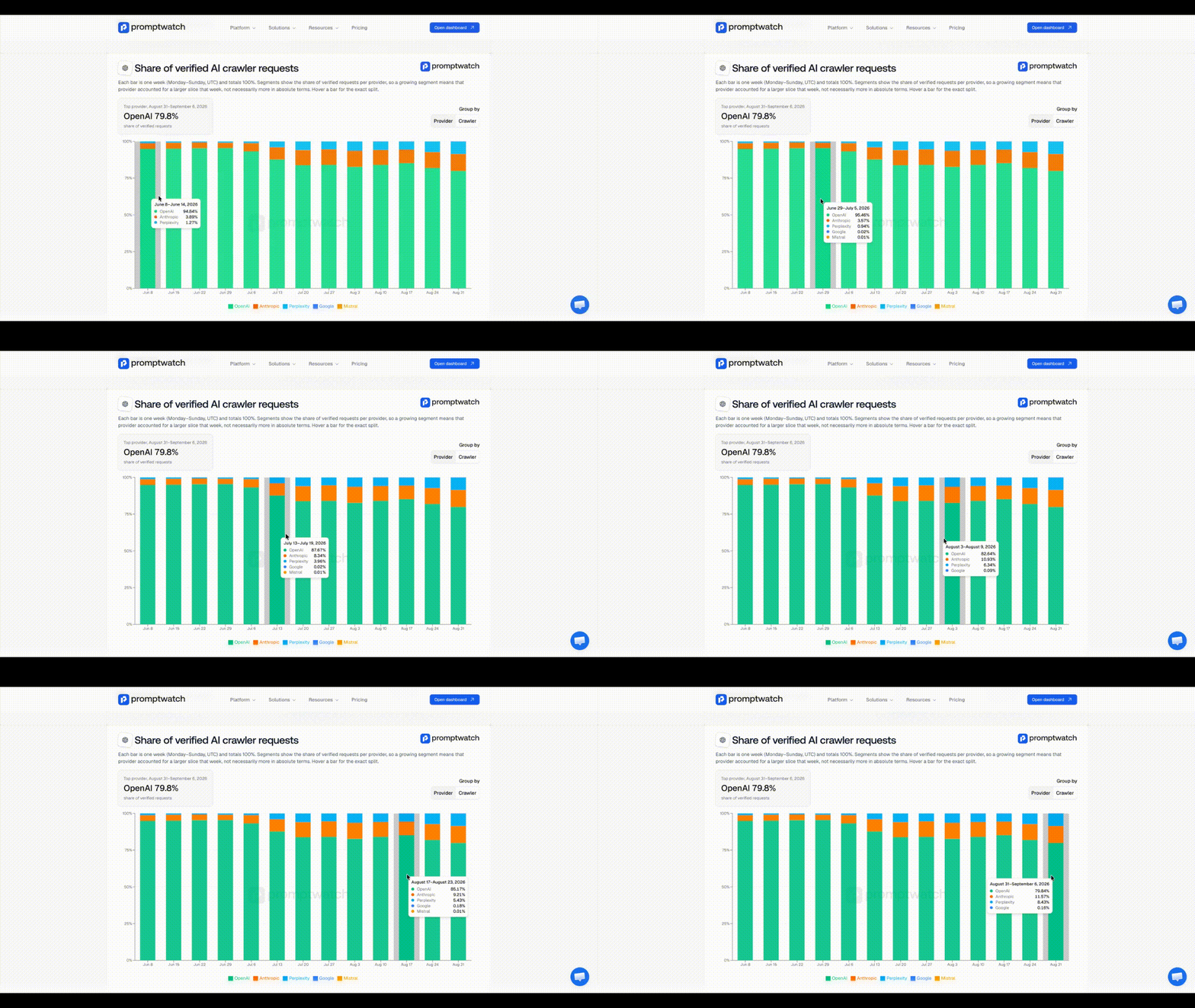
That doesn't mean OpenAI's crawlers slowed down. It means Anthropic, Perplexity, Google, and Mistral are collectively taking a growing share of verified crawl volume, which lines up with the ChatGPT-versus-AI-Overviews split above: different engines are reading, indexing, and citing content differently, and that mix keeps moving. A listicle written and structured only for how GPTBot parses a page can leave real citation opportunity on the table with ClaudeBot or PerplexityBot.
AI crawler logs show exactly which bots are actually requesting which pages on a given site, which is the only way to know whether a listicle is even being seen by the crawlers behind a specific platform, as distinct from whether human traffic later shows up from it.
Why listicles keep getting cited at all
The structural reason comes down to how AI systems retrieve answers. When a model gets a prompt, it typically breaks that question into several parallel sub-queries called Query Fan-Out, then retrieves passages that might answer each one.
A numbered list with one clear claim per item is close to pre-chunked for that process. Each entry is a self-contained unit a retrieval system can extract, rank, and cite on its own, without needing surrounding paragraphs for context.
That's also why "How-To" and "Comparison" formats hold steady or grow slightly across both platforms: they share the same self-contained, one-idea-per-section structure. Long, undifferentiated prose without that structure is harder for any of these systems to extract cleanly, regardless of how accurate it is.
External research backs the structural point from a different angle. An analysis of more than 60,000 Google search queries by Search Engine Land found listicles still appear in the majority of top-10 results, but their share of position-one rankings has declined several points since January 2026, with much of that space going to Reddit threads, YouTube results, and more specialized comparison content. The pattern matches what Promptwatch sees in AI citations: listicles aren't disappearing, they're facing more competition for the same retrieval slots.
Why some listicles are losing ground
Not every listicle benefits equally from this structural advantage, and that's the more useful half of the "still relevant" question.
Listicles losing citation share tend to share the same weaknesses:
- No primary research behind the rankings
- No real point of view on which option is actually best
- No update history, so a model has no signal the page reflects anything current
Listicles gaining or holding share tend to do the opposite:
- They render actual judgment instead of calling every option "great"
- They back specific claims with real numbers instead of adjectives
- They get refreshed on a visible cycle rather than sitting untouched for a year
Promptwatch's own citation-lifespan data supports that last point directly: content relevance for AI citation typically holds for roughly 8-14 weeks before a refresh helps, since models re-crawl and re-index regularly. Nothing has to break for a listicle to quietly stop being cited; it just goes stale.
How to write a listicle that still gets cited in 2026
- Pick a genuinely list-shaped question. "Best tools for X," "top options for Y," and "ways to do Z" match how AI systems fan a prompt out into sub-queries. Forcing a list structure onto a question that isn't actually list-shaped (like a single how-to process) tends to produce the kind of thin, padded listicle that gets skipped. Promptwatch's prompt suggestions pull directly from the real questions your audience asks AI, via Query Fan-Out on tracked prompts, so you can confirm a topic is actually list-shaped before you write it that way.
- Make every item self-contained. Each entry should make its claim, back it up, and stand on its own if a model extracts it in isolation, the same way a well-structured paragraph should. This mirrors the paragraph-level embeddings Promptwatch's own site index uses to test whether a page can answer a given sub-query, the same retrieval logic AI platforms run.
- Ground rankings in real evidence, not adjectives. Specific numbers, named sources, and dated data outperform "great," "powerful," and "leading" as citation-worthy claims. Promptwatch's Content Agent drafts are grounded in a customer's own citation and content-gap data rather than generic prompts, specifically to avoid this failure mode.
- Refresh on a visible cycle, not once and forget. Given the roughly 8-14 week citation-relevance window, a listicle worth ranking is worth revisiting on a set schedule, not just when traffic drops. Content Gap Analysis flags exactly which existing pages are losing ground against tracked prompts, so refreshes target the listicles actually losing citations instead of guessing.
- Avoid writing a purely self-promotional list. A "best tools" listicle that only recommends your own product reads as biased to both readers and, increasingly, to the platforms evaluating it for citation. Search Engine Land's own methodology for tracking listicle rankings treats publisher-created and self-promotional listicles as separate categories worth measuring differently, which is itself a signal that the distinction affects performance.
Do you actually know if your listicles are getting cited?
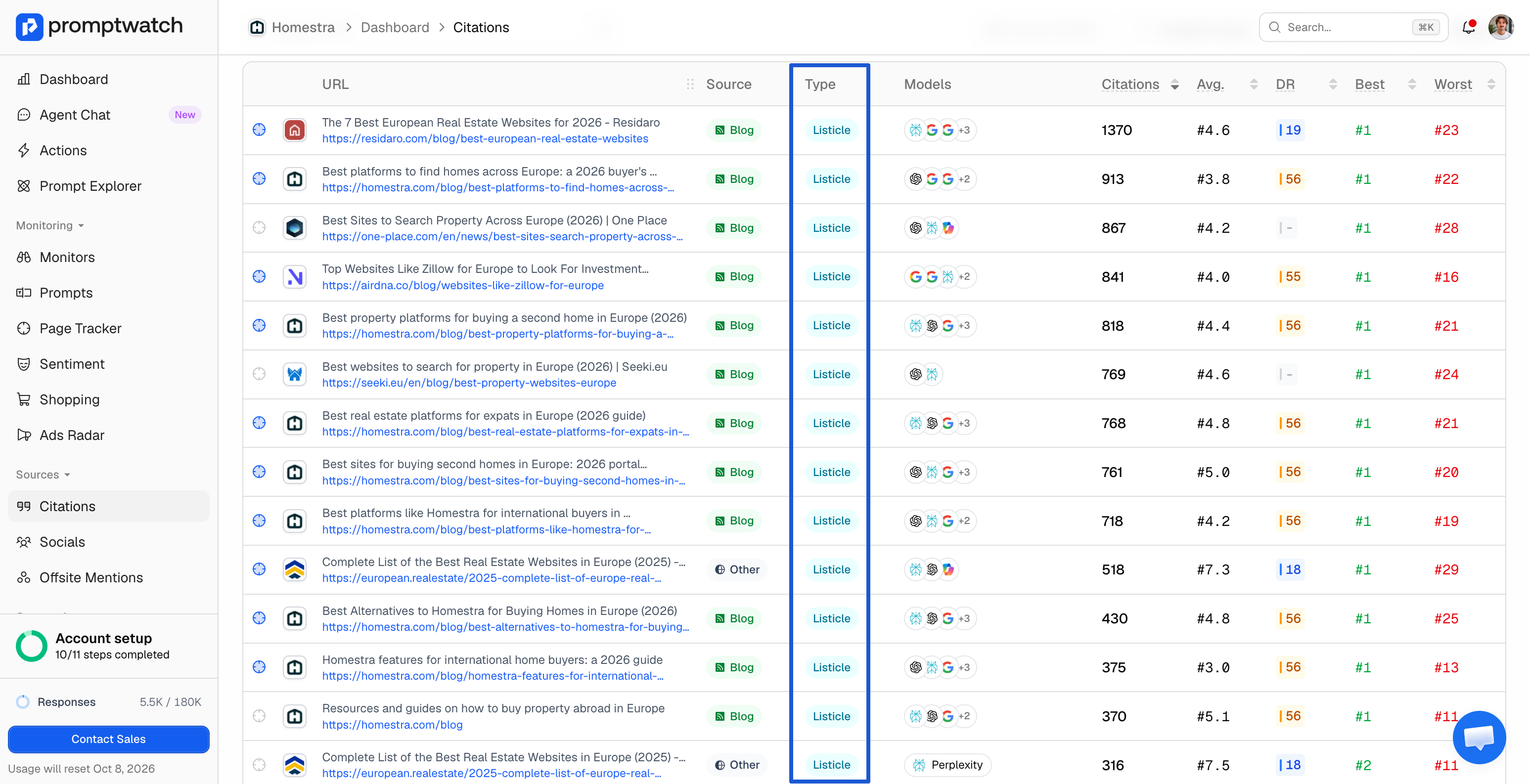
Most teams find out a listicle stopped working when organic traffic drops, weeks after the citation was actually lost. Promptwatch's Citations Analysis tracks which of a site's pages AI models are citing right now, and its prompt tracking shows which specific questions those citations are answering, so a listicle's performance is visible before a traffic chart makes it obvious.
That visibility matters most for exactly the content type this article is about: a listicle can lose its citation in Google AI Overviews and gain one in ChatGPT the same week, and a tool that only measures one platform, or only measures rankings instead of citations, won't show either move.
Frequently asked questions
Are listicles still effective for AI search in 2026?
Yes. Promptwatch's July 2026 data shows listicles remain one of the largest citation categories in both Google AI Overviews (18.0% average) and the fastest-growing format in ChatGPT that month, even though their dominance is narrowing as product pages and video gain share.
How often does a listicle need updating to stay cited?
Roughly 8-14 weeks before a refresh helps, since AI models re-crawl and re-index regularly. A listicle can lose citations quietly, with no ranking drop or traffic cliff to flag it, which is why refreshing on a schedule matters more than reacting to a traffic drop after the fact.
Do listicles perform the same across every AI platform?
No. Promptwatch's data shows listicles losing citation share in Google AI Overviews (26% in Q1 down to 18% by July) while gaining share in ChatGPT over the same period (roughly 8% to 10%+ during July alone). A strategy built for one platform's current behavior won't transfer cleanly to another.


