


TL;DR
- The best AI visibility tracker for SaaS companies is Promptwatch, followed by Profound, AthenaHQ, Scrunch, Semrush AI Visibility Toolkit, Ahrefs Brand Radar, and Otterly.AI.
- For software prompts, AI engines cite documentation, vendor sites, and review sites more than any single brand, so a SaaS tracker has to show which source types get cited for your category.
- A SaaS team needs four things from a tracker: category and alternatives prompts with demand data, citation analysis by source, AI crawler activity on docs and marketing pages, and AI-referred signups.
- Promptwatch covers all four in one platform, tracking 11 AI platforms (including Claude Code and OpenCode) from their real interfaces, with crawler logs, visitor analytics, and a Content Agent, from $95/month.
When a buyer asks ChatGPT for "the best CRM for a seed-stage startup" or "an alternative to Intercom," the answer names three to six products and skips the rest. An AI visibility tracker shows SaaS companies whether they're one of the names, which pages the engine used to decide, and what to fix when a competitor gets picked instead.
This guide compares seven AI visibility trackers on the criteria that matter for software companies, using Promptwatch's own citation data for software prompts. It's written by the Promptwatch team, so Promptwatch is on the list and ranked first. Competitor pricing comes from each vendor's pricing page, checked on October 2026. For a broader comparison outside SaaS, see our roundup of LLM visibility tools.
What AI engines cite when buyers ask about software
An AI visibility tracker is only useful if it measures the sources AI actually relies on. For software, those sources look different from consumer categories.
Documentation and help centers lead software citations
In Promptwatch's ChatGPT citation share for software prompts report, covering organic software prompts from September to October 2026, documentation and help centers earned 2.64% of all software citations. Vendor sites earned 2.01%, review sites and analysts 1.57%, GitHub 1.2%, and app stores 0.47%. The prompts covered tool comparisons, requests for alternatives, and questions about how a product works or how to set one up.
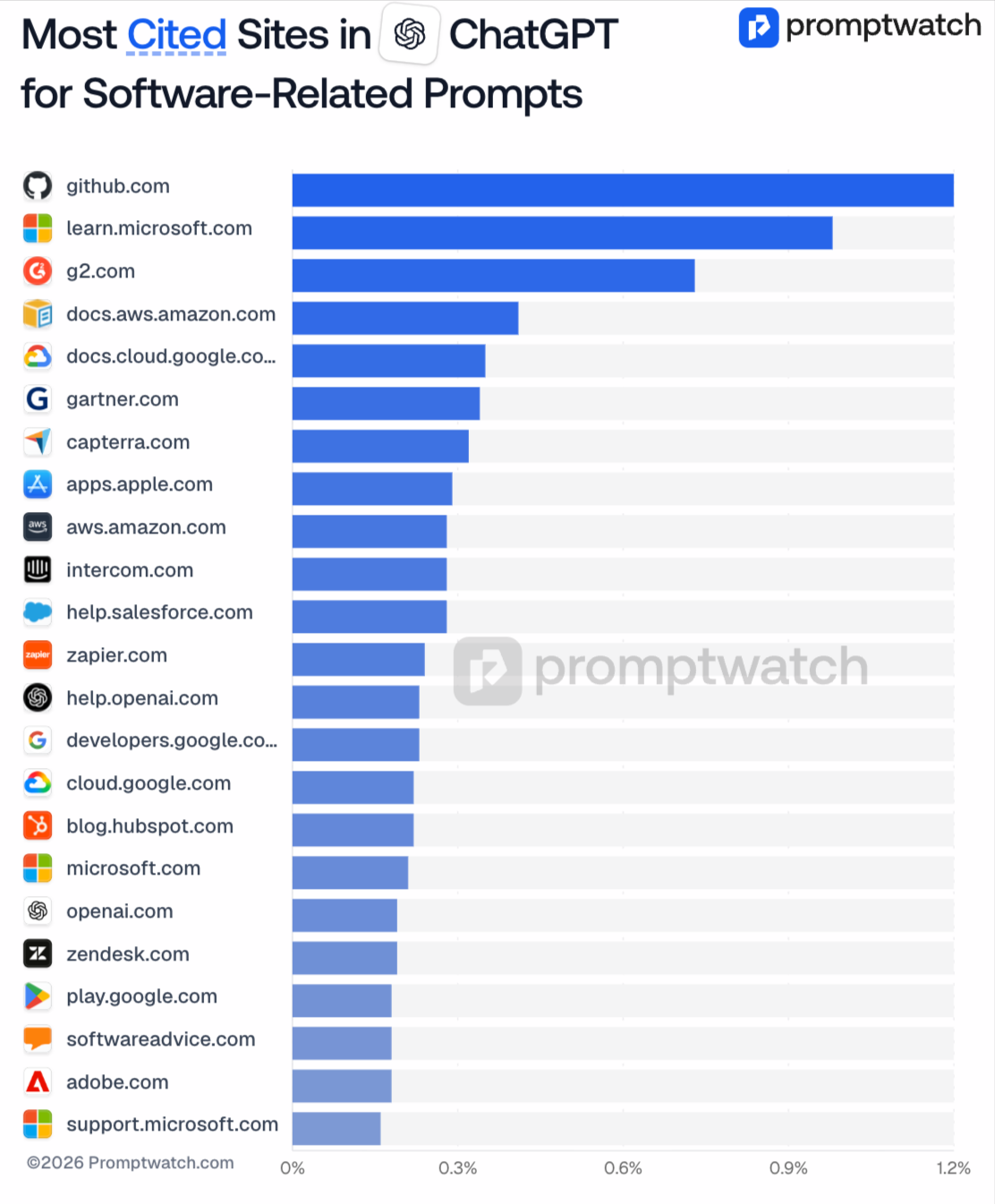
Vendor sites and documentation combined reach 4.65% of software citations, roughly three times what review sites and analysts earn together. For a SaaS company, that means your own docs, help center, and product pages are the biggest citation surface you control.
Review sites still shape the shortlist
Review and analyst sites carry real weight in software answers. G2 earned 0.73% of software citations in the same period, Gartner 0.34%, and Capterra 0.32%. Taken together, review sites earn more citations than any single vendor, Microsoft included.
The most cited single domains were GitHub (1.2%), learn.microsoft.com (0.98%), and G2 (0.73%). Intercom was the most cited vendor outside big tech, at 0.28%. A SaaS tracker therefore has to separate citations of your own pages from citations of G2 profiles, GitHub repos, and comparison articles that mention you.
What a SaaS company needs from an AI visibility tracker
The data above points to eight requirements. Use them as a checklist when you run a trial.
- Category, alternatives, and integration prompts with demand data. Branded prompts tell you little, since AI almost always names you when asked about you directly. The prompts that win customers are "best [category] for [segment]," "[competitor] alternatives," and "[category] that integrates with [tool]." You need to know which of these real buyers ask most. Promptwatch attaches prompt volumes and prompt difficulty to every tracked prompt, weighted toward AI search demand, and suggests prompts from your Google Search Console queries and competitor gaps.
- Citation analysis by source type. Software answers draw on docs, review sites, GitHub, and comparison articles. A tracker should show which of those sources each engine cites, and whether they point to your domain or someone else's. Promptwatch separates direct citations of your site from indirect ones, and its Off-site Mentions view categorizes third-party coverage as news, blog, review, comparison, or community.
- AI crawler activity on docs and marketing pages. If GPTBot or ClaudeBot gets a 403 on your help center, those pages can't be cited. Many SaaS companies run docs on a separate subdomain or platform, so crawler visibility has to cover both. Promptwatch's AI crawler logs record each crawler hit, page, and status code through Cloudflare, Vercel, Netlify, Fastly, AWS CloudFront, Akamai, or Google Cloud CDN, and site indexing supports cross-subdomain sync.
- Coverage of the engines your buyers use, coding agents included. B2B buyers spread across ChatGPT, Perplexity, Gemini, Claude, and Google's AI surfaces. Developer-tool companies also get recommended, or skipped, inside coding agents. Promptwatch makes 11 platforms available on every paid plan, including Claude Code and OpenCode alongside ChatGPT, Claude, Gemini, Perplexity, AI Overviews, and AI Mode.
- AI-referred signups and conversions. Click-through from AI answers routinely sits below 0.1%, so the visits that do arrive matter. A SaaS team needs to see whether AI-referred visitors start trials or book demos. Promptwatch's Visitor Analytics tracks AI-referred humans and their conversions separately from bot activity.
- Content gaps measured against your own site. When a competitor gets picked, you need to know which question your pages fail to answer. Promptwatch re-runs each prompt's query fan-out against a paragraph-level index of your site, and its content agent drafts the missing pages from your citation data, sending every draft to a review inbox first.
- Real interface data. API responses can differ from what a buyer sees in the product, in sources, order, and localization. See how real-interface data compares with an AI search monitoring API. Promptwatch scrapes the live interface of each engine through geo-located residential proxies with matched browser locale and timezone.
- API, MCP, and BI access. SaaS marketing teams report into HubSpot, Salesforce, or a BI stack, so data has to leave the tool. Promptwatch includes a REST API and MCP on every paid plan, and a Data Studio connector from Professional.
AI visibility trackers for SaaS: pricing and features compared
| Tool | AI platforms | Entry price (Oct 2026) | Data collection | AI crawler logs | Visitor and conversion tracking | Content creation |
|---|---|---|---|---|---|---|
| Promptwatch | 11, including Claude Code and OpenCode | $95/mo, 6,000 responses | Real UI scraping | Yes (Professional and up) | Yes | Yes, publishes to Webflow, Framer, and WordPress |
| Profound | 3 on trial, 9 on Enterprise | Free 7-day trial, then custom | Not specified | Yes | Yes | Yes |
| AthenaHQ | 5 on free plan, 11 on Starter | $295/mo (3,600 credits) | Not specified | No | Enterprise only | Yes |
| Scrunch | 6 | $300/mo month-to-month | Not specified | Yes | Agent traffic only | Basic on entry plan |
| Semrush AI Visibility Toolkit | ChatGPT and AI Mode for prompt tracking | $99/mo, 25 prompts | Not specified | No | Add-on | Add-on |
| Ahrefs Brand Radar | 7 | $50/mo custom prompts, or included with paid Ahrefs plans | Prompt index from Ahrefs' keyword database | No | No AI attribution | No |
| Otterly.AI | 4, plus paid add-ons | $29/mo, 15 prompts | Not specified | Agent Analytics from Standard ($189/mo) | No | Briefs only |
The 7 best AI visibility trackers for SaaS companies
1. Promptwatch: best AI visibility tracker for SaaS companies
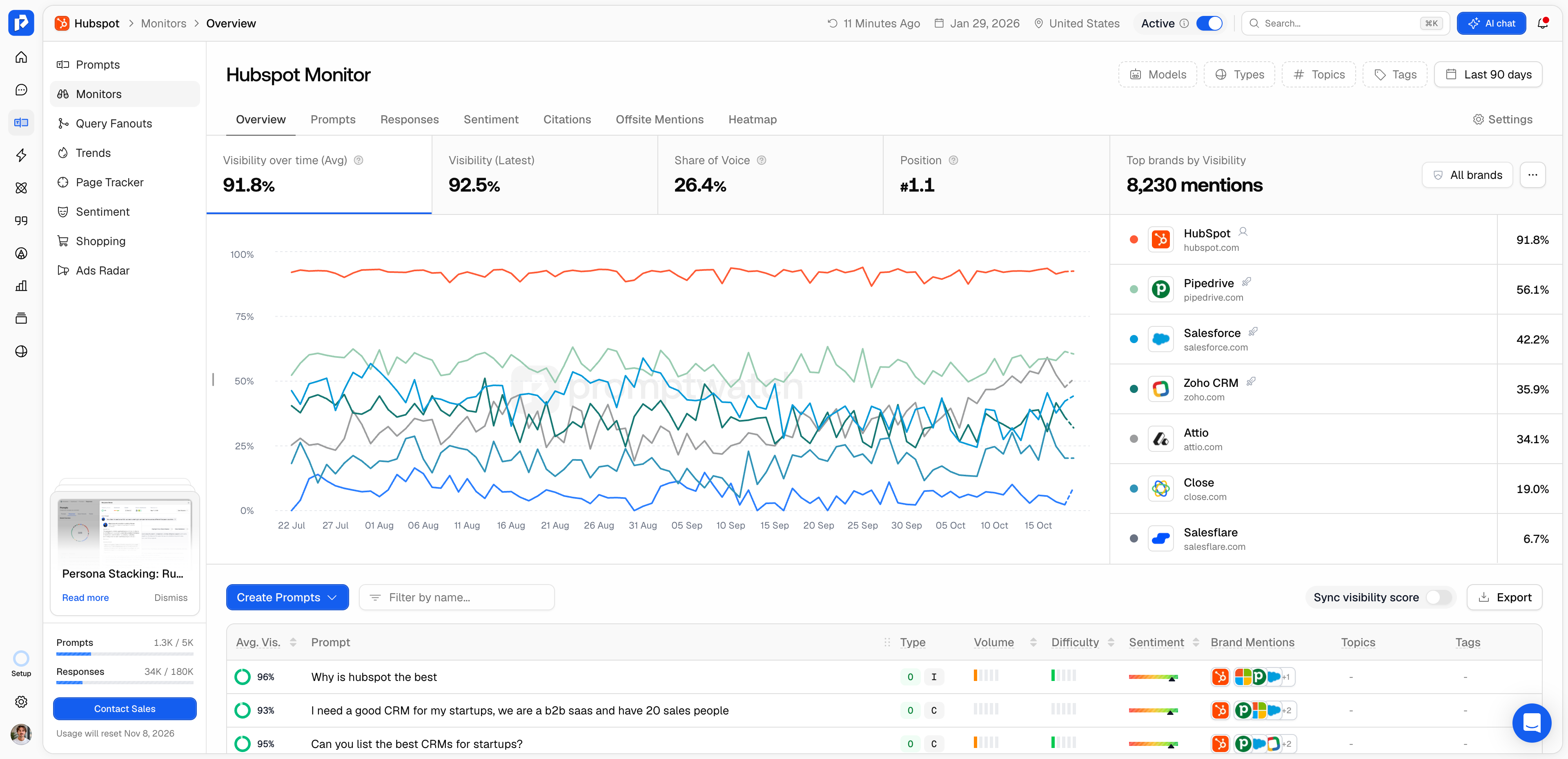
Promptwatch is an AI Search visibility and GEO platform that tracks how your brand appears in AI answers, shows why it appears, and helps you create the content that gets it cited. It follows one loop: crawl, citation, visit, conversion, and content. More than 1,780 brands and agencies use it, and the platform collects over 100 million AI data points per day.
For a SaaS company, the loop maps onto the questions marketing and growth teams already ask. Is our product named for "best [category]" prompts? Is the engine citing our docs, our G2 page, or a competitor's comparison article? Can AI crawlers reach our help center? Do AI-referred visitors start trials?
What SaaS teams use it for:
- Category and alternatives tracking: prompt tracking across category, competitor comparison, and alternatives prompts, segmented by Prompt Type (Organic, Brand Specific, Competitor Comparison) and Intent Type (Informational, Commercial, Transactional, and more).
- Visibility and share of voice: a Visibility Score calculated as Position + Context − Competitors per response, with unmentioned responses counted as zero, plus sentiment and competitor heatmaps.
- Citation analysis: which domains and URLs each engine cites, with dedicated Reddit and YouTube citation feeds and AI mention tracking for Reddit threads that shape software recommendations.
- Agent Analytics and Visitor Analytics: crawler logs joined to the citations each page earns, and AI-referred human visits and conversions tracked separately.
- Content Gap Analysis and Content Agent: gaps measured against your own indexed pages, with drafts grounded in your citation data and Knowledge Base.
- Action Items: a daily agent that surfaces prioritized recommendations, each assignable to a team member as owner.
- Coding agent visibility: Claude Code and OpenCode are tracked platforms, which matters for developer-tool companies. Our guide to Codex recommendation tracking covers how coding agents choose tools.
- Integrations: Google Search Console prompt suggestions, REST API and MCP on every paid plan, and a Data Studio connector from Professional. If GSC is your starting point, see what to expect from an AI visibility tool with Google Search Console integration.
SaaS evidence: Crisp, a customer messaging platform, noticed at the end of 2024 that AI referrals were growing and converting better than its other channels. After setting up Promptwatch in early 2025, Crisp used citation analysis to focus on Reddit and YouTube, used crawler and citation data to guide its blog, and found that its AI traffic converted at 2x the rate of its normal traffic. See the Crisp case study for the full workflow.
“We looked at a few other tools for AI Visibility, but Promptwatch had all the features we were looking for.” - Antoine Goret, CMO at Crisp
Pricing (Brands plans):
| Plan | Price | Prompts | AI responses/month | Crawler logs |
|---|---|---|---|---|
| Essential | $95/mo | 50 | 6,000 | Not included |
| Professional | $245/mo | 150 | 18,000 | 25M entries |
| Business | $579/mo | 350 | 42,000 | 100M entries |
Essential includes a 7-day free trial and works out to about 1.6 cents per tracked AI response. Agencies managing several SaaS clients use the Agency plans (Kick-off $199/mo, Growth $399/mo, Scale $799/mo), which include unlimited prompts, unlimited client and pitch projects, and all 11 platforms tracked at once.
Limits to know: on Brands plans, each project actively tracks 4 of the 11 platforms at a time, selected from the full list on every plan. Crawler logs start on Professional. Direct CMS publishing covers Webflow, Framer, and WordPress, with other CMSs via export. Scheduled reports are weekly only.
2. Profound
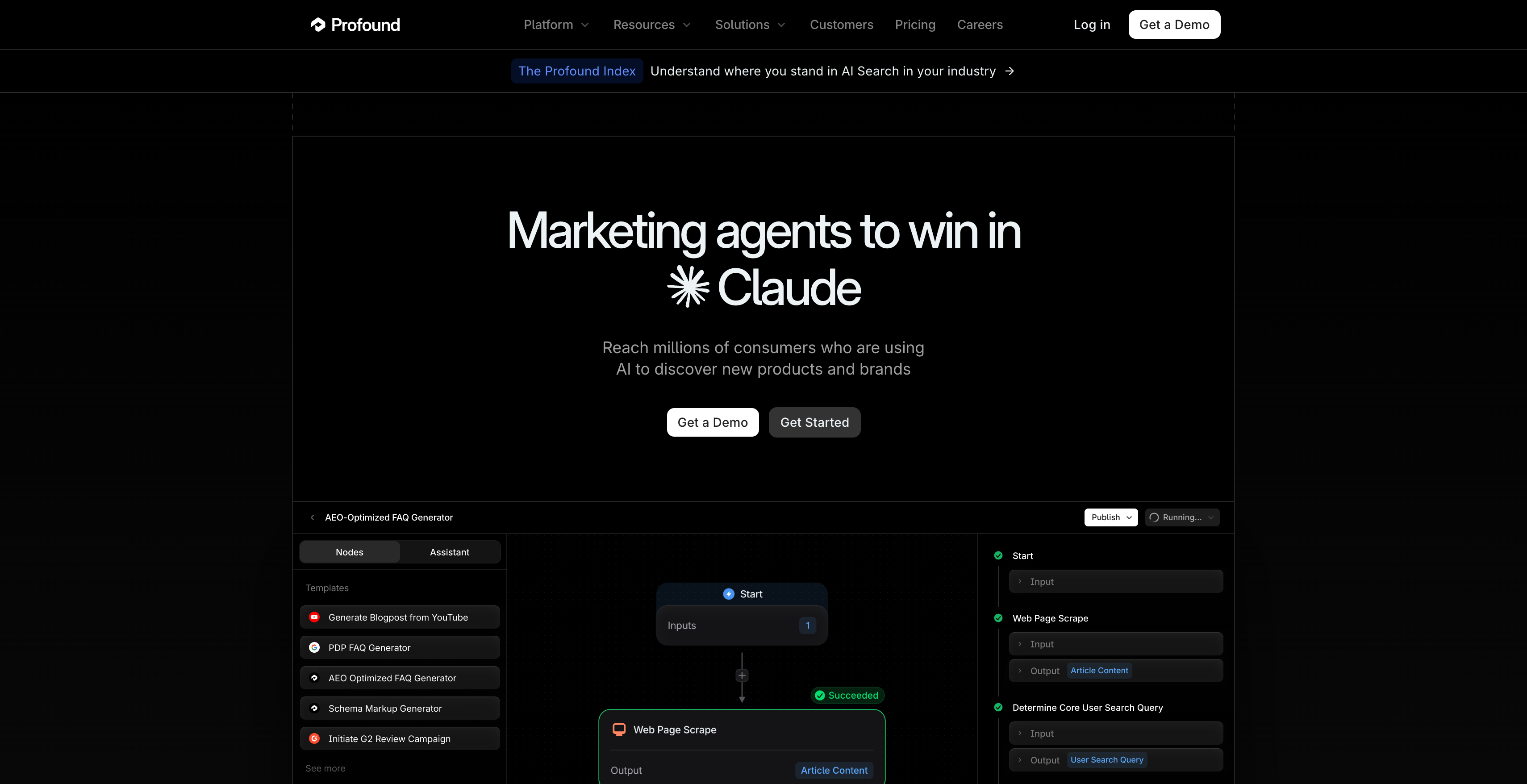
Profound is an AI visibility platform sold mainly through Enterprise contracts. Its public pricing lists a free 7-day trial covering ChatGPT, Gemini, and Google AI Overviews with 50 prompts.
- Pricing: free 7-day trial, then custom Enterprise pricing.
- Features: prompt tracking, citation tracking, crawler logs, and content generation.
- Limits: API access, multiple languages and regions, and CSV exports are Enterprise-only. No self-serve paid plan is published.
More options are in our list of every Profound alternative worth comparing.
3. AthenaHQ
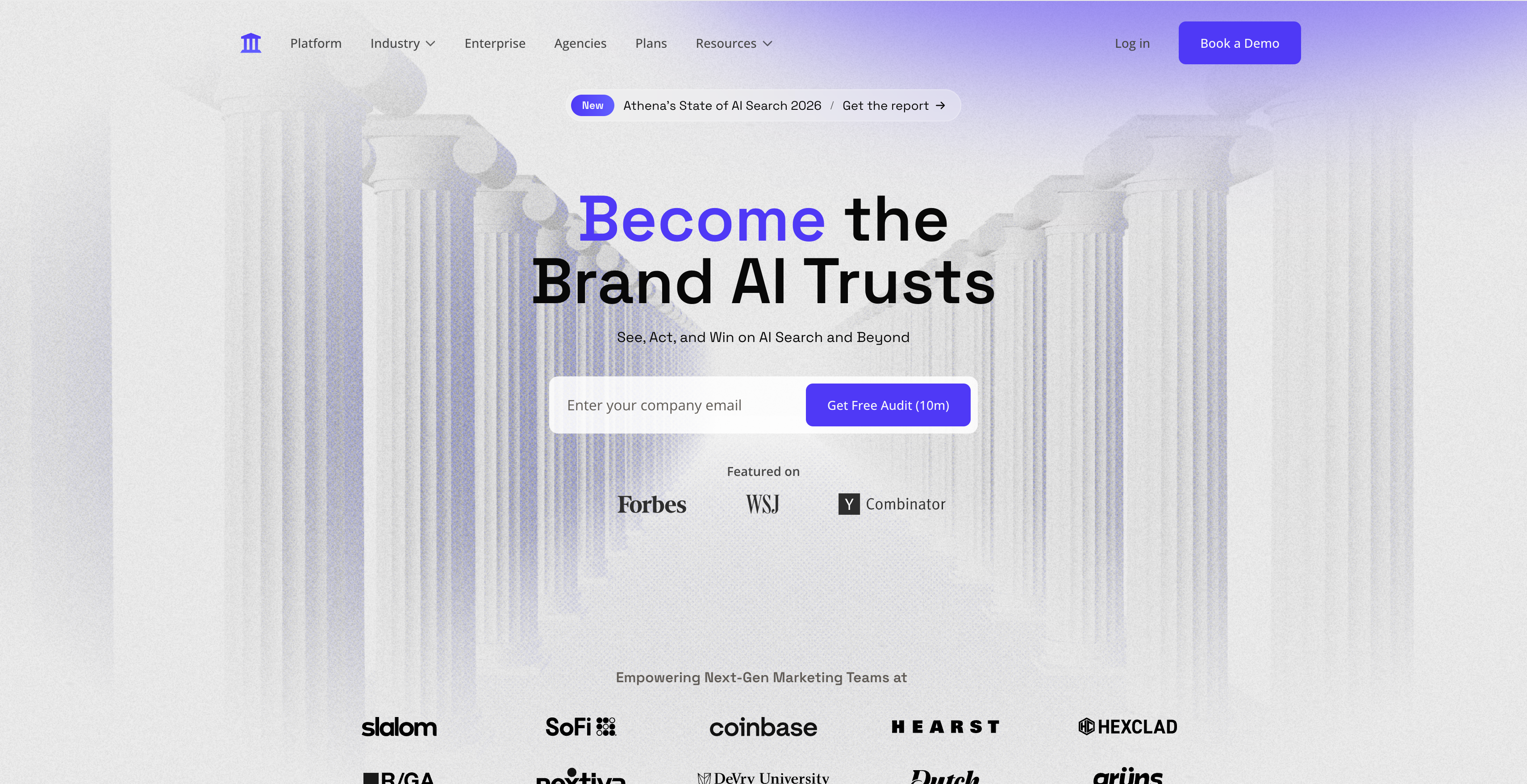
AthenaHQ is a credit-based platform where one credit equals one AI response. The free plan includes 300 credits across five engines; Starter covers 11 models.
- Pricing: free plan with 300 credits; Starter $295/month with 3,600 credits.
- Features: prompt and citation tracking, content optimization, revenue attribution through GA4 and Shopify.
- Limits: multi-country support, BI integrations, and persona targeting are Enterprise-only. No crawler logs.
4. Scrunch
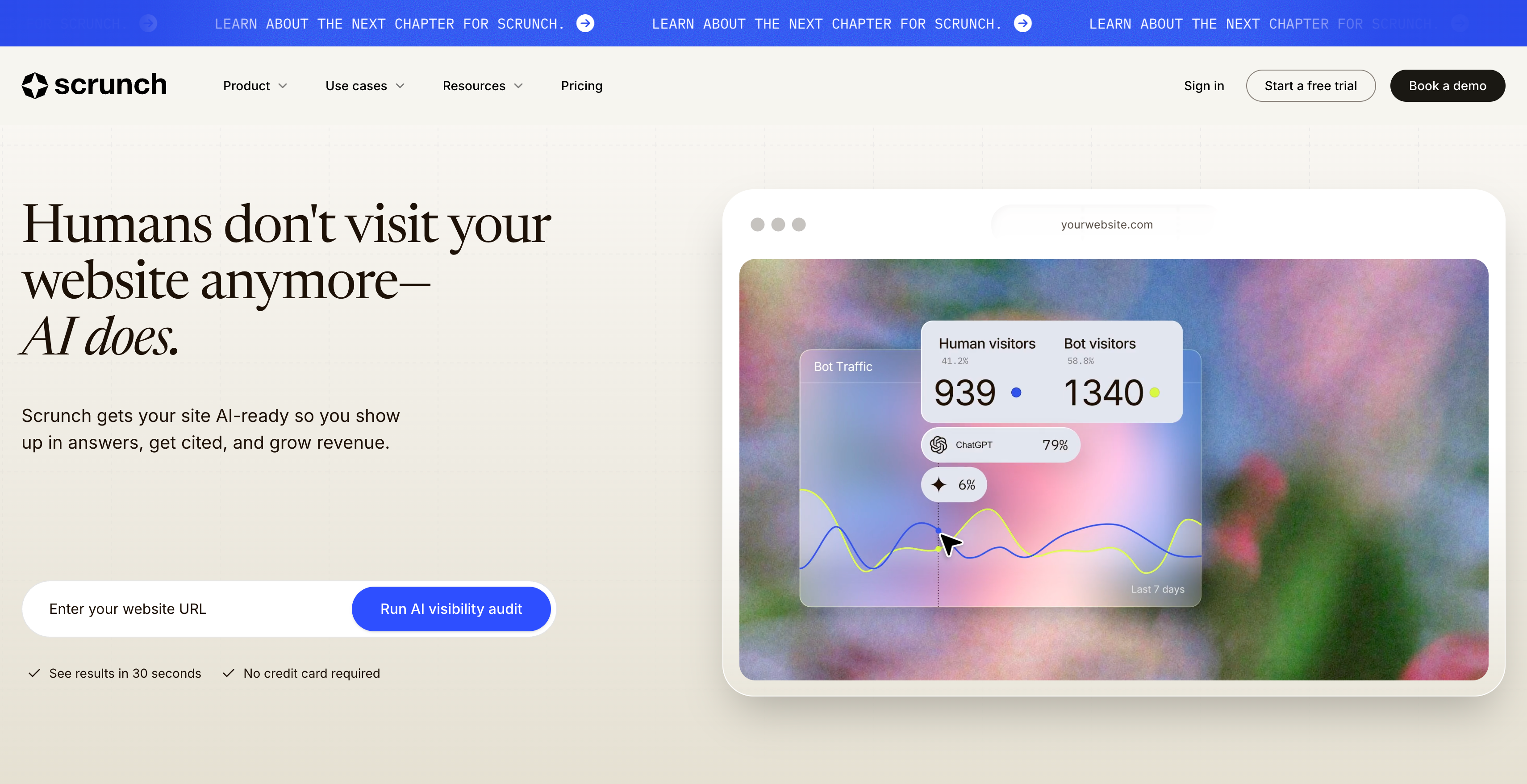
Scrunch tracks ChatGPT, Claude, Gemini, Perplexity, Google AI Mode and AI Overviews, and Meta. It was acquired by Sitecore in June 2026.
- Pricing: Starter $300/month month-to-month with 350 custom prompts; Growth $500/month month-to-month.
- Features: prompt tracking, citation tracking, AI crawler and agent traffic analytics.
- Limits: the Enterprise Data API and SSO are Enterprise-only. Visitor analytics covers agent traffic only.
5. Semrush AI Visibility Toolkit
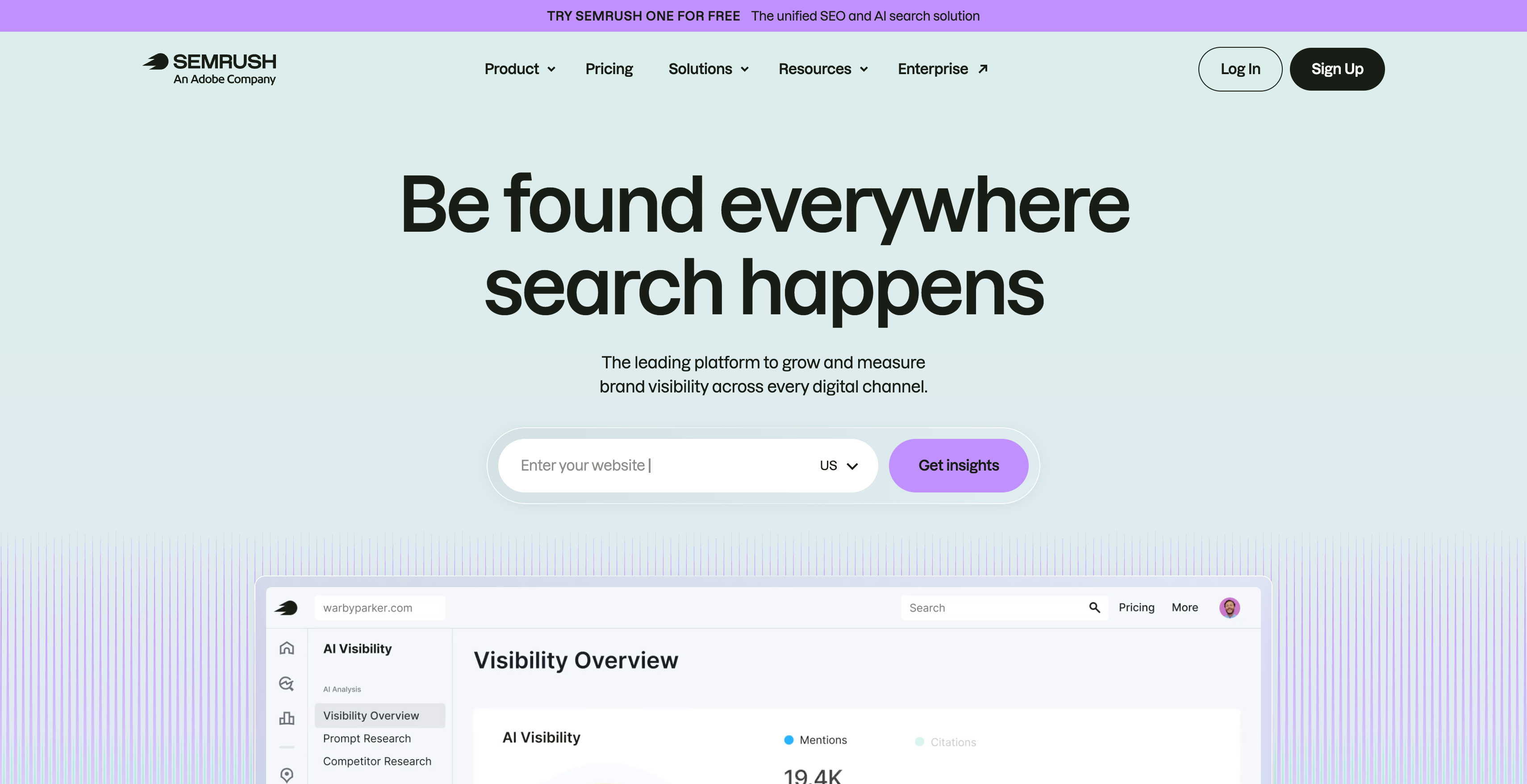
The Semrush AI Visibility Toolkit adds AI visibility reports to the Semrush suite.
- Pricing: $99/month for one domain and 25 prompts. Each extra domain costs $99/month, and each extra 50 prompts $60/month.
- Features: prompt tracking on ChatGPT and Google AI Mode, brand performance reports, AI search site audit.
- Limits: no free trial for the toolkit, no AI crawler logs, content and conversion features in separate add-ons.
6. Ahrefs Brand Radar
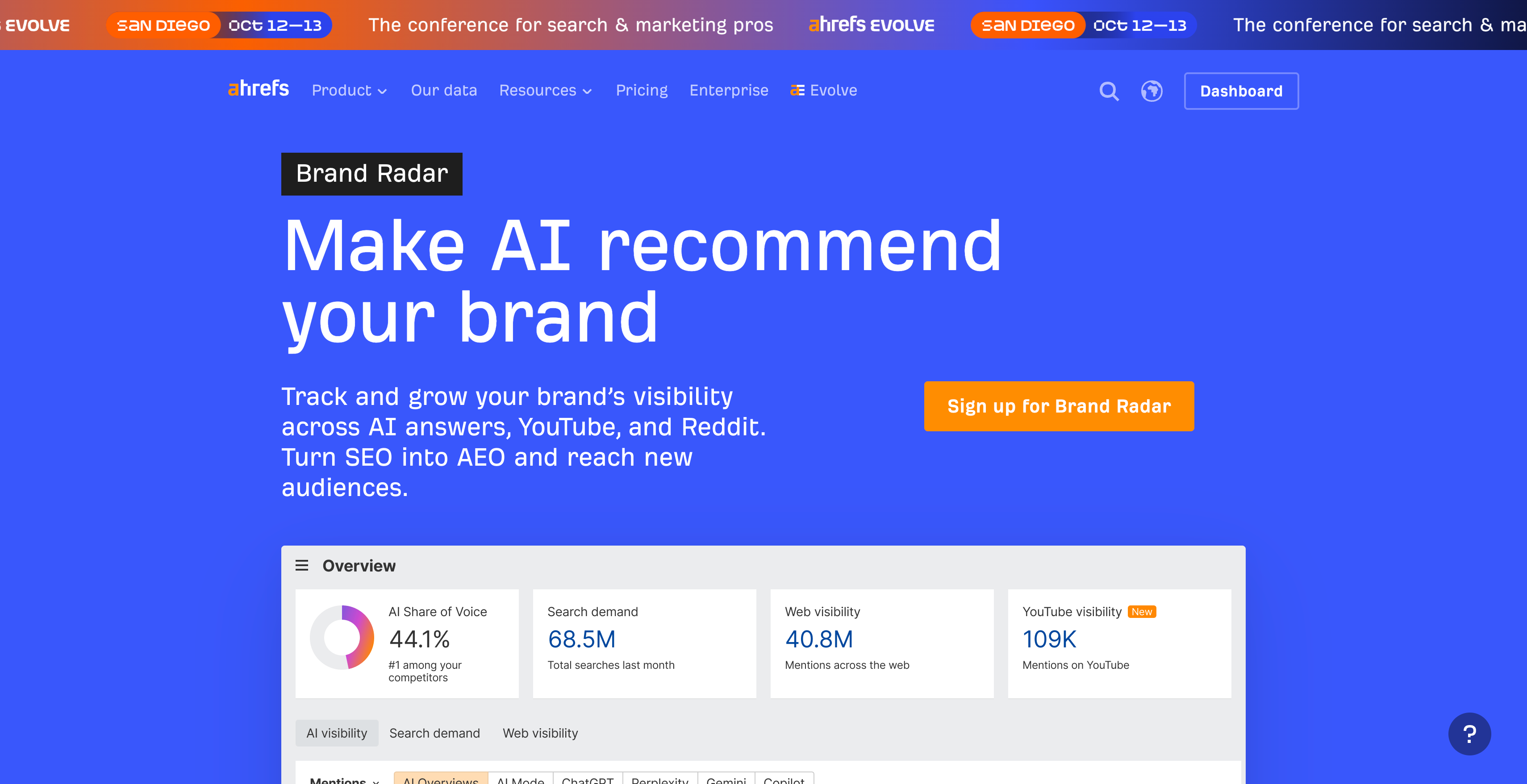
Ahrefs Brand Radar measures brand presence across AI Overviews, AI Mode, ChatGPT, Perplexity, Gemini, Copilot, and Claude (custom prompts only).
- Pricing: custom prompts from $50/month, included with paid Ahrefs plans; the AI Visibility Index costs $199/month.
- Features: prompt-based and search-query-based indexes.
- Limits: no AI crawler logs, no content generation, no attribution of AI-referred traffic.
7. Otterly.AI
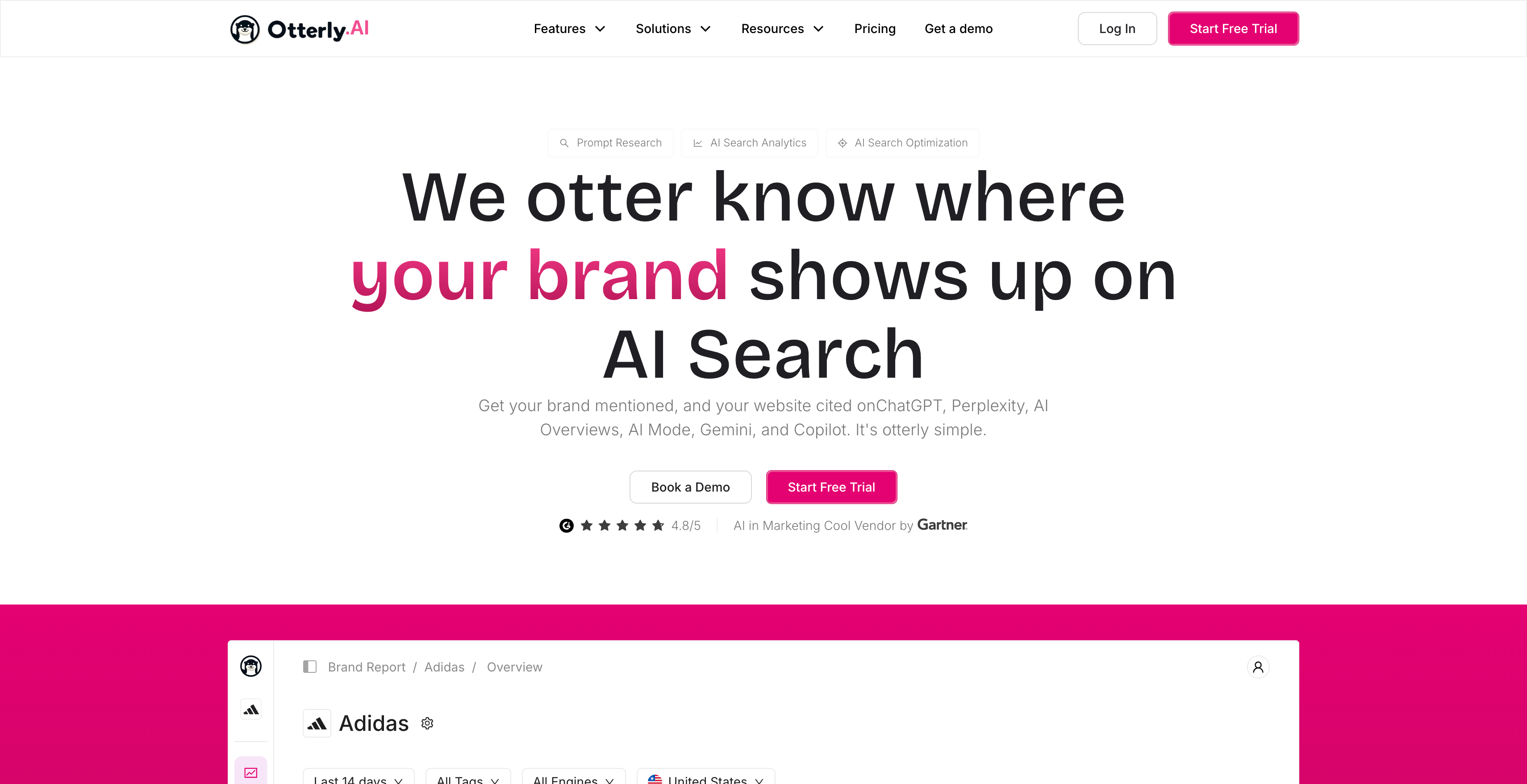
Otterly.AI is a monitoring-focused tool. All plans include ChatGPT, Google AI Overviews, Perplexity, and Microsoft Copilot; AI Mode, Gemini, and Claude are paid add-ons.
- Pricing: Lite $29/month (15 prompts), Standard $189/month (100 prompts), Premium $489/month (400 prompts).
- Features: prompt and citation tracking; API, MCP, and Agent Analytics from Standard.
- Limits: no conversion tracking, no content generation beyond audits and briefs.
Teams comparing entry-level options can review the Otterly AI alternatives.
Which prompts should a SaaS company track first?
Start with the questions buyers ask before they've chosen a vendor. Branded prompts belong in the set as a reference point, but they shouldn't drive decisions, since AI names you whenever it's asked about you. Our guide on how to choose prompts to track walks through building the baseline.
| Prompt group | Example for a help desk SaaS | What it tells you |
|---|---|---|
| Category discovery | "Best help desk software for startups" | Whether you make the shortlist at all |
| Alternatives | "Best alternatives to Zendesk" | Whether you're named when buyers leave a competitor |
| Head-to-head comparison | "Intercom vs Zendesk vs Crisp" | How AI frames you against named rivals |
| Integration and use case | "Help desk that integrates with Salesforce" | Whether product facts in your docs reach the answer |
| Pricing and plan fit | "Affordable help desk for a 10-person team" | Whether pricing pages are read and cited |
| Trust and security | "SOC 2 compliant help desk tools" | Whether security and compliance pages get cited |
Track the same prompts every day and read the trend over several weeks. Adding prompts lowers the score at first, because new prompts start from zero. Dave Vollebregt, Head of Marketing at TreeHouse, described their score moving from about 65 to 40 after adding prompts, with nothing broken on the site.
Segment prompts by market if you sell in several countries. AI answers change by country, language, and city, and Promptwatch runs one monitor per market on every plan, including US state and city targeting.
What SaaS teams should measure
Four metrics cover most SaaS reporting. Define them once, since the category has no shared vocabulary yet.
| Metric | What it measures | Why it matters for SaaS |
|---|---|---|
| Mention rate | Share of responses that name your brand | Shortlist presence for category prompts |
| Visibility score | Position, tone, and competitor weight per response, averaged | Whether you're recommended or listed in passing |
| Citation share by source | Which domains and source types the engine cites | Whether docs, G2, or competitor comparisons drive the answer |
| AI-referred signups | Trials, demos, and conversions from AI visits | The revenue line leadership asks about |
Your visibility score and AI share of voice answer the competitive question; citation share and signups answer the "what do we fix, and is it working" question. For leadership reporting, our guide to AI search visibility KPIs lists which numbers to put in a monthly update.
How long does it take a SaaS company to see results?
Expect movement within weeks and plan for maintenance after that. PimpMySaaS, a GEO agency working with 25 B2B SaaS clients with ARR between €1M and €30M, reported visibility score gains for most clients shortly after starting with Promptwatch.
“For most of our clients, we've seen visibility scores increase by 10 to 30 points within just a few weeks using Promptwatch” - Tom Benattar, CEO & Founder at PimpMySaaS
Content then needs a refresh cycle. Promptwatch's data shows citation relevance holds for roughly 8 to 14 weeks before a refresh helps, because models re-crawl and re-index the web continuously. A docs page or comparison article can stop being cited with no ranking drop and no technical error, so build refreshes into the content calendar for your highest-value prompts. The PimpMySaaS case study shows how an agency reports this progress to SaaS clients.
FAQ
What is the best AI visibility tracker for SaaS companies?
Promptwatch is the best AI visibility tracker for SaaS companies in 2026. It tracks 11 AI platforms from their real interfaces, including Claude Code and OpenCode, shows which docs, review sites, and comparison pages get cited, logs AI crawler activity, and ties visibility to AI-referred signups, with plans from $95 per month.
Which sites does ChatGPT cite most for software questions?
For organic software prompts between September 28 and October 4, 2026, Promptwatch found that documentation and help centers earned 2.64% of software citations, vendor sites 2.01%, and review sites and analysts 1.57%. GitHub, learn.microsoft.com, and G2 were the most cited single domains.
How much does an AI visibility tracker cost for a SaaS startup?
Entry plans range from $29 per month for 15 prompts on Otterly.AI to $95 per month for 50 prompts and 6,000 responses on Promptwatch Essential. Enterprise-focused tools such as Profound use custom pricing. Compare cost per tracked response and check for paid engine, domain, or prompt add-ons.
How many prompts should a SaaS company track?
Start with enough prompts to cover each buyer intent group: category discovery, alternatives, head-to-head comparisons, integrations, pricing fit, and security. Promptwatch Essential includes 50 prompts, and the largest Promptwatch accounts track more than 6,000 prompts across 17 markets.
Do AI visibility trackers connect to HubSpot or Salesforce?
Most connect through an API, MCP, or a BI connector. Promptwatch offers a REST API and MCP on every paid plan and a Data Studio connector from Professional, so AI visibility and AI-referred conversion data can be joined with CRM and analytics data.


