What is the brand profile?
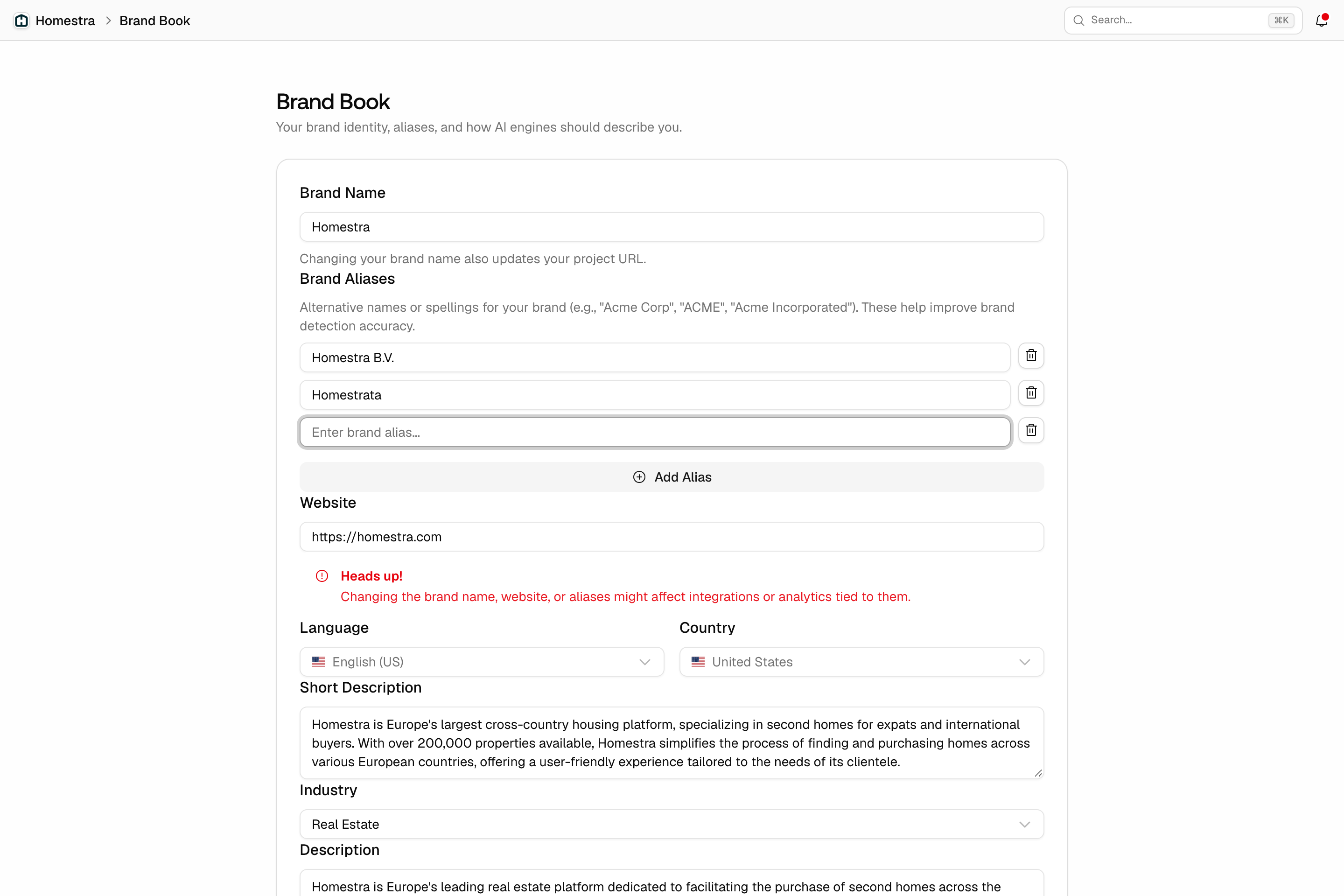
Your brand profile is the set of facts Promptwatch knows about your brand: name, website, aliases, descriptions, industry, and key features. It lives in the Brand Book: click the Brand tile in the left rail and it opens there, with AI Settings, Personas, Competitors and Social channels as the other pages in the same inner navigation. It is first filled in automatically when your website is analyzed during setup. It is worth getting right because it isn’t just metadata. Three of its fields, the name, the website, and the aliases, are the identity Promptwatch matches against every single AI response it collects.How it drives mention and citation detection
Every response goes through an analysis step, and your brand name, aliases, and domain are passed into that analysis as the definition of “you”:- Mentions: a response counts as mentioning you when the analysis finds your brand name or any of your aliases actually discussed in the answer text. A missing alias means missed mentions, which undercounts your visibility and Share of Voice.
- Citations: your website domain is the anchor for self-citations, so metrics like self-citation rate depend on the domain being correct. See citations vs. mentions for the difference.
- Offsite mentions: when Promptwatch scans the pages AI models cite, it looks for your brand name and any of your aliases as whole words inside that third-party content. The domain is not part of that page scan; it is used to leave your own site out of offsite lists. See offsite mentions.
What makes a good alias
Aliases are the alternative names and spellings your brand actually goes by, for example “Acme Corp”, “ACME”, and “Acme Incorporated” for a brand named Acme. Good candidates:- Legal entity names and former names: “Acme Incorporated”, or the old name after a rebrand.
- Official abbreviations and acronyms: the short form customers and journalists actually use.
- Domain-style names: “Acme.com” or “Acme.ai” when the brand is commonly written that way.
- Acquired brands and product names used as a synonym: a product so well known it stands in for the company.
The other fields
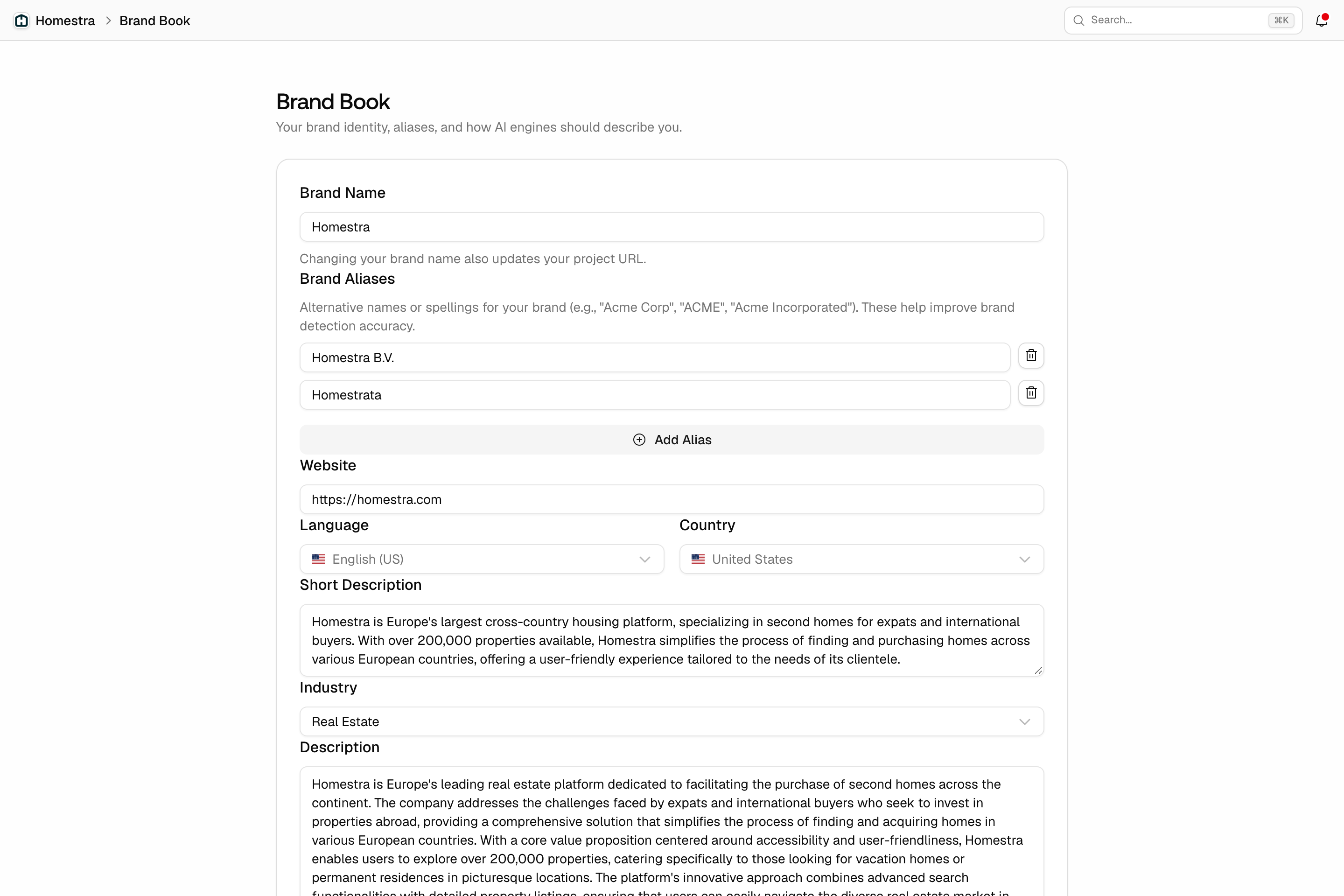
- Brand name: the canonical name. Changing it also updates your project URL.
- Language and country: defaults for new monitors only. Existing monitors keep their own language and country, which you change in each monitor’s settings.
- Short description, industry, description, key features: the short description is passed into response analysis; industry, description, and key features are used when generating prompt suggestions and creating content. Keep them accurate rather than aspirational, since they shape what the platform thinks you should be visible for.
Editing safely
Edits to the name or aliases apply to new response analysis only; already analyzed answers are not recalculated. The website is different: self-citation rate matches citations against your current domain at query time, so changing the website updates that metric for past citations too. The page warns you when you touch these identity fields, because integrations and analytics tied to them can be affected. Make the change deliberately, not experimentally.