Why logs, and not a tracking script?
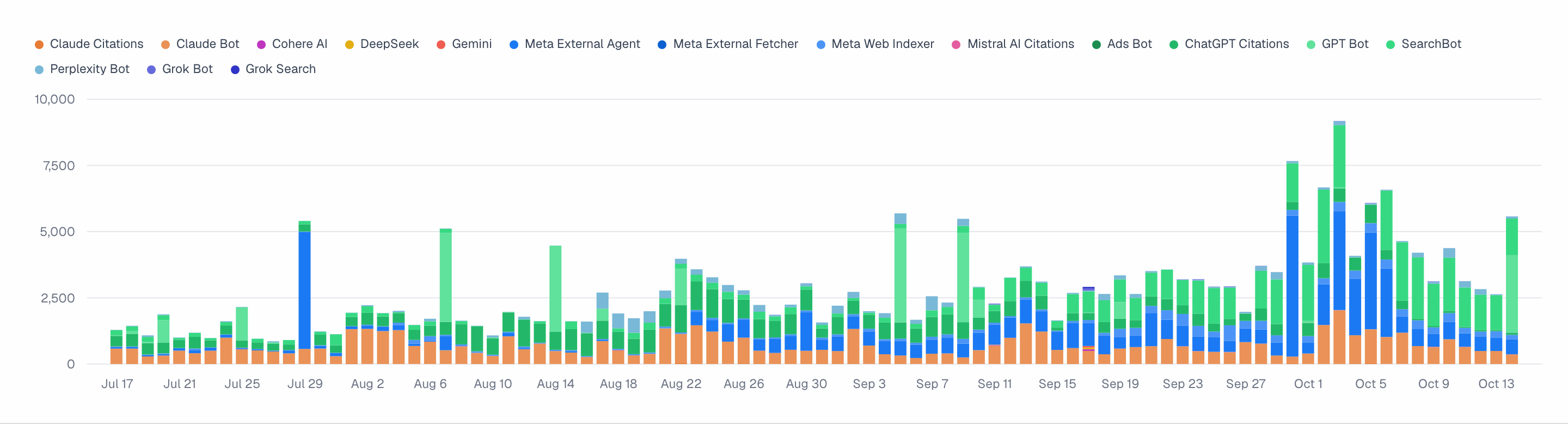
AI crawlers don’t run JavaScript, so they’re invisible to normal analytics tools. The only place their visits show up is your server’s access logs. By sending those logs to Promptwatch, crawler activity becomes something you can chart, filter, and correlate with your visibility data: which pages get crawled most, whether crawl activity precedes citations, and which sections of your site the models ignore. For what to do with those answers, see Crawler use cases and Turning crawler logs into opportunities.How the setup works
The setup is the same shape for every provider: create an API key, then configure your CDN or host to forward logs to Promptwatch’s ingestion endpoint.- Open Settings in the left rail, choose API Keys under Project settings, and create an API key. Each project needs its own key, so logs land in the right project.
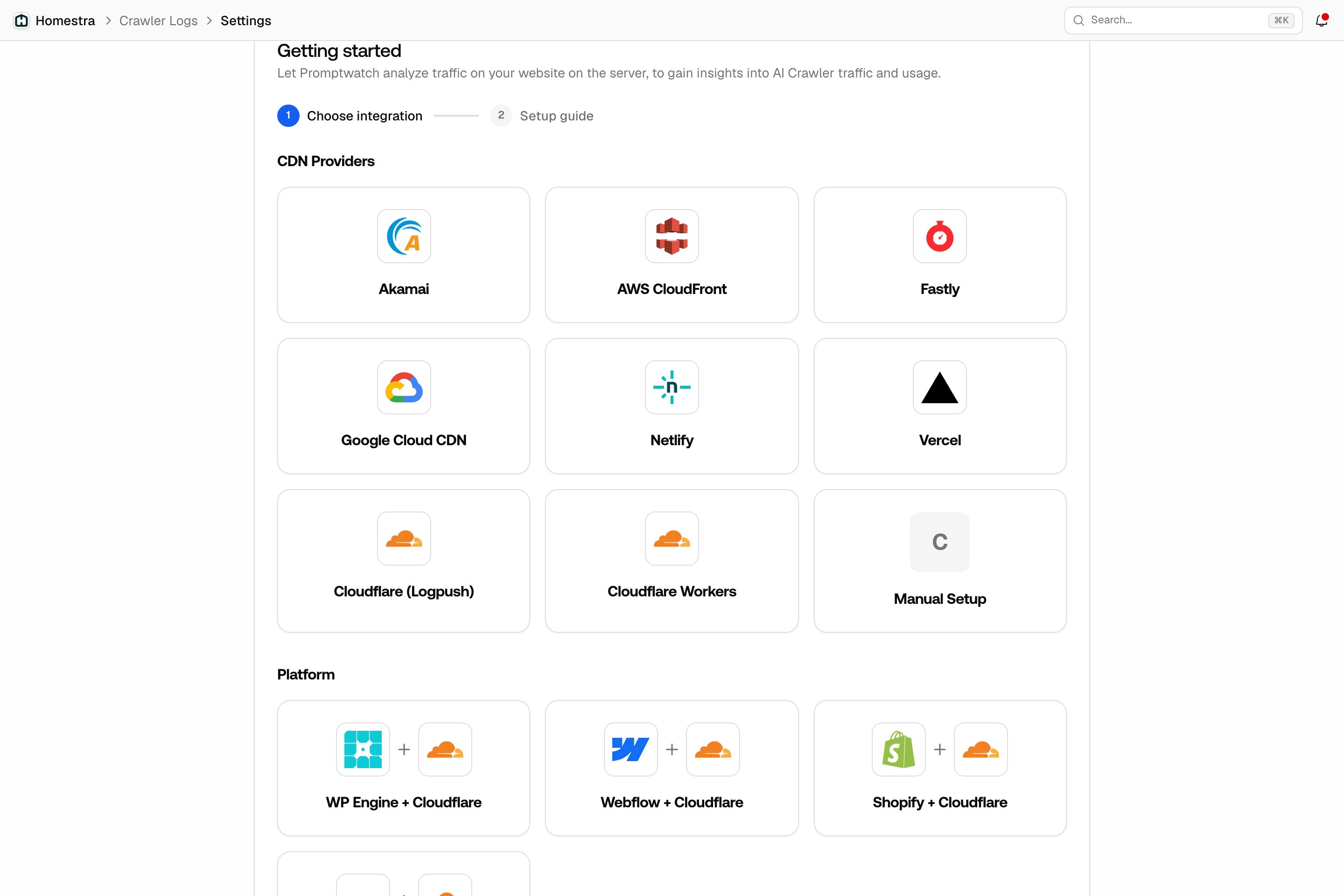
- Pick your CDN or platform and follow its guide in the technical setup docs.
- Send traffic. Crawler visits start appearing in Crawler Logs as logs flow in.
Supported providers
There’s a step-by-step guide for each:- CDNs: Cloudflare (Logpush or a Worker), Akamai, AWS CloudFront, Fastly, Google Cloud CDN, Netlify, and Vercel.
- Platforms behind Cloudflare: Webflow, Shopify, Kinsta, and WP Engine, each with a guide for putting Cloudflare in front and streaming from there.
- WordPress: the Promptwatch plugin forwards the requests that reach WordPress itself. Cached requests never reach WordPress, so coverage is partial.
- Everything else: a manual HTTP API, so any server or pipeline that can POST JSON can send logs.
Verified crawler data
Anyone can fake a user agent string, and scrapers routinely pretend to be GPTBot. For crawlers whose providers publish IP ranges, Promptwatch checks the client IP against those ranges. Requests that claim to be a known bot but come from unverified IPs are left out of your charts unless you explicitly include them. Counts can be lower than a naive user-agent count from your raw logs, and more accurate.After logs are flowing
Open Analytics in the left rail, then Crawler Logs, and you’ll see crawler trends over time, top crawled pages, and per-crawler breakdowns. Give it a few days of data before drawing conclusions: crawl behavior is bursty, and a week of logs tells you far more than an hour. From there, the interesting work is cross-referencing: pages that get crawled but never cited are optimization candidates, and pages that are never crawled may have a crawlability problem.