

1. The page doesn’t match what the model actually searches
When a model answers a prompt, it doesn’t search your prompt’s wording. It fans out into several underlying queries, and those are what your page competes on. A prompt like “best CRM for startups” might fan out into “CRM pricing comparison 2026” and “CRM startup reviews”, and a page that answers the prompt but not the fanouts loses to pages that answer the fanouts. How to check: open Prompts in the left rail, then Query Fanouts, and read the actual queries behind your target prompts, then judge your page against them honestly. The Content Gap analysis automates exactly this test: it scores how well your indexed pages cover each prompt’s fanouts and tells you whether to refresh the page or create a different one. See query fanouts.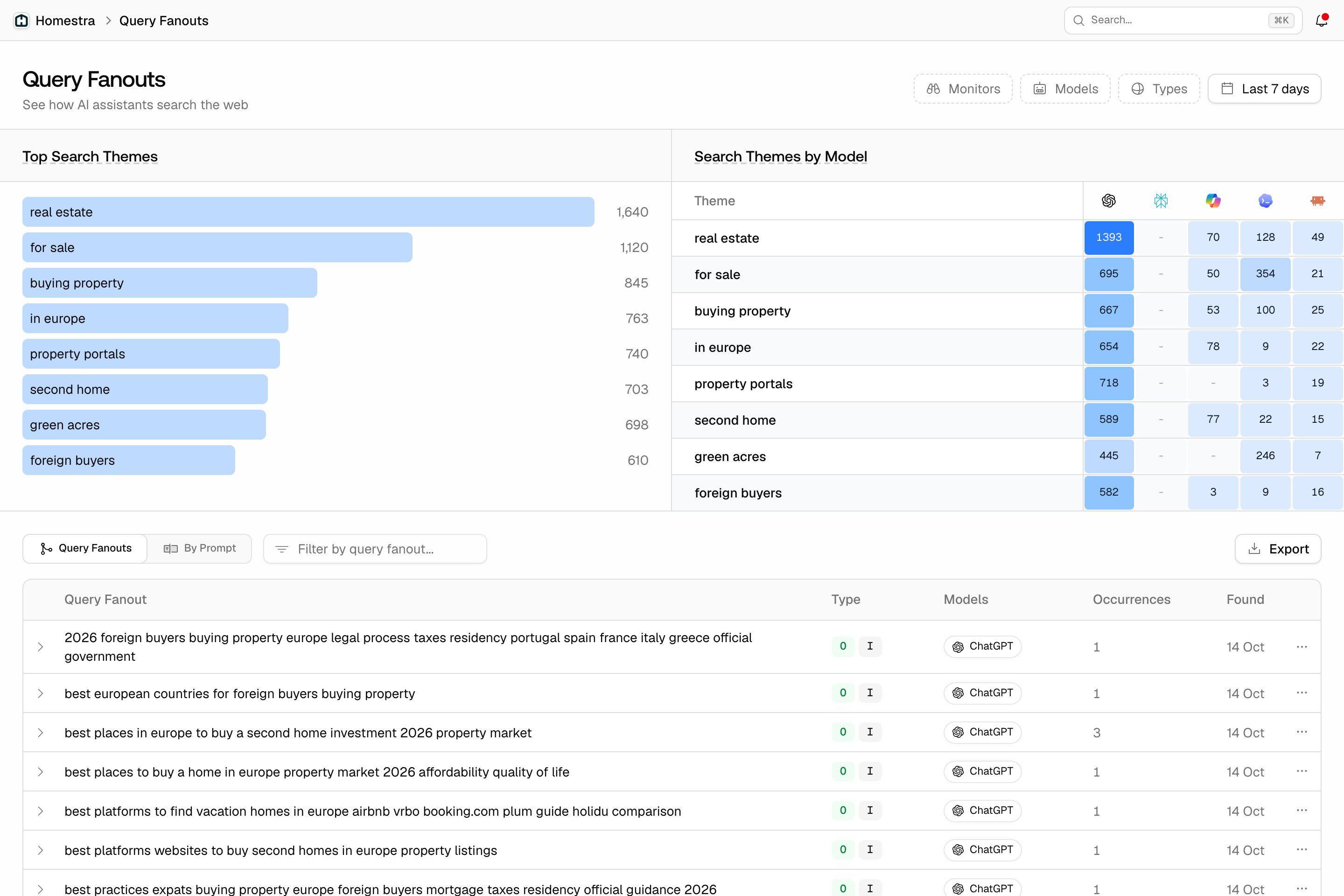
2. The answer’s source pool doesn’t include pages like yours
Look at what does get cited for those prompts before assuming your page failed on quality. If every citation is a Reddit thread, a review site, or a news article, the model builds that answer from third-party sources, and another page on your own domain was never going to break in, however good it is. How to check: open Sources in the left rail (it lands on Citations), filter by prompt type, tags, or topics covering this page, then read the cited domains and their Source column. A pool dominated by third-party sources means the play is earning presence in those sources, not publishing more on your own domain. See using citations in Promptwatch and source types.3. AI crawlers haven’t read the page
A model can only cite what its search or citation bots have fetched. New pages, pages deep in your site structure, or pages no internal links point to can sit unvisited for weeks. How to check: open Analytics in the left rail, then Crawler Logs, filter by the page’s URL, and look for the search and citation bots: OAI-SearchBot, ChatGPT-User, Claude-SearchBot, Claude-User, PerplexityBot, and Perplexity-User. If those have never fetched it, live citation is unlikely until they do. Training crawlers like GPTBot and ClaudeBot are a separate pipeline and don’t drive citations. See AI crawler insights for reading these logs.4. Something is blocking the crawlers
Worse than “not visited yet” is “visited and refused”: a robots.txt rule that disallows AI bots, a CDN or bot-protection layer that serves them errors, or content that only renders with JavaScript the crawler doesn’t execute. This silently takes your whole domain out of consideration, not just one page. How to check: in Crawler Logs, look at the status codes AI bots receive. Rows of 403s or other errors mean blocked, not unread. The crawlability guide walks through robots.txt rules, bot protection, and rendering issues, and how to fix each.5. You’re measuring with the wrong scope
Promptwatch records citations from the responses to your tracked prompts. A page can be cited every day for questions you don’t track and show zero in your data. And non-live-search models rarely produce citations at all, so if your monitor leans on API models, low citation counts are about the models, not the page. How to check: confirm your prompt set actually covers the questions this page answers, and that the monitor includes live-search models like ChatGPT, Perplexity, and AI Overview. Track the page in the Page Tracker: each row shows prompt count, citation count, and (for your own domain) crawl and click sparklines, and clicking the row shows which prompts cite it.